Pharmaceutical Wastewater › Regulatory
EU UWWTD Compliance for Pharmaceutical Manufacturers
The EU’s revised Urban Waste Water Treatment Directive introduces extended producer responsibility (EPR) obligations specifically naming the pharmaceutical and cosmetics industries — a materially different compliance picture than the directive’s previous, more general framework.
Reviewed for technical accuracy by Janeczka Kowalski, Process / Electrochemical Engineering. Figures and ranges on this page are engineering starting points — verify against your own pilot or vendor data before finalizing a design. The content is created by the Evoaeo engineering team led by Janeczka, All rights reserved.
What Changed, and Who It Applies To
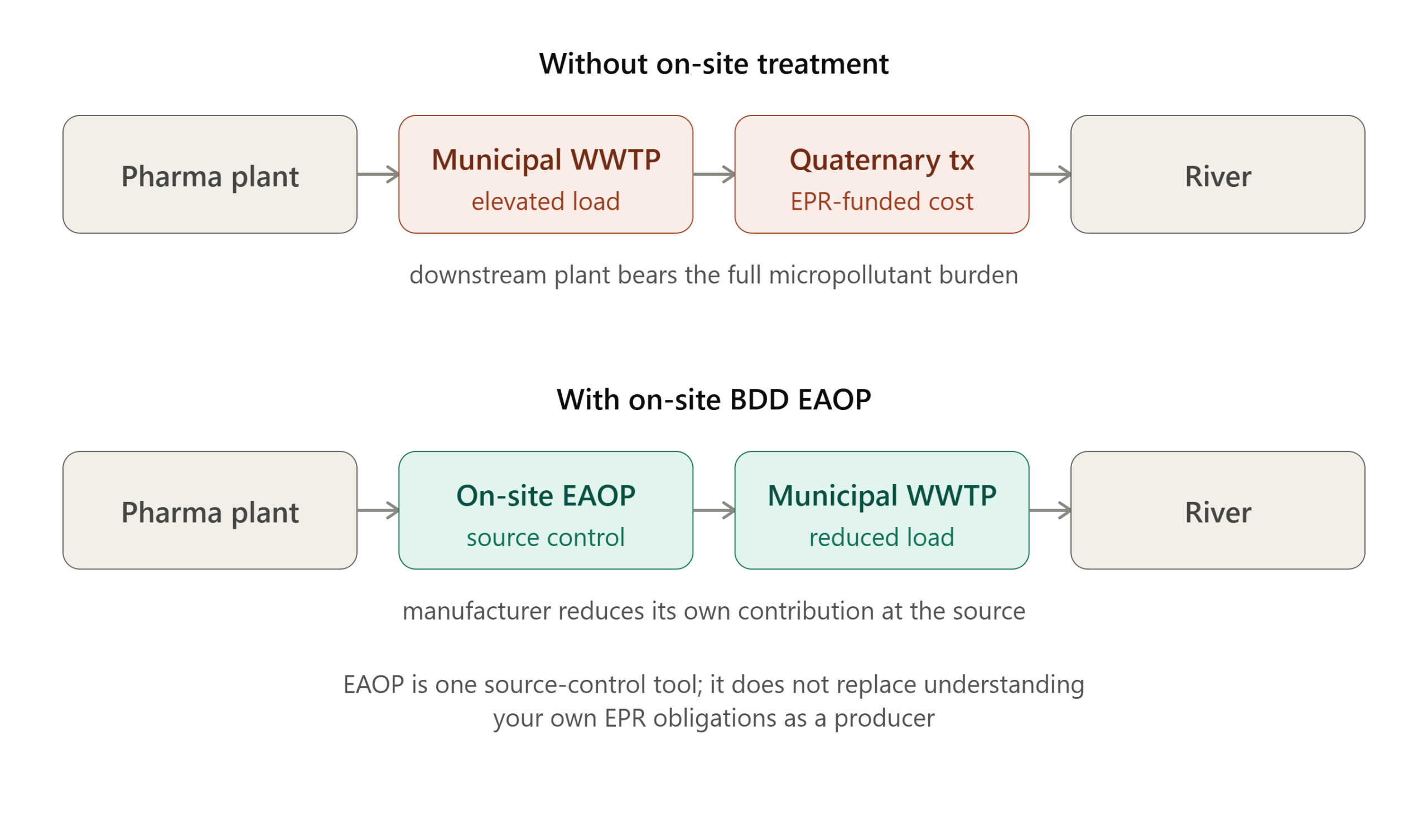
The revised directive requires quaternary treatment (targeting micropollutants, including pharmaceutical residues) at larger wastewater treatment plants, funded through an EPR scheme that pharmaceutical and cosmetics producers contribute to. This is a shift from general discharge limits toward producers bearing direct financial responsibility for the pollutant classes their industry contributes.
Where EO Fits in a Compliance Strategy — and Where It Doesn't Solve Everything
Treating pharmaceutical wastewater at the source, before it reaches a municipal plant, is a direct way for a manufacturer to reduce its own contribution to the micropollutant load a downstream plant would otherwise need EPR-funded quaternary treatment to remove. Electrochemical oxidation applied on-site is a source-control approach, not a substitute for understanding your specific EPR obligations as a producer.
This page describes the compliance landscape at a high level. It is not legal or regulatory advice — confirm your facility’s specific obligations, thresholds, and timeline with EU regulatory counsel before treating anything here as a compliance plan.
Facing an EPR or discharge compliance question?
Share your facility’s situation and we’ll discuss where on-site treatment fits your compliance approach.