Electrode Comparison: BDD Anode Vs. IrO₂ Anode
BDD vs. Iridium Oxide Electrode
electro oxidation basics, electrode comparison#3: why bdd electrode is preferred to iridium oxide electrode in eo process, bdd electrode vs. iridium oxide electrode: hydroxyl radicals generation and electro oxidation wastewater treatment application
Reviewed for technical accuracy by Janeczka Kowalski, Process / Electrochemical Engineering. Figures and ranges on this page are engineering starting points — verify against your own pilot or vendor data before finalizing a design. The content is created by the Evoaeo engineering team led by Janeczka, All rights reserved.
Guidance to the content
Electrochemical oxidation is an efficient and innovative wastewater treatment technology based on advanced oxidation processes (AOPs), used for treating various types of complex and refractory industrial and municipal wastewater. At its core, the process relies on direct oxidation at the anode surface, alongside indirect oxidation driven by the bulk generation of highly reactive oxidizing species that degrade and eventually mineralize organic compounds. Because the anode surface is the main site of reactive species generation, the anode material’s physicochemical properties directly govern the dominant oxidation pathway (direct vs. indirect), and ultimately the system’s energy efficiency and treatment effectiveness.
Selecting the right anode material therefore matters a great deal. The efficiency of generating hydroxyl radicals — the primary reactive species, with a redox potential of 2.73 to 2.80 V vs. SHE, second in oxidizing power only to fluorine — depends heavily on the anode’s physicochemical properties. Since •OH radicals are capable of mineralizing persistent organic pollutants, this generation efficiency directly affects the overall performance of the electrochemical oxidation system.
IrO₂ vs. BDD
A Final Showdown of Iridium Oxide Electrode vs. BDD Anode
This section provides an in-depth comparative analysis of two widely used anode materials: Boron-Doped Diamond (BDD) and Titanium-supported Iridium Oxide (Ti/IrO2). It covers their distinct mechanisms of hydroxyl radical generation, their respective application niches in electrochemical wastewater treatment, and how anode material selection and optimization impact on-site treatment performance. While both are industrially relevant and widely studied, their fundamental electrochemical behavior is profoundly different — leading to distinct roles in practice, as the comparison below shows.
BDD Anode Vs. IrO₂ Anode Comparison Fundamental: Radical Generations
Comparison of BDD Electrode Vs. Iridium Oxide Electrode for Radical Generation
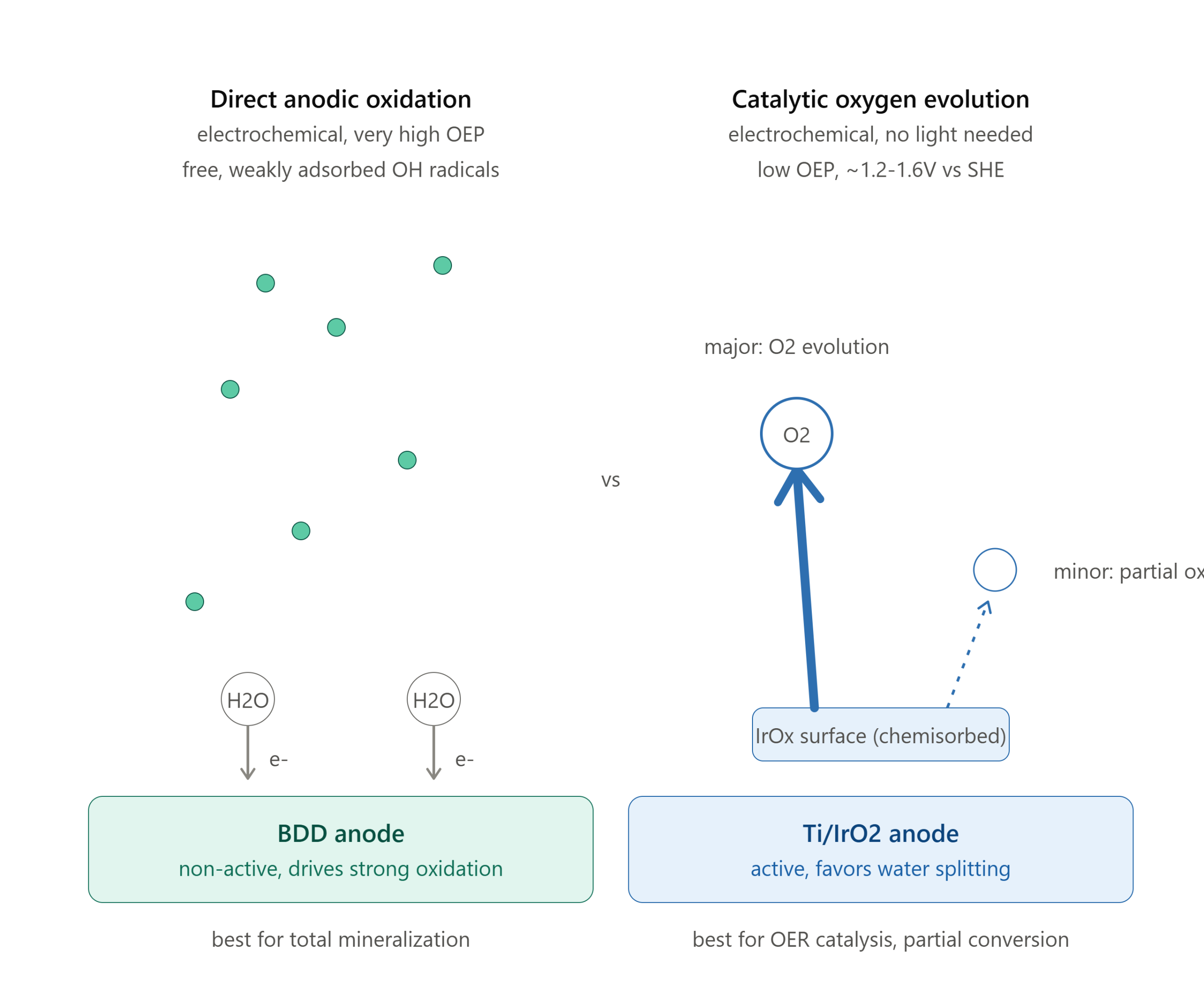
The iridium oxide electrode is highly “active,” functioning as a catalyst for the oxygen evolution reaction (OER), which splits water to produce oxygen gas at the anode (hydrogen is generated separately, at the cathode) — rather than generating high-energy free radicals — because it has a low oxygen evolution potential (OEP). Hydroxyl radicals are mainly chemisorbed to the surface, forming a higher-state surface oxide. With this more limited oxidation power, the iridium oxide electrode is better suited to partial oxidation or “conversion” of organic matter than to total mineralization, and it is also widely used as an OER catalyst in water electrolysis for green hydrogen production.
The BDD electrode is a “non-active” electrode. Its incredibly high OEP allows for a much weaker interaction between the anode surface and the radicals it generates — the radicals stay only weakly attached to the surface, which expedites their reactivity and drives more aggressive oxidation of organic pollutants, while suppressing the competing side reaction of water splitting.
Iridium Oxide Electrode And BDD on Depth of Oxidation and Mineralization
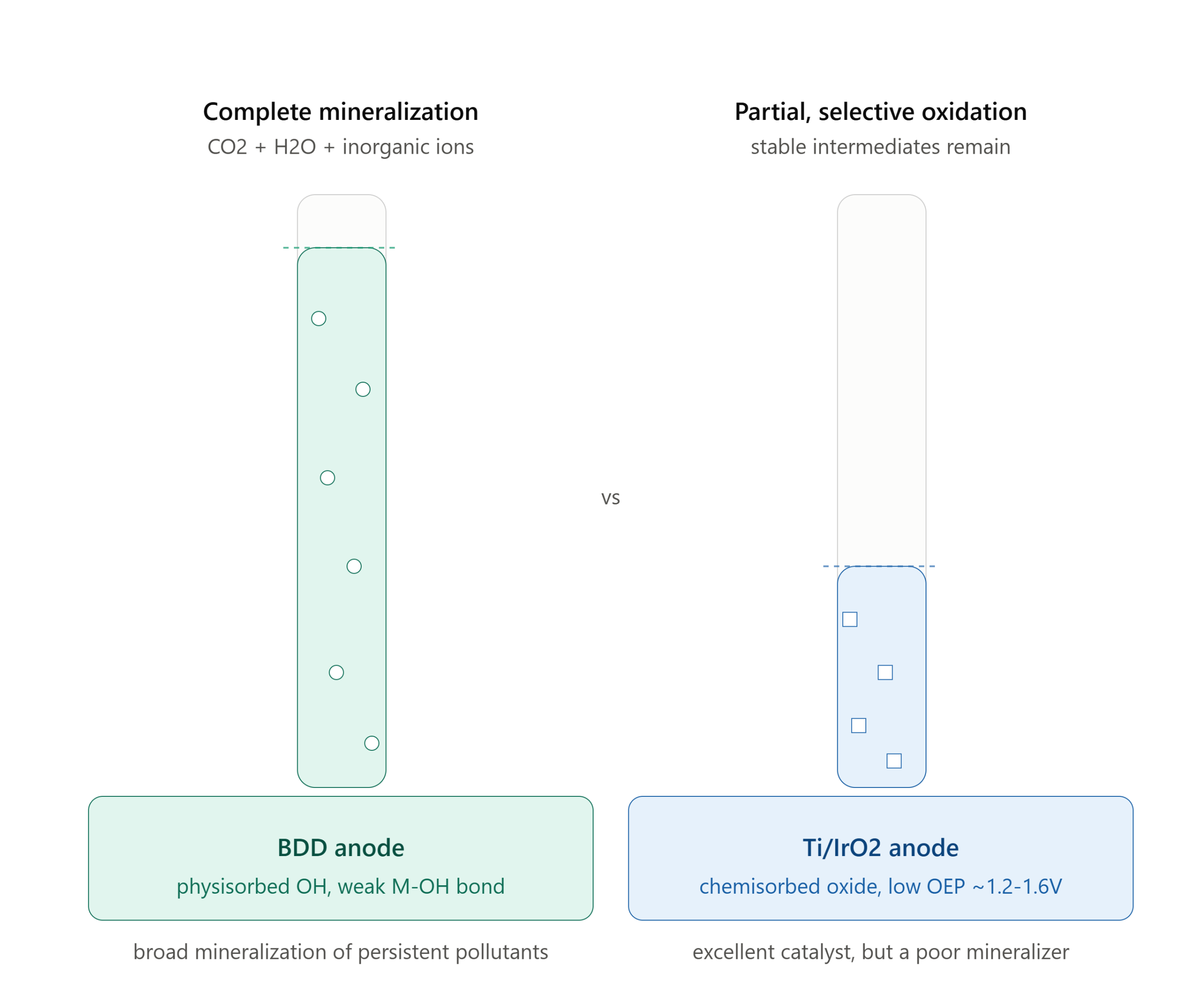
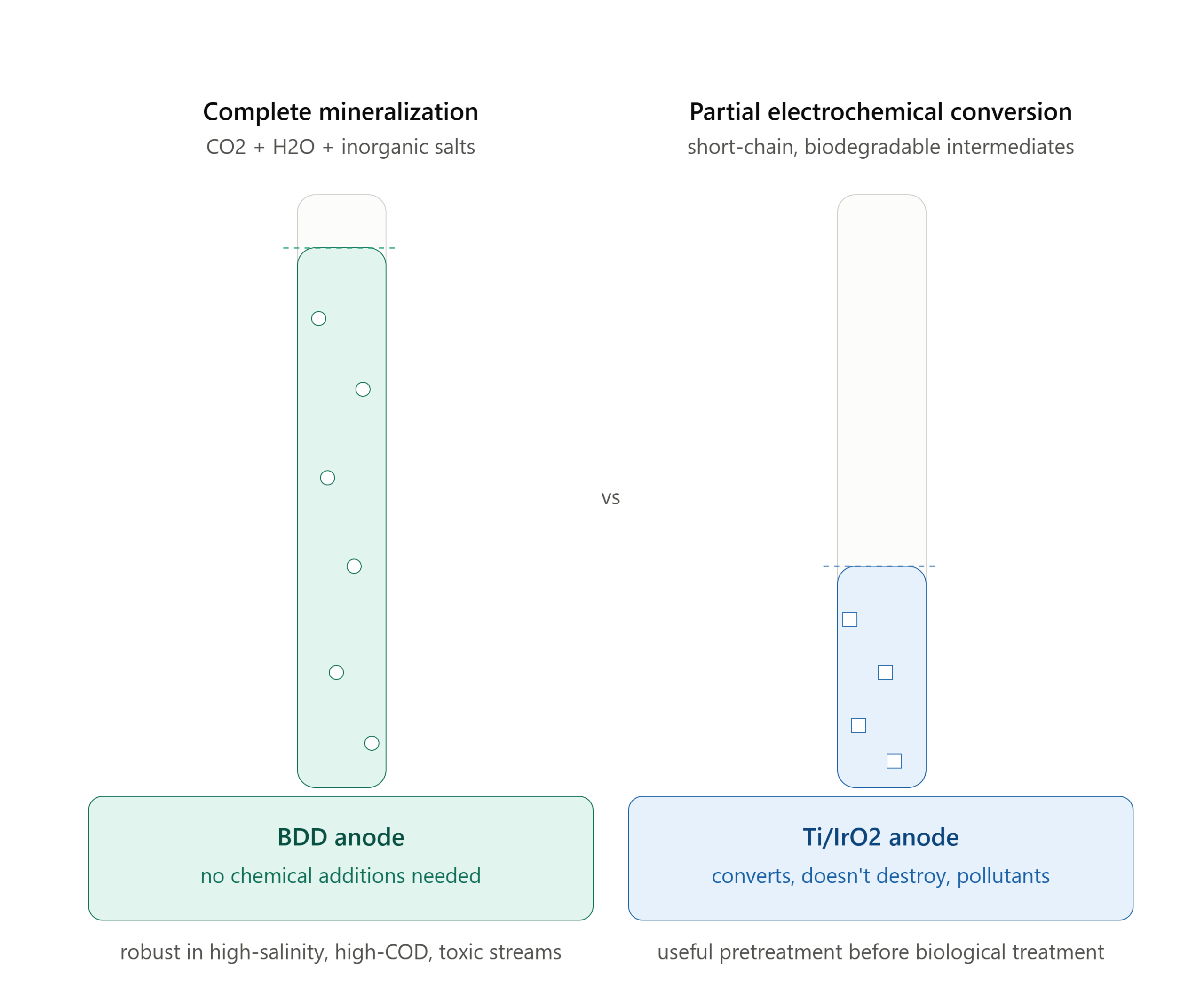
Partial oxidation or electrochemical conversion of Iridium oxide electrode transforms those organic pollutants into intermediate biodegradable compounds, carboxylic acids and other short-chain intermediates.
Total mineralization or electrochemical combustion of organic pollutants on BDD electrode means organic pollutants are completely destroyed and converted into carbon dioxide, water, and inorganic salts. Persistent organic pollutants can be mineralized even if those wastewaters are very complex, e.g, with high COD concentration, high sanility, highly toxic, high salinity enhances conductivity, reducing energy costs, this process needs no chemical additions, and reduces toxicity, physi-chemical stability of BDD electrode making it robust and emit stable performance in industrial effluent treatment processes.
Energy Efficiency Comparison
While the iridium oxide electrode is often cheaper to manufacture, BDD electrodes are significantly more energy-efficient for the complete destruction of organic pollutants. The iridium oxide (IrO2) electrode, with an OEP of around 1.6 V, starts splitting water early. BDD, by contrast, has an OEP over 2.3 V vs. SHE. This wider potential window allows BDD to reach higher energy levels and generate hydroxyl radicals without wasting as much energy on water splitting.
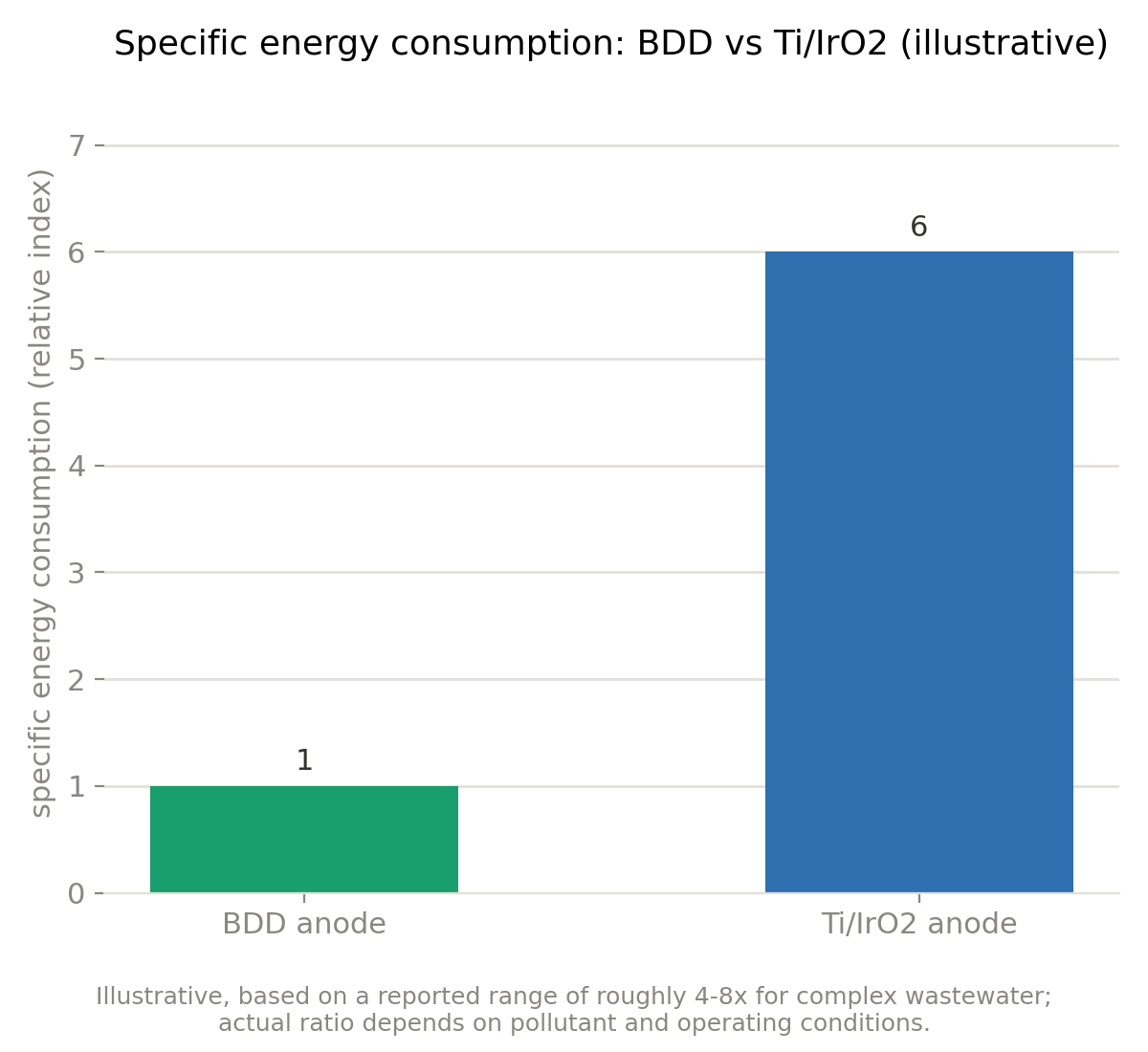
Reported figures suggest BDD can achieve specific energy consumption rates roughly 4 to 8 times lower than IrO2 for complex wastewater — though this ratio depends heavily on the specific pollutant and operating conditions, so it’s best treated as an illustrative range rather than a fixed constant. BDD can also maintain near-100% current efficiency in the early stages of treatment, while IrO2 typically drops below 20-30% (and sometimes lower) once refractory organics dominate what’s left to remove.
Water Matrixs & Anode Selection
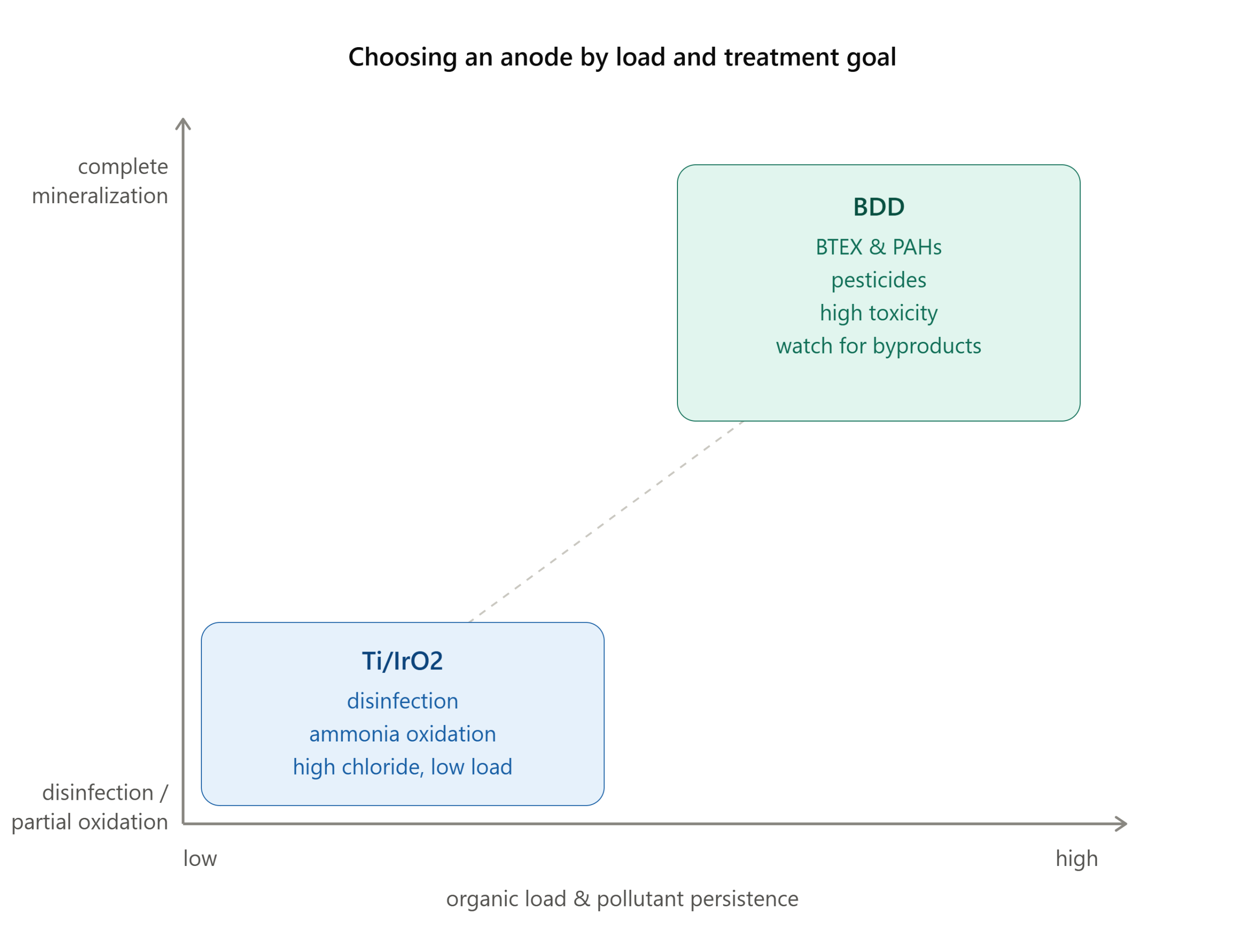
When the water has a high organic load and is toxic or complex with persistent organic pollutants — for example, BTEX, pesticides, or PAHs (polycyclic aromatic hydrocarbons) — the BDD electrode provides the extreme oxidation power required to break down stable carbon chains into carbon dioxide and water. However, you’ll need to monitor for and mitigate byproducts such as perchlorate, especially in chloride-containing streams.
Select the iridium oxide electrode if you want to perform disinfection, partial oxidation, or enhance biodegradability, or if you’re treating waste streams with low organic loads, high chloride content, or ammonia-laden streams.
On-site Implements
Comparison of Iridium Oxide Electrode vs. BDD Electrode for Real Wastewater
Right before we wrapping up all this specific content about comparative comparison of Ti Iridium Oxide electrode and boron doped diamond BDD electrode, let’s take a look at efficacy of these two electrodes toward general organic loads such as COD, and TOC, treatment efficiency toward different types of persistent organic pollutants, it’s a final showdown of oxidation capability and performance in real wastewater treatment.
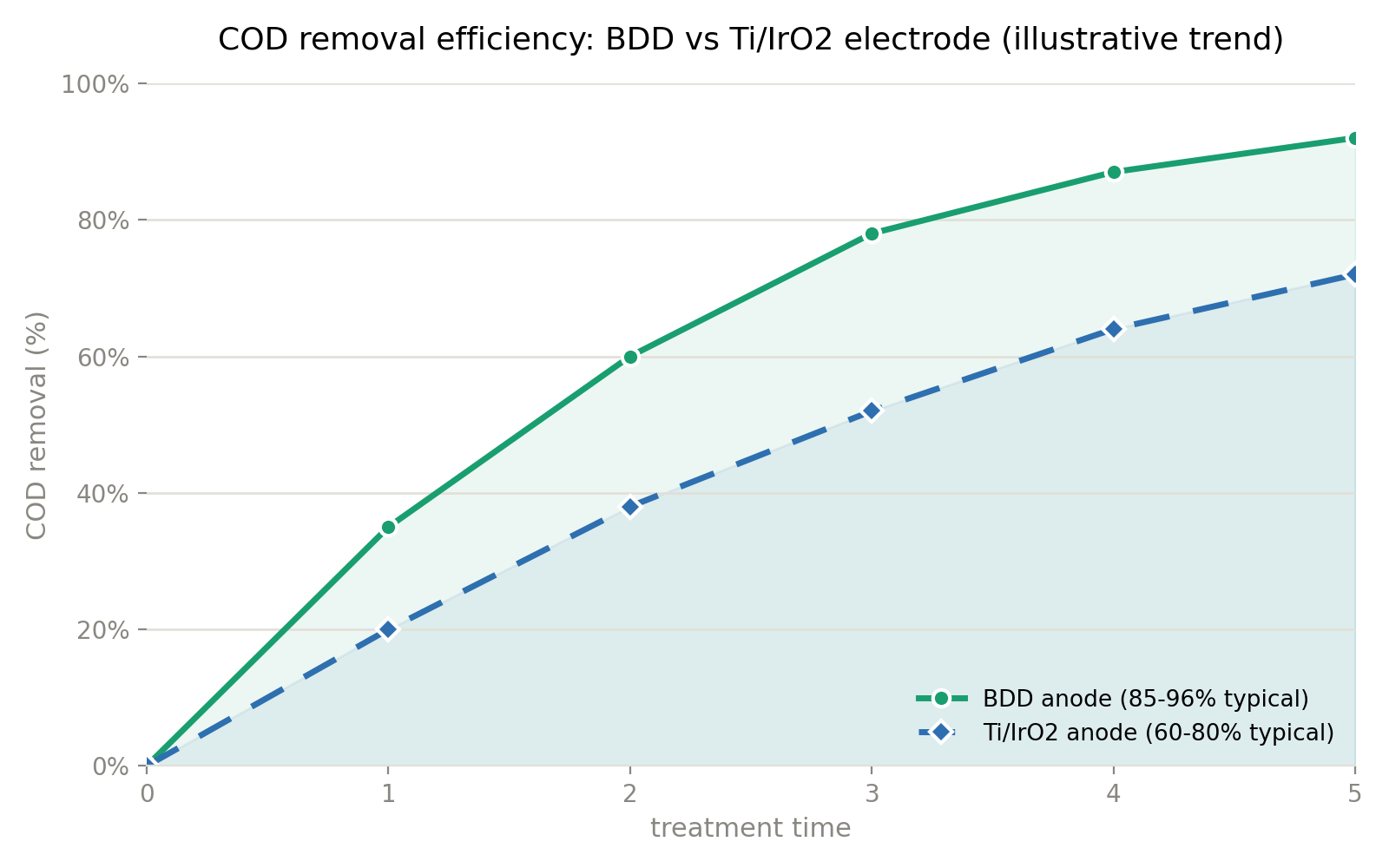
COD degradation efficiency comparison of BDD and Iridium Oxide Electrode
With a high OEP, BDD electrode doesn’t split water into oxygen easily, it creates reactive hydroxyl radicals, weakly adsorbed on the surface, these radicals conduct non-selective attack and break molecules of organic pollutants, while Iridium oxide electrode tends to “convert” those complex organics into intermediates. The COD removal efficiency on BDD electrode reached some 85–96%, while a 60–80% on Iridium oxide electrode.
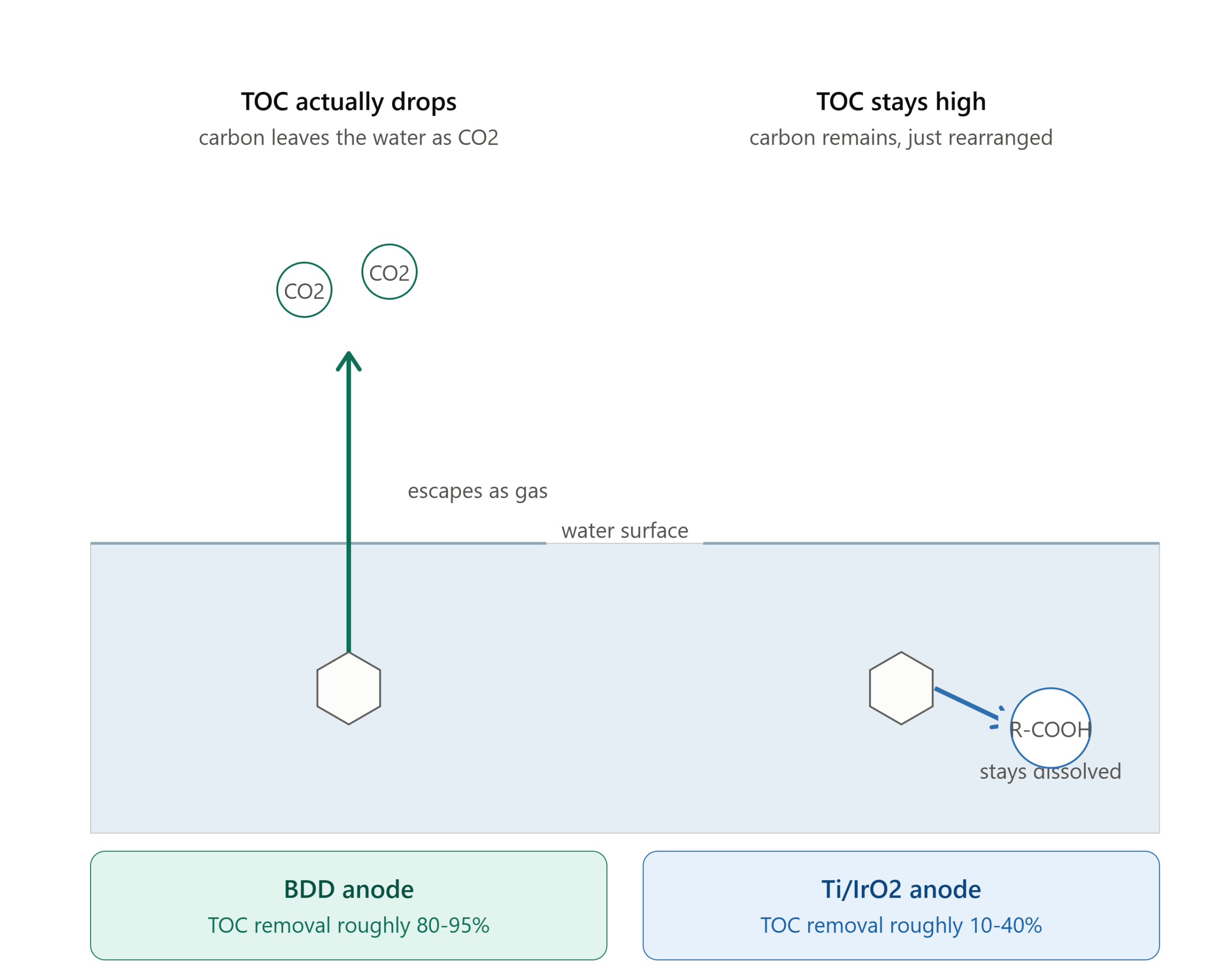
TOC degradation efficiency comparison of BDD and Iridium Oxide Electrode
The fundamental difference lies in mineralization versus conversion when it comes to TOC removal. The BDD electrode can break down the molecular structure of organic carbon — even stable aromatic structures such as benzene rings, biphenyls, dioxins, furans, and PAHs — functioning like an “incinerator.” It mineralizes organic carbon into carbon dioxide and water. Some experiments report TOC removal rates around 80-95% on BDD.
While iridium oxide converts organic compounds into various types of intermediates with smaller, simpler molecular structures — which can be less toxic or have lower COD — the carbon itself is still present in the water. It demonstrates decent COD removal efficiency, but only about 10-40% TOC removal.
Final Thoughts: A Radar Chart
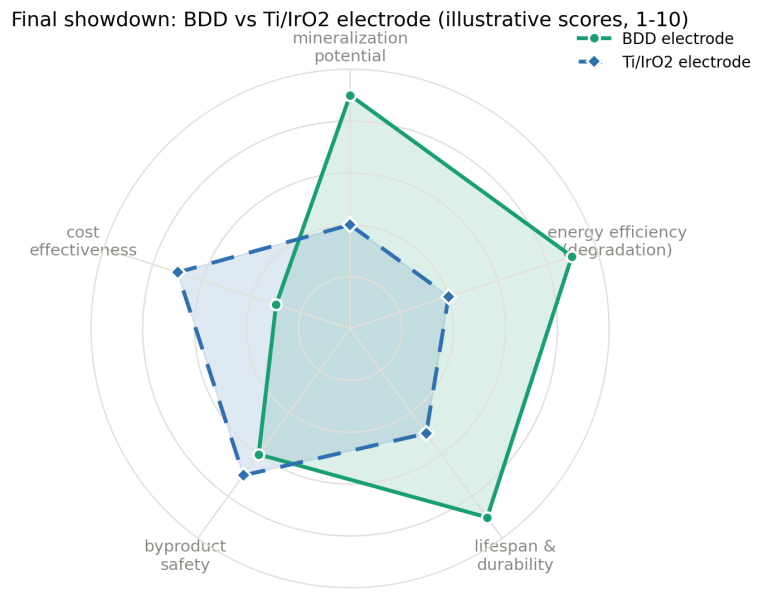
BDD’s electrode has a very high oxygen evolution potential, over 2.3V, and its optimal anode surface allows it to generate free hydroxyl radicals capable of breaking down persistent organic pollutants into CO2, water, and inorganic salts. Iridium oxide has a lower OEP, around 1.6V, so it starts splitting water into oxygen rather than generating reactive oxidants. It’s better suited for disinfection or enhancing the biodegradability of wastewater.
As mentioned earlier, BDD is roughly 4 to 8 times more energy-efficient than iridium oxide when the primary goal is complete degradation of refractory pollutants, since BDD doesn’t spend much energy on water splitting — more of the electricity goes directly into oxidant generation and carbon removal. IrO2, on the other hand, can be more efficient for brine electrolysis or chlorine generation, which are its actual designed applications.
BDD electrodes, fabricated on substrates like niobium or silicon, demonstrate unmatched longevity and can function in harsh environments for years. However, the synthesis process is costly, and there may be a toxic byproduct — perchlorate — if chloride is present in the influent. IrO2 instead generates hypochlorite or chlorate byproducts, which are generally easier to manage, but it is less durable: its catalytic coating eventually erodes or “passivates,” requiring more frequent replacement.
Not sure which anode fits your stream?
It’s strategic decision balancing upfront investment against long-term operational performance and environmental compliance of different electrode materials. Send us your water matrix, target compounds, and treatment objective — we’ll recommend an electrode platform and the right next step.