Electrode Comparison: BDD Anode Vs. PbO₂ Anode

BDD vs. Lead Dioxide Electrode

Electro Oxidation Basics#3: this context is about lead dioxide electrode, as one of the critical anode for electrochemical oxidation wastewater treatment processes which is one of the advanced oxidation processes (AOPs), lead dioxide anode performed well when economic issues be the major concerns since it does not require expensive substrates, then boosting mass transfer and offer high oxidation kinetics.

lead dioxide electrode vs bdd electrode

Guidance to the content

As the group of lead dioxide anodes can easily applied to 3D substrates (e.g., Reticulated Vitreous Carbon – RVC/), and suitable for large-scale, low-cost applications, improved stability, capability and efficiency to remove COD, total organic carbon (TOC), and specific organic pollutants such as RNO, and certain groups of pesticides, implements of these types of electrodes in wastewater treatment are massive.

Reviewed for technical accuracy by Janeczka Kowalski, Process / Electrochemical Engineering. Figures and ranges on this page are engineering starting points — verify against your own pilot or vendor data before finalizing a design. The content is created by the Evoaeo engineering team led by Janeczka, All rights reserved.

Content regarding lead dioxide is inspired by application of lead oxide electrodes in wastewater treatment from sciencedirect.

PbO₂ vs. BDD

A Final Showdown of "Non-Acitve Electrode": Lead Dioxide Electrode vs. BDD Anode

Since this content is all about a comprehensive comparison of Boron-Doped Diamond BDD electrode and lead dioxide electrode. These types of electrode materials are mainstream anode in electro oxidation wastewater treatment processes to degrade and mineralize organic compounds, and important components of industrial wastewater treatment solutions, therefore this context will cover physci-chemical properties, differences with mechanisms in wastewater treatment and organic pollutants removal, side-by-side comparison of electrochemical efficiency, electrode lifespan, degradation efficiency toward general organics and persistent organic pollutants, followed by applications, total cost of ownship, conclude with a comparative comparison of these two electrodes. 

lead dioxide electrode vs bdd elctrode over oxygen evolution overpotential

BDD Anode Vs. TiO₂ Anode Comparison Fundamental: Oxygen Evolution

BDD Electrode Vs. Lead Dioxide Electrode On Oxygen Evolution Overpotential

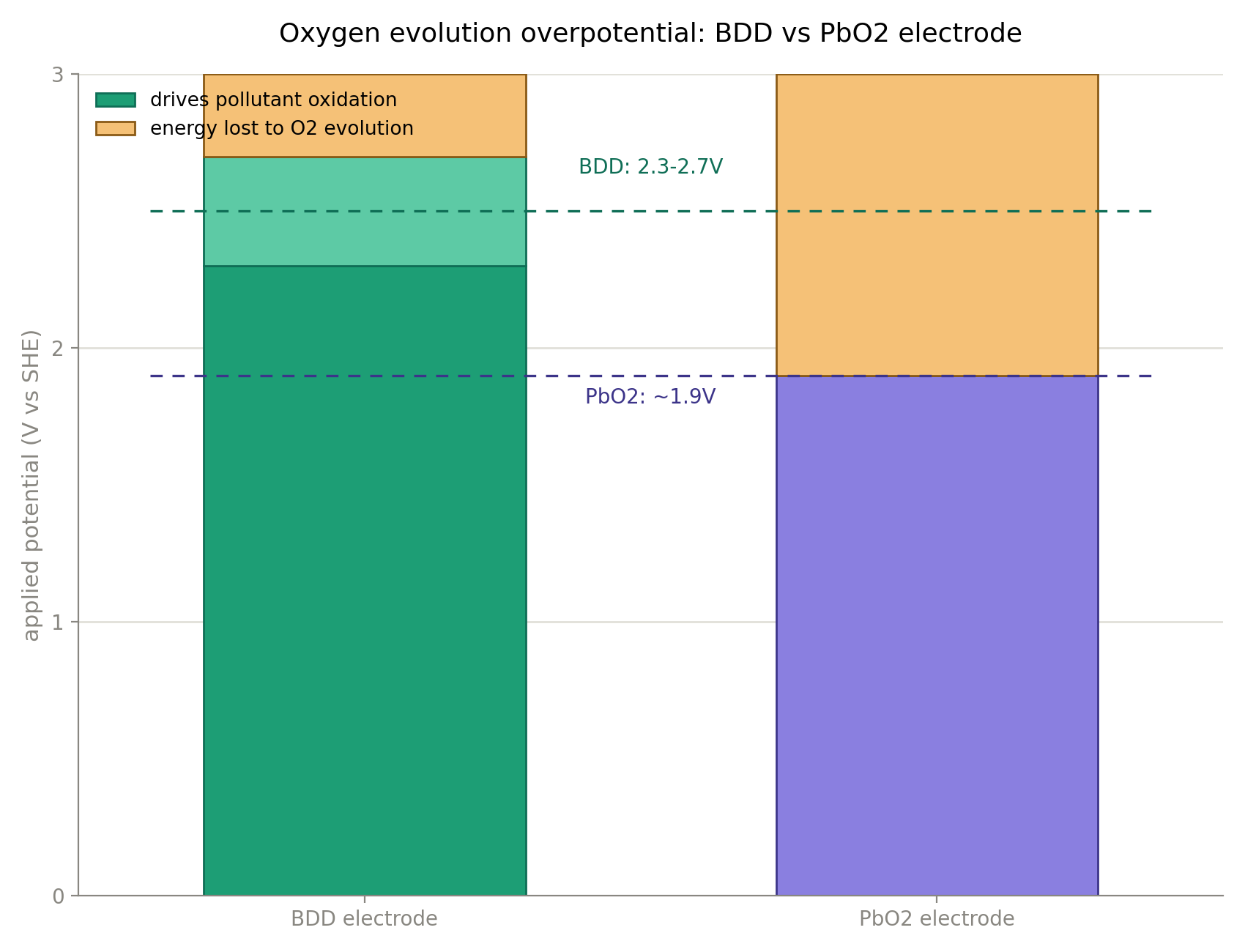
The Oxygen Evolution Overpotential (OEP) is one of the most critical metrics for an Electrochemical Advanced Oxidation Processes (EAOPs) when it comes to selecting electrode materials, especially anode, OEP is the voltage at which water begins to electrolyze into oxygen gas (O2).

Lead Dioxide (PbO2) has a high OEP at approximately 1.9V. Therefore it can be effective at reactive oxidant generation, however a critical percentage energy is divided to oxygen generations.

Borond doped diamond BDD electrode on the other hand, with an OEP at some 2.3v to 2.7v which is the widest potential window of any known electrode material available for industrial applications. This allows the electrode to reach much higher energy levels before water interference occurs, directing more energy toward the destruction of persistent organic pollutants.

lead dioxide electrode vs bdd elctrode over oxygen evolution overpotential
These radicals are highly reactive and mobile, interacting with a wide range of organic molecules and breaking chemical bonds in a non-selective manner — which is why BDD is able to degrade most pollutants, including persistent ones, more completely than PbO2.

BDD Anode Vs. PbO₂ Anode Comparison: Pollutant Oxidation

Lead Dioxide Electrode Vs. BDD on Depth of Oxidation & Mineralization

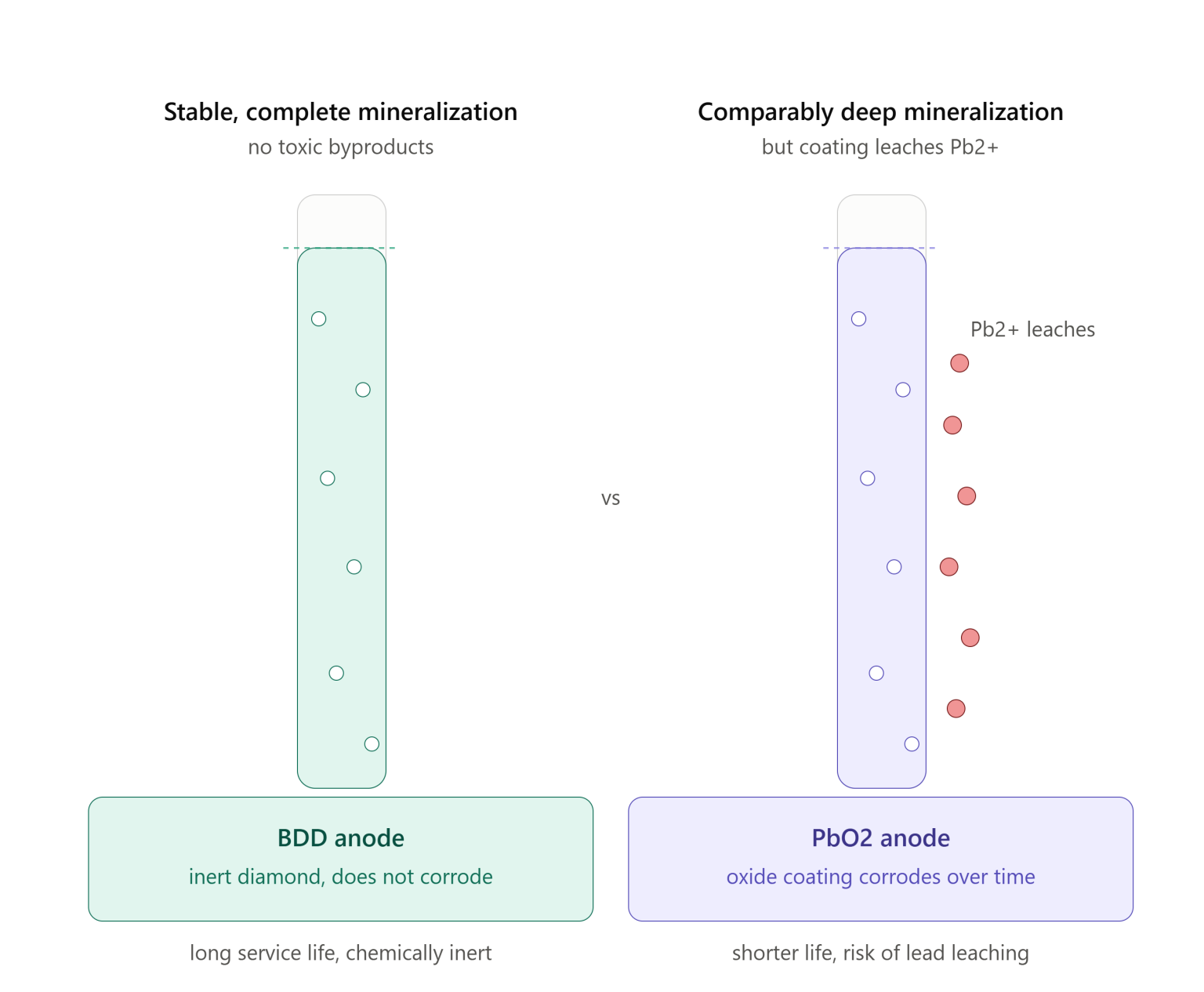
As a non-active anode, hydroxyl radicals and other reactive oxidants generated at the lead dioxide (PbO2) surface are only weakly, physically adsorbed — similar in principle to BDD, rather than strongly chemisorbed like an “active” electrode such as TiO2. However, PbO2 has a lower oxygen evolution overpotential (~1.9 V) than BDD, and its surface is more prone to fouling and passivation over time. As a result, while PbO2 is capable of substantial, non-selective oxidation and can mineralize many organic pollutants, it generally reaches a lower overall depth of mineralization than BDD, and may leave more intermediates — including some persistent organic pollutants — only partially broken down. 

Reactive hydroxyl radicals are similarly physisorbed on the surface of the BDD electrode. Because diamond is chemically inert, it does not trap these radicals the way a reactive oxide surface might; instead, they exist as a thin, highly mobile layer just above the surface. 

On-site Implements

Lead Dioxide Electrode Vs. BDD Electrode on Real Wastewater Treatment

This next section is a comprehensive comparison of lead dioxide and boron-doped diamond electrodes across the different dimensions of wastewater treatment — chemical oxygen demand (COD) removal, total organic carbon (TOC) removal, persistent organic pollutant (POP) removal, and overall treatment efficiency toward target pollutants. Intended to give you a clearer understanding of the efficiency gap between them — building on the oxidation and mineralization concepts discussed in the section above. It closes with a comparative summary, presented as a radar chart, covering anode selection across different water matrices, cost of ownership, and stability and durability in specific wastewater treatment applications.

comparison of lead dioxide electrode vs bdd electrode on cod removal
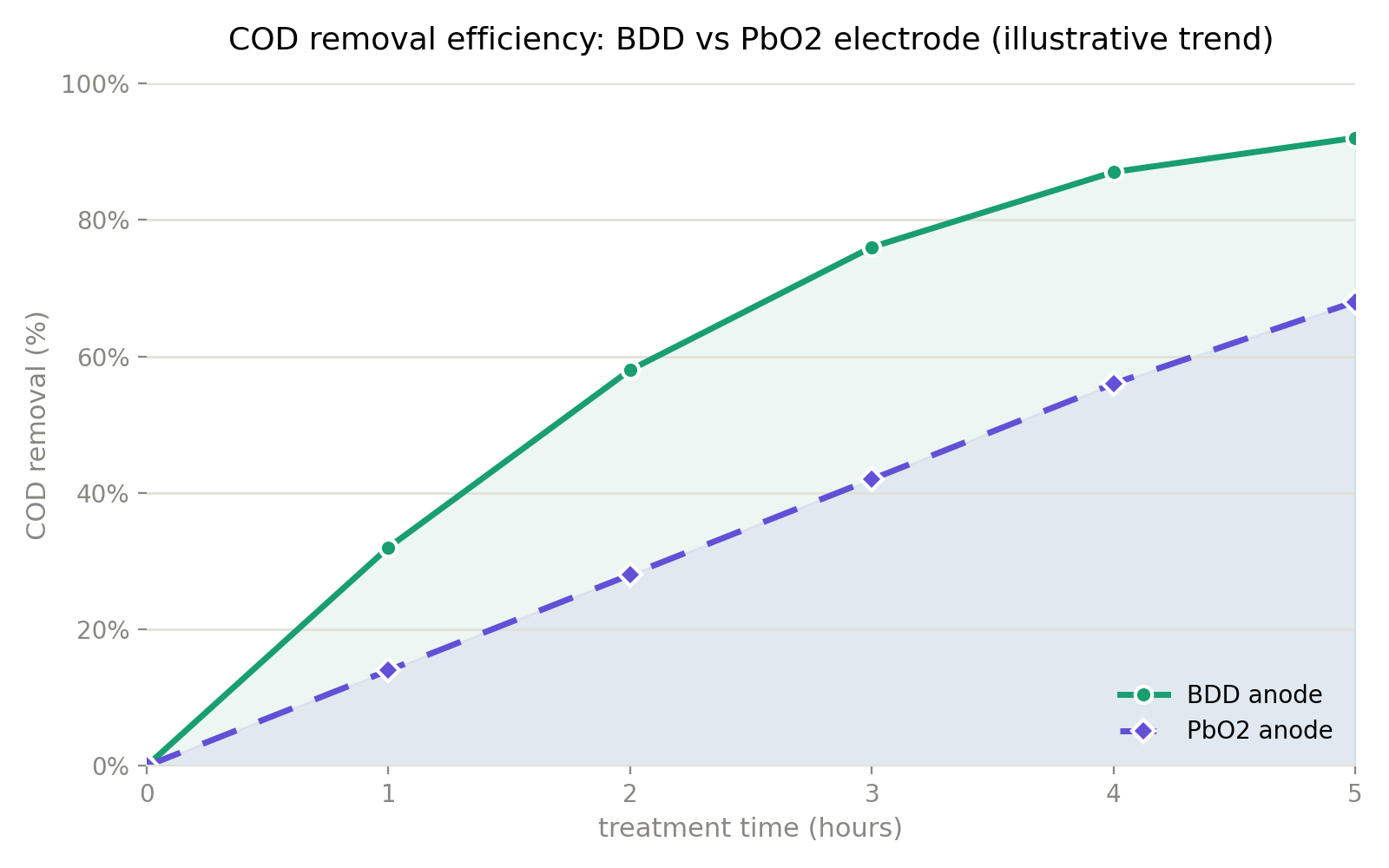
comparison of lead dioxide electrode vs bdd electrode on cod removal :BDD, by contrast, can reach organic pollutant mineralization (COD degradation) rates around 92% in the same illustrative comparison, cutting treatment time by roughly 30-55% relative to PbO2 for complex industrial waste streams

COD Degradation Efficiency Comparison of BDD vs. Lead Dioxide Electrode

COD degradation with lead dioxide is often constrained by PbO2’s tendency toward surface fouling and passivation rather than by any inherent selectivity. As treatment progresses, fouling agents such as proteins or fats can coat portions of the electrode surface, creating “blind spots” that reduce the effective reactive area. As a result, PbO2 anodes tend to show a slower, more linear COD degradation rate that struggles to reach very low, near-untraceable residual COD levels, especially with complex or high-strength industrial waste streams. Largely because the entire region just above BDD’s non-active, physisorbed-radical surface acts as an intensive, non-selective oxidation zone rather than being limited by fixed adsorption sites. This is also why BDD is often cited as uniquely capable of “polishing” COD from levels like 500 mg/L down to under 10 mg/L in a single treatment pass.

bdd electrode vs lead dioxide electrode on chloride rich water matrix
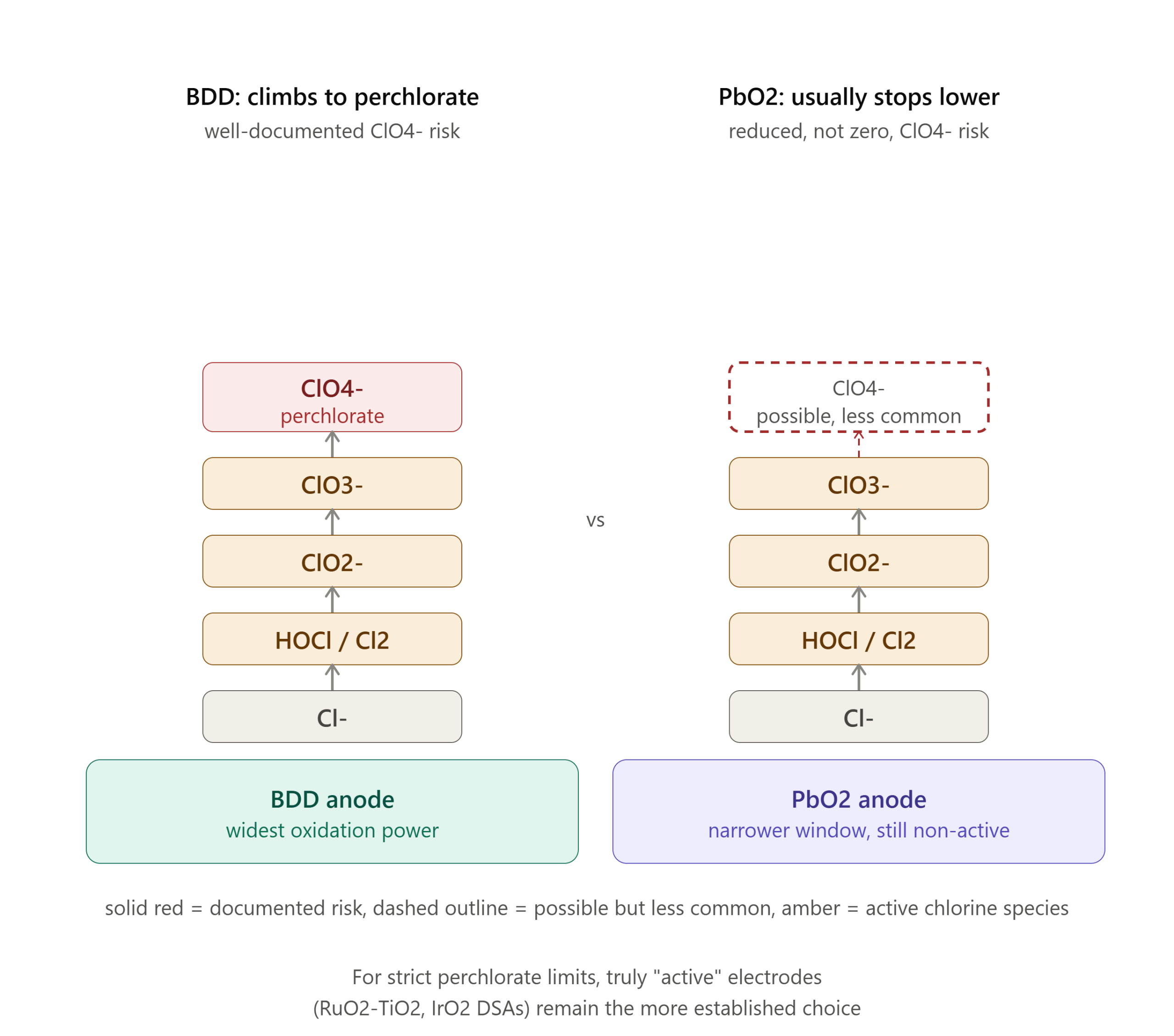
bdd electrode vs lead dioxide electrode on chloride rich water matrix: In high-chloride waste streams, an aggressive radical generator like the BDD anode can generate active chlorine species (Cl2, HOCl, OCl-) as secondary oxidants alongside its hydroxyl radicals.

Anode Selection for Different Water Matrix #1: Chlorides & Active Chlorine

PbO2, though still a non-active electrode like BDD (not a fundamentally different “active” mechanism), has a narrower oxygen-evolution overpotential window, which generally makes it less likely — though not guaranteed — to drive chloride all the way to significant perchlorate levels under typical operating conditions. 

Where discharge permits set strict perchlorate limits but tolerate active chlorine, truly “active” electrodes such as RuO2-TiO2 or IrO2-based DSAs remain the more established, purpose-built choice, since they favor the chlorine evolution reaction without the radical-driven pathway that pushes toward perchlorate. PbO2 can be a reasonable middle ground, but perchlorate formation should still be verified by testing under your actual operating conditions.

However, BDD’s strong, non-selective oxidation power can also push chloride all the way to perchlorate (ClO4-), a harmful and regulated byproduct.

bdd electrode vs lead dioxide electrode on sulfate rich water matrix

Anode Selection for Different Water Matrixs #2: Sulfate Rich Waste Stream

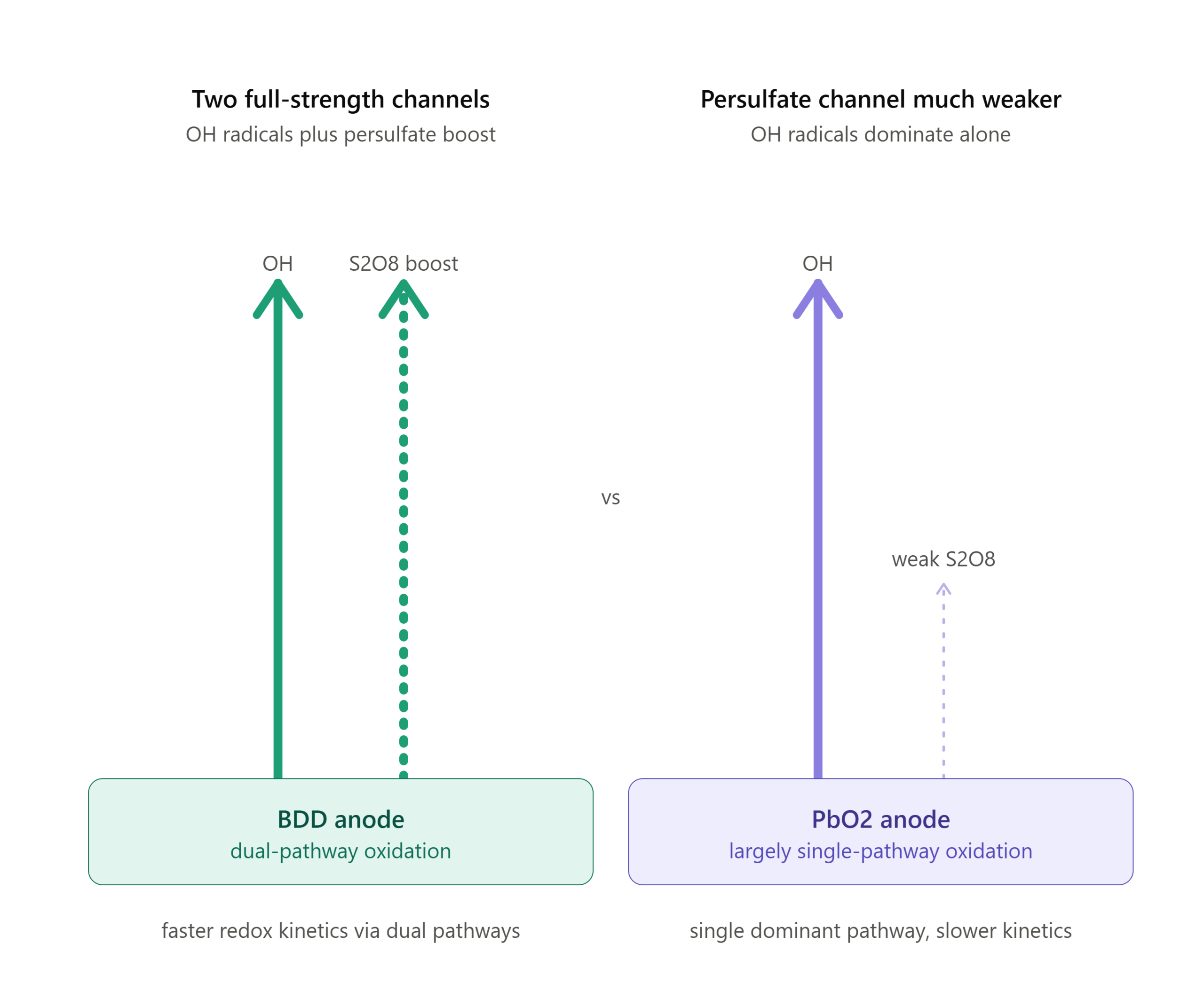
Sulfates are oxidized into persulfates (S2O8²⁻) at the surface of the BDD anode. This adds an “extra” indirect oxidation pathway via persulfate and sulfate radicals on top of BDD’s existing direct oxidation via hydroxyl radicals. As a result, BDD can reach much faster redox kinetics for organic pollutant removal in sulfate-rich streams, boosting overall treatment efficiency.

PbO2 can also handle sulfate-containing wastewater, but it cannot convert sulfate to persulfate as efficiently as BDD, largely for the same reason it falls short on chloride and COD performance: a narrower oxygen-evolution overpotential window limits how far its oxidation chemistry can be pushed.

bdd anode vs lead dioxide electrode in high salinity water matrixs

Anode Selection for Water Matrixs #3: High Salinity and Conductivity

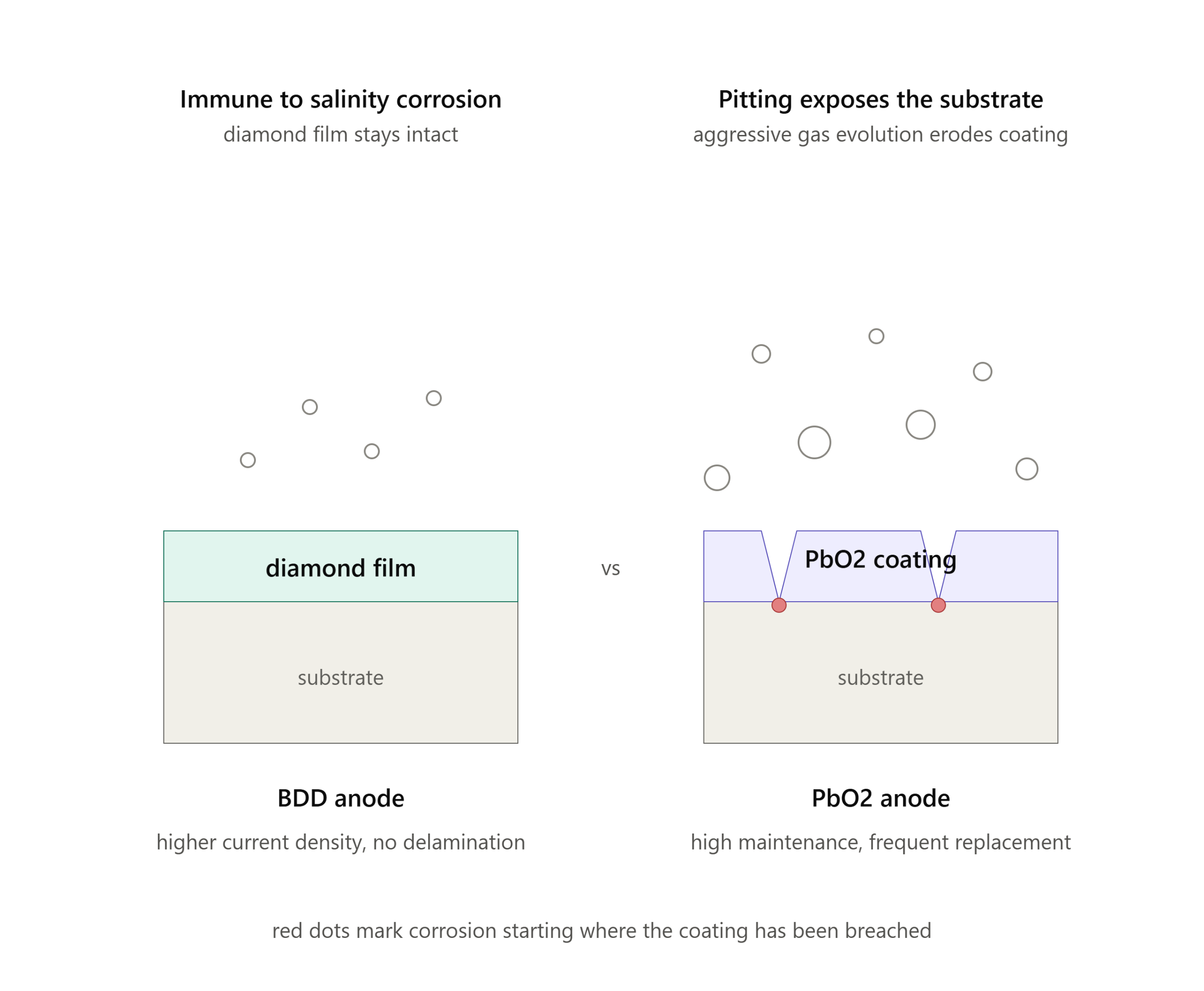
In high-salinity water, PbO2 coatings on the lead dioxide electrode are susceptible to enhanced physical erosion. The aggressive evolution of gas at the surface can cause pitting in the lead dioxide layer, eventually exposing the underlying substrate to corrosion — which is why PbO2 anodes typically demand higher maintenance and more frequent replacement in these conditions.

BDD, on the other hand, is highly resistant to salinity-induced corrosion. It performs well in high-conductivity environments, allowing operation at higher current densities without the diamond film delaminating or the substrate failing.

bdd anode vs lead dioxide electrode in stability of different ph ranges
bdd anode vs lead dioxide electrode in high flouride water matrixs

Anode Selection for Different Water Matrixs #4: Extreme pH and Fluorides

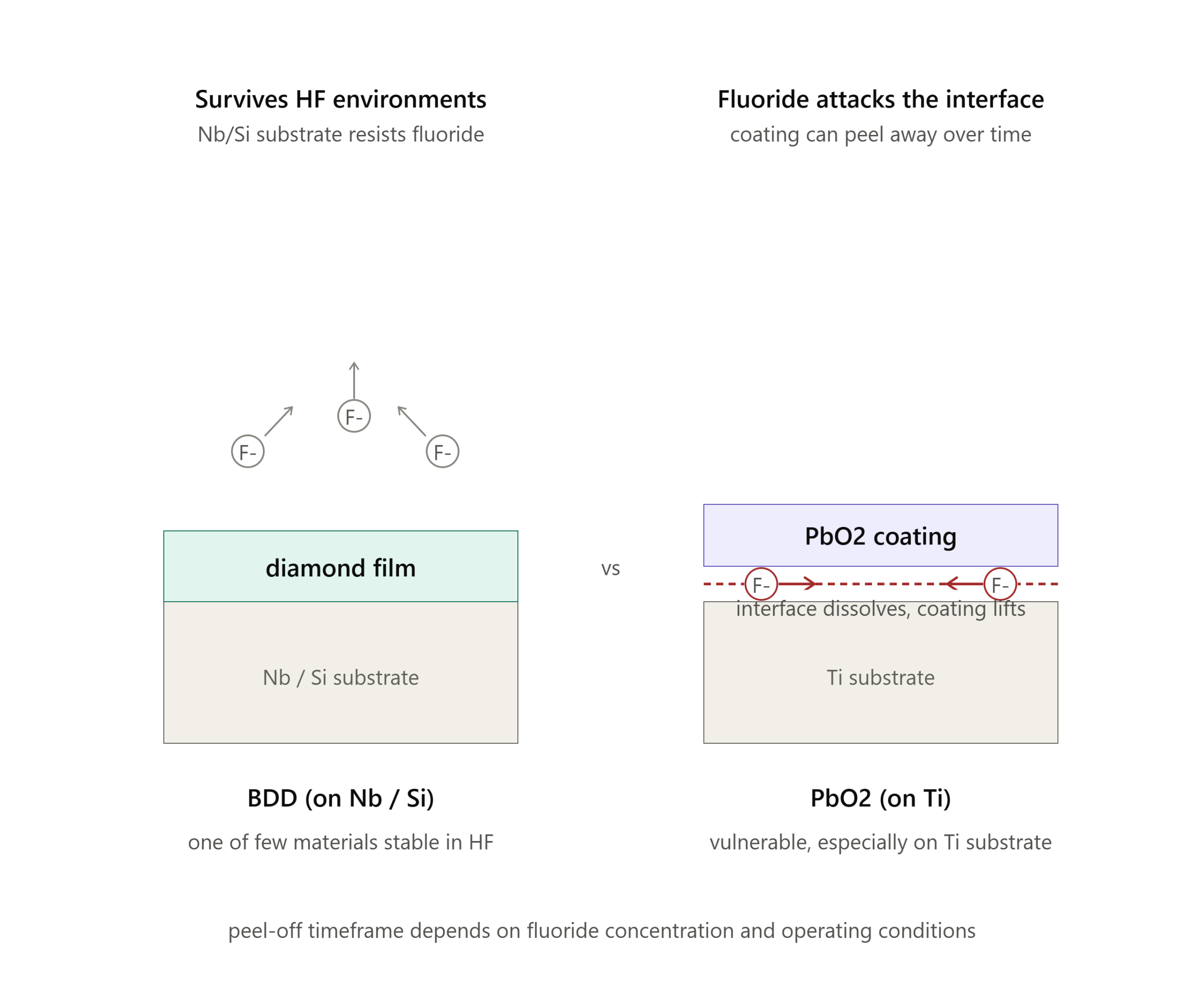
Fluorides aggressively attack the titanium/lead-oxide interface, which can cause the coating to delaminate within a period as short as weeks, depending on fluoride concentration and operating conditions. 

BDD electrodes grown on niobium or silicon substrates are among the few materials that can reliably survive hydrofluoric acid (HF) environments — notably, BDD grown on a titanium substrate does not share this advantage, since the underlying titanium remains vulnerable even though the diamond film itself is inert.

However, fluoride ions degrade boron-doped diamond (BDD) electrodes by accelerating chemical etching, causing surface roughening, and reducing the electrochemical window during wastewater treatment, therefore you may need to implement effective pre-treatment methods such as lime or calcium chloride-based chemical precipitation, electrocoagulation, activated alumina or bone char-based adsorption before the higher fluoride concentrated industrial effluents reached BDD-based electrochemical reactors. 

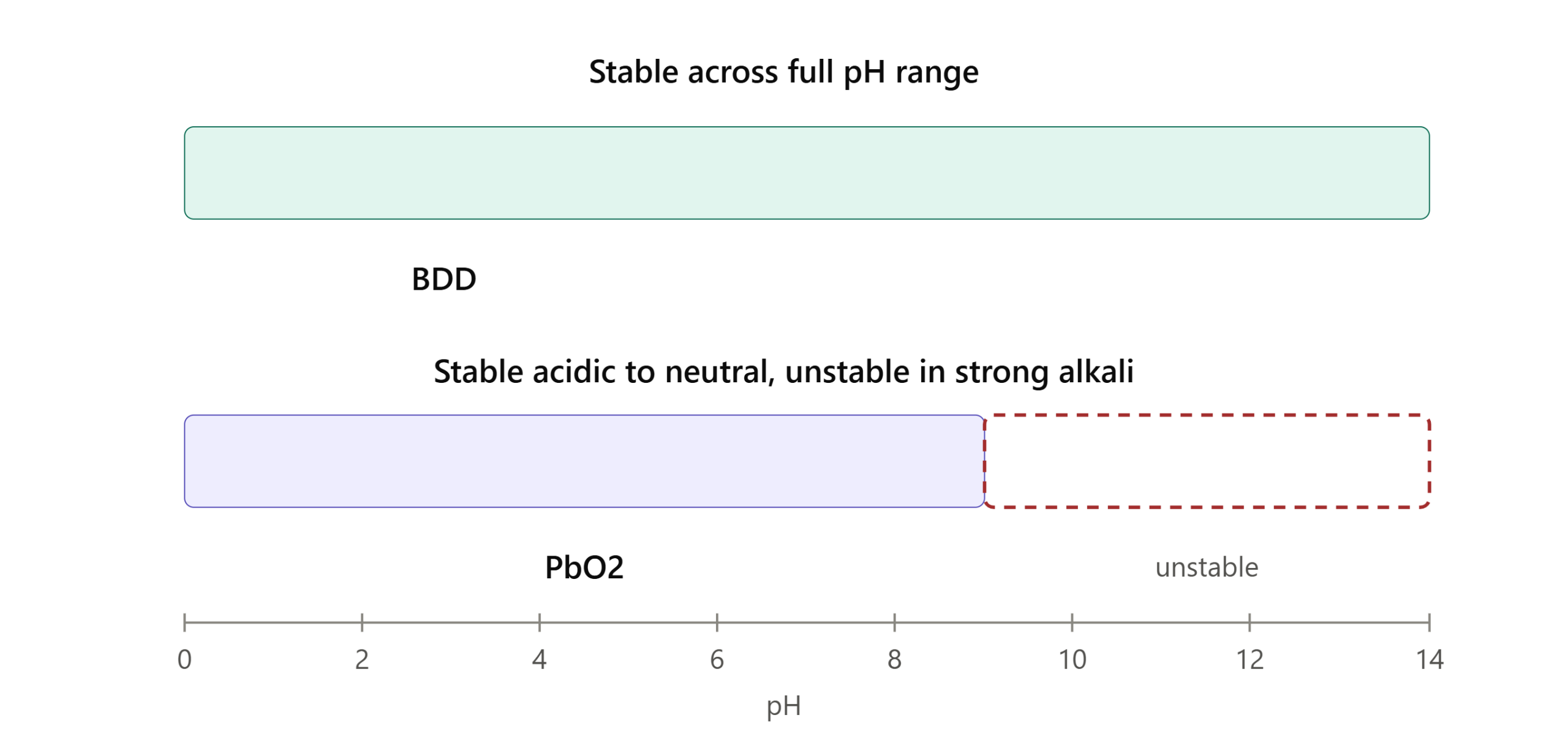
Industrial waste streams with wide pH fluctuations pose a related challenge: PbO2 performs best in acidic-to-neutral conditions and becomes unstable in strongly alkaline matrices. BDD, by contrast, is chemically stable across the entire pH scale (0–14).


bdd electrode vs lead dioxide electrode on total cost of ownership
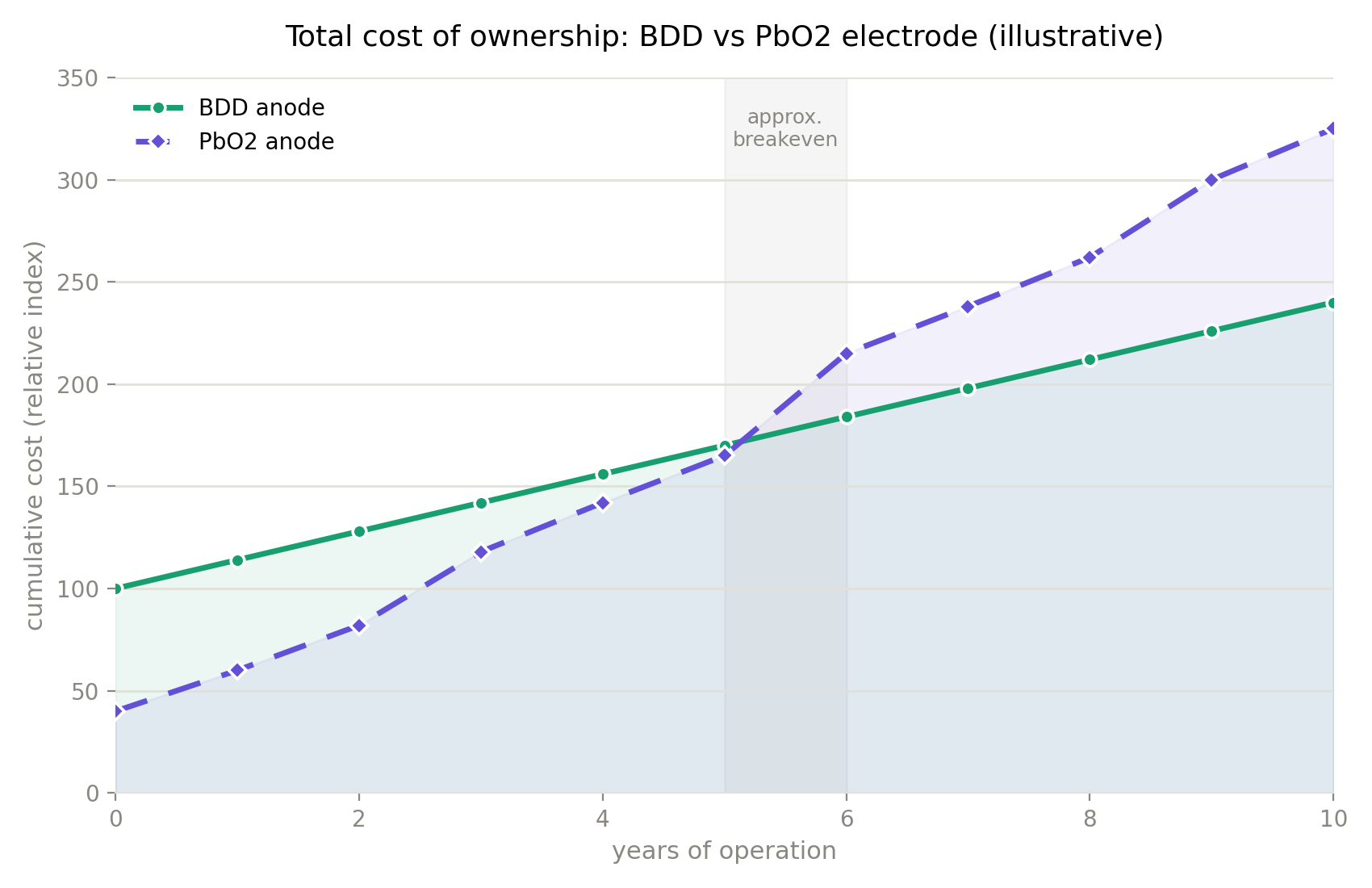
Over a multi-year operating horizon, this often narrows or reverses the apparent cost advantage of PbO2 — the two curves tend to cross at a "breakeven" point, after which BDD's lower ongoing costs make it the more economical choice, even though it started out more expensive.

Anode Selection for Cost of Ownership

Total cost of ownership (TCO) tells a different story than upfront price alone. PbO2 anodes carry a lower initial capital cost, but that advantage erodes over the operating life of the system: PbO2 coatings degrade faster under high current density, salinity-induced pitting, and fluoride attack, requiring more frequent recoating or full electrode replacement, along with more downtime and labor for maintenance.


BDD anodes require a significantly higher upfront capital investment, but their resistance to corrosion, fouling, and chemical attack across a wide pH range typically translates into a much longer service life and lower cumulative maintenance cost.

The right choice still depends on your specific operating horizon: for a short-term or pilot application, PbO2’s lower entry cost may be the better fit. For a long-term industrial installation, BDD’s total cost of ownership is often lower once replacement and downtime costs are factored in.

Not sure which anode fits your stream?

Searching for your own types of anode material or wastewater treatment approach to degrade organic pollutants from all these complex industrial wastewater? It’s strategic decision balancing upfront investment against long-term operational performance and environmental compliance of different electrode materials.

Search no more, simply ask our engineering team how boron doped diamond electrode can tackle all the challenges you are facing now.

Scroll to Top