Pharmaceutical Wastewater › Pollutant Chemistry
Active Pharmaceutical Ingredients (APIs) in Wastewater: Structure, Persistence, and Degradation Pathways
APIs are not ordinary organic pollutants. They are engineered, quite literally, to survive contact with a biological system without breaking down — which is precisely why conventional biological wastewater treatment struggles with them, and why the same molecular stability that makes a drug effective makes its wastewater persistent.
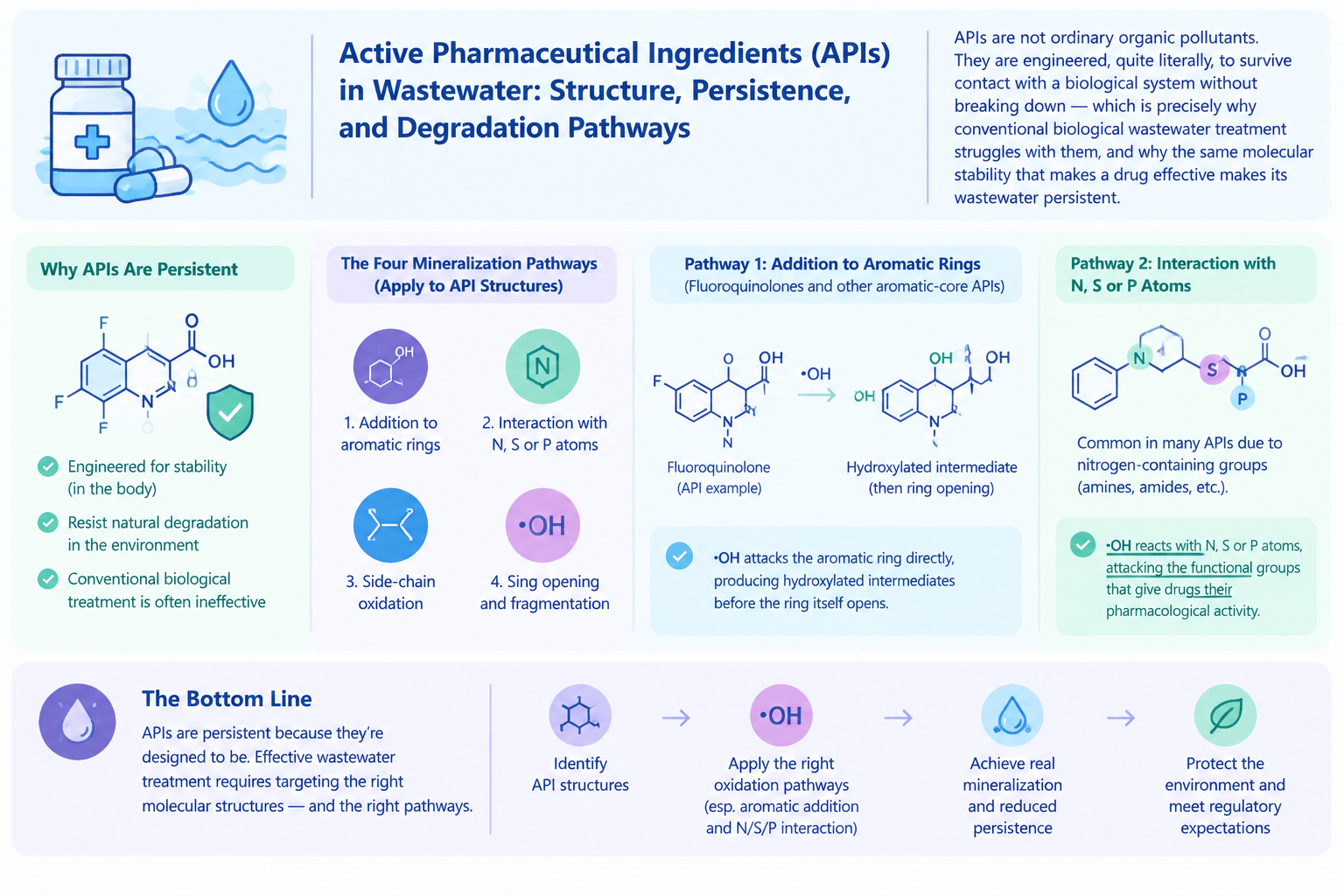
Why API Structure Resists Conventional Treatment
Three structural classes account for most pharmaceutical manufacturing wastewater load, and each resists biodegradation for a different reason:
β-lactams
Penicillins and cephalosporins. The strained four-membered β-lactam ring is reactive chemically, but the antimicrobial activity itself suppresses the microbial population meant to consume it in a biological reactor.
Fluoroquinolones
Broad-spectrum antibiotics built around a fluorinated aromatic core. The carbon-fluorine bond is one of the most stable in organic chemistry — the same property that gives fluoroquinolones their shelf life defeats biological breakdown.
Steroid-based APIs
Hormonal and corticosteroid products. The fused ring system is bulky and hydrophobic, resisting the enzymatic attack biological treatment depends on.
How Hydroxyl Radicals Actually Break These Structures Down
The four mineralization pathways covered in depth on our Hydroxyl Radicals for Wastewater Treatment page apply directly to API structures — two of them do most of the work:
Addition to aromatic rings is the dominant pathway for fluoroquinolones and other aromatic-core APIs — •OH attacks the ring directly, producing hydroxylated intermediates before the ring itself opens.
Interaction with N, S, or P atoms matters heavily here because most APIs carry nitrogen-containing functional groups (amines, amides) as part of their pharmacological design — exactly the atoms this pathway targets.
Removal vs. Mineralization: The Distinction That Matters for APIs
An API that is “removed” by COD measurement may only have been converted into a smaller intermediate — and some pharmaceutical breakdown intermediates retain partial biological activity. Complete mineralization (breakdown into CO₂, water, and inorganic salts) is the meaningful endpoint for this pollutant class specifically, not just a nice-to-have.
Both of our documented pharmaceutical deployments targeted this endpoint directly — see the Hebei and Anhui case studies for real influent/effluent data.
Working with a specific API or antibiotic class?
Talk to us about mineralization targets that address resistance risk, not just discharge compliance.