— Dense Specification Layer
Details across the BDD electrode
all the basics about boron doped diamond (BDD) electrode are explained with specific information
Electrode Type
BDD Anode
Boron-doped diamond active surface for high-overpotential electrochemical oxidation duties.
Formats
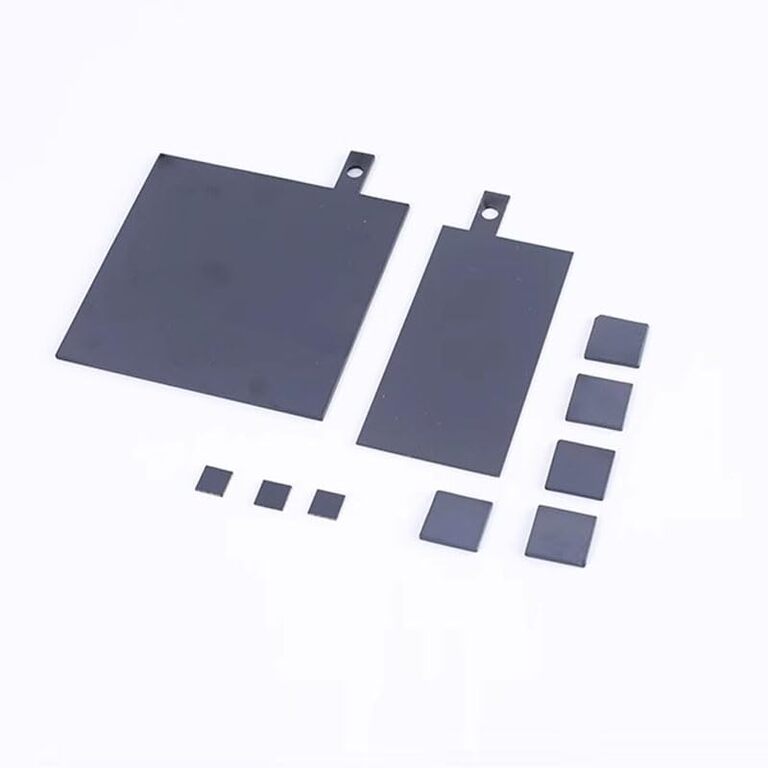
Plate / Mesh / Tube / Disc
Core collection geometries plus rods, cassettes, custom assemblies, reactor packs, and OEM programs.
Active Area
Editable by model
Use product-specific effective area; do not substitute gross envelope size for active electrode area.
Substrate
Model-dependent
Confirm whether the specific item uses silicon, niobium, titanium-supported architecture, or another validated base.
Operating Mode
Batch / recirc / flow-through
Match geometry to residence time, turbulence, mass transfer, conductivity, and electrode gap.
Power Supply
DC controlled
Pair electrode pack with current-controlled supply, cabling, busbar, polarity, and protection logic.
Process Fit
AOP / polishing / pilot
Used for persistent organics, color, odor, COD polishing, brine treatment studies, and process validation.
Documentation
Datasheet + drawing
Publish SKU-specific dimensions, electrical limits, connector type, mounting, and service notes before sales launch.
Engineered for High-Intensity Electrochemical Performance
Boron-Doped Diamond Active Layer
Conductive diamond-film surface designed for strong anodic oxidation and demanding electrochemical environments.
High Oxygen Evolution Potential
Supports advanced oxidation reactions where strong oxidizing conditions are needed for difficult organic contaminants.
Excellent Chemical Resistance
Suitable for a wide range of wastewater matrices when operated within recommended process and cleaning conditions.
Multiple Substrate Options
Available on selected conductive substrates such as silicon, niobium, titanium, tantalum, or other project-specific bases depending on requirements.
Flexible Electrode Geometry
Supplied as plate, mesh, tubular, disc, wafer, rod, or custom machined format for direct reactor integration.
Stable Process Interface
Designed to support repeatable current distribution, controlled electrode spacing, and reliable contact connection.
Pilot-to-Industrial Scalability
Suitable for bench testing, pilot demonstrations, and modular scale-up when reactor conditions are properly designed.
Strong Pollutant Degradation Potential
Applicable to treatment processes targeting color, odor, organic residues, micropollutants, and refractory COD fractions.
Custom Terminal Design
Electrical contacts, bus bars, threaded terminals, welded tabs, and sealing details can be adapted to equipment drawings.
— Selection Architecture Matrix
Turn buyer intent into the right electrode geometry
This matrix is the intelligence layer that separates a high-performing BDD category page from a simple product grid. It tells engineers where to start and which variables must be checked before quotation.
| Buyer Problem | Best Starting Product | Why It Fits | Engineering Check |
|---|---|---|---|
| Flat reactor stack or compact flow cell | BDD Plate Electrode | Simple sealing, repeatable gap, scalable active area. | Plate size, gasket path, compression, current distribution. |
| Higher contact in constrained hydraulic channel | BDD Mesh Electrode | Open area can support turbulence and flow-through contact. | Pressure drop, clogging risk, particle load, support frame. |
| Pipe reactor or annular cell | BDD Tubular Electrode | Natural fit for cylindrical housings and recirculation loops. | Diameter, length, annular gap, seal, connector location. |
| Treatability study or lab method screening | BDD Disk / Lab Kit | Controlled small area and easier bench testing. | Cell volume, stirring, reference electrode, current limit. |
| OEM replacement or repeated production | Cassette / OEM Program | Controlled drawings and repeatable service format. | Batch traceability, QA acceptance, packaging, lead time. |
— Reactor Architecture Matrix
Map BDD products to cell architecture, not just shape
Visitors often know their reactor concept before they know the correct electrode format. This section keeps the page grounded in cell architecture: plate stack, annular tube, open channel, bench cell, or OEM cartridge.
| Architecture | Typical BDD Form | Hydraulic Pattern | Collection Page CTA |
|---|---|---|---|
| Parallel plate stack | Plate electrode / reactor pack | Serpentine or straight-channel flow | Ask for active area and gasket drawing. |
| Annular pipe cell | Tubular BDD electrode | Axial flow through annular gap | Ask for tube diameter, length, and seal type. |
| Open-channel frame | Mesh or plate cassette | Flow-through / cross-flow | Ask for suspended solids and cleaning access. |
| Batch beaker / lab cell | Disc, rod, lab kit | Stirred batch or recirculated bench loop | Ask for volume, electrolyte, and test protocol. |
| OEM cartridge | Cassette / replacement set | Predefined cell channel | Ask for drawing control and lifecycle forecast. |
— Technical Specification Table
Category-level specifications built for engineering review
Unlike a single product datasheet, a category page should clarify what is common to the family and what must be confirmed per SKU. This table is intentionally explicit about placeholders.
| Category | Boron-doped diamond electrode products | Primary role | High-overpotential anode for electrochemical oxidation |
| Available forms | Plate, mesh, tube, disc, rod, cassette, stack pack, custom assembly | Active area | Set per SKU or project drawing |
| Electrical input | DC current-controlled power supply required | Connections | Lead, lug, busbar, threaded, clamped, or OEM-specified interface |
| Hydraulic mode | Batch, recirculation, flow-through, annular, cassette, or stack cell | Media compatibility | Confirm electrolyte, conductivity, pH, temperature, organics, solids, chloride, and scaling tendency |
| Procurement files | Datasheet, dimensional drawing, application questionnaire, QA record, packaging note | Page status | Values are placeholders pending final SKU data |
— Operating Envelope
Define the safe inquiry window before final electrode selection
This section should remain conservative. Use it to route buyers toward engineering review instead of publishing unsupported current-density, lifetime, or chemical-compatibility claims across the entire category.
Current Density
Publish only model-validated ranges. For early files, state that final current density depends on active area, electrolyte conductivity, reactor design, cooling, and target reaction.
Electrolyte Conductivity
BDD electrodes require a complete electrical circuit through the liquid phase. Conductivity, supporting electrolyte, feed variability, and voltage ceiling should be reviewed before sizing.
pH and Temperature
Use product-specific limits. Category pages should request operating pH, temperature, cleaning chemicals, and excursion conditions before quotation.
Scaling and Fouling
Hardness, silica, suspended solids, oils, biomass, iron, manganese, and precipitating salts can alter performance and cleaning intervals.
Chloride and Byproducts
Ask for chloride, bromide, ammonia, COD, TOC, alkalinity, and discharge objectives where oxidation byproducts or active chlorine formation may matter.
Service Life
Do not use a blanket lifetime claim for all BDD products. Tie service-life language to duty cycle, current density, chemistry, temperature, and validated application history.
— Engineering Notes
BDD electrode performance is a system outcome, not a standalone material promise.
Final performance of BDD electrode in real world performances are depends on electrode area, current distribution, electrolyte composition, mass transfer, residence time, oxidation pathway, temperature control, scale prevention, cleaning protocol, and downstream treatment objectives.
Do confirm
- Active electrode area
- Electrode gap
- Current and voltage limit
- Substrate and coating architecture
- Lead and busbar design
- Seal and gasket compatibility
- Cleaning method
- Packaging and QA requirements
Do not assume
- One chemistry fits all waters
- One lifetime fits all duties
- Gross size equals active area
- Lab data scales directly to plant flow
- Electrode only fixes mass-transfer limits
- Chloride has no byproduct implications
- Cleaning interval is universal
— Application Map
Where the Engineering Services Be Placed On BDD electrode
Our engineering and design services toward boron doped diamond (BDD) electrode encompassing electrode plate drawing, catalyst coating enhancements, quality control, treatability testing, pilot data testing, analysis, and validation,as well as performances of these non-active electrode in electrochemical reactors and electrochemical oxidation wastewater treatment system at different scales.
Drawing control
For replacement sets and OEM programs, publish revision-controlled drawings and lock the connection geometry before production quotation.
QA record
Use this block for inspection, coating verification, dimensional checks, packaging records, and batch traceability language.
Application validation
Wastewater outcomes should be tied to treatability testing, pilot data, analytical methods, and defined influent/effluent criteria.
Service planning
Make cleaning, inspection, replacement, gasket handling, and connection checks visible before purchase to reduce support friction.
— Application ranges
Where the BDD electrode belongs in the implement aspects
Explore one of the major application ranges of BDD electrode in the real world now, that is treatment of complex industrial effluents via the electrochemical oxidation wastewater treatment, that is to remove refractory pollutants and compliant with regulations, treat those waste streams considered challenging to conventional treatment methods.
01 / Application
Use BDD electrode product to route wastewater projects toward active-area review, treatability testing, energy consumptions, and byproduct assessment.
02 / Application
Landfill Leachate Trials
Position BDD products for difficult matrices where pilot data, chloride, ammonium, COD, conductivity, and scaling must be reviewed.
03 / Application
Frame the category around recalcitrant compounds, validation work, and careful process-data intake rather than one-size-fits-all claims.
04 / Application
Route academic and R&D visitors toward disc, rod, and lab-kit formats with clear bench-cell documentation.
05 / Application
Give equipment builders a clear path for cassettes, electrochemical reactor packs, replacement sets, and recurring drawing-controlled electrode programs.
06 / Application
Connect electro oxidation pilot module inquiries to flow, power, residence time, sampling plan, and operational data capture.
— applications BESIDES WASTEWATER TERATMENT
Established commercial, research and emerging applications of BDD electrode
Explore implement ranges of BDD electrode besides electrochemical oxidation wastewater treatment, that is commercial, residential, research and developing one.
07 / Application
Water disinfection
Run current through water across a BDD anode and you get in-situ ozone generation, That makes it attractive anywhere disinfection needs to happen without a chemical supply chain behind it: food-contact surface sanitizing, home and commercial appliances, pool or spa.
08 / Application
Electrochemical sensors & analysis
BDD’s sensitivity and stability support detection of heavy metals, organic pollutants, and pharmaceutical compounds — an active area of environmental monitoring and medical diagnostics research.
09 / Application
Electrochemical synthesis
BDD’s unique reactivity, cleaner conversion profile, and wide electrochemical potential window show promise for electrosynthetic applications.
10 / Application
Electrochemical hydrogen production
BDD’s water-splitting efficiency holds promise for hydrogen production as a clean energy source — an active area of sustainable energy research.
11 / Application
Neurotransmitter detection
BDD electrodes have shown promise in neuroscience research for detecting neurotransmitters, with potential therapeutic relevance for neurological disorders still being established through ongoing research.
12 / Application
Soil & groundwater remediation
Emerging research points to BDD’s potential in remediating soil and groundwater contaminated with refractory organic pollutants — a natural adjacent application to our core wastewater treatment work.
— Application Hearing / Intake
Make the category page qualify the inquiry before sales touches it.
This is the hearing section for the BDD electrode subcategory. It gives engineering, procurement, and OEM buyers a complete checklist.
| 1. Electrode target | Desired form, active area, dimensions, quantity, mounting, connection, substrate preference, and whether it is a replacement, prototype, or new reactor design. |
| 2. Process liquid | pH, temperature, conductivity, chloride, bromide, COD, TOC, ammonia, hardness, suspended solids, oil/grease, and known oxidant sensitivity. |
| 3. Cell architecture | Batch, recirculation, parallel plate, annular tube, cassette, stack, OEM housing, flow rate, pressure, electrode gap, gasket material, and cleaning access. |
| 4. Electrical limits | Power supply type, maximum current, voltage ceiling, duty cycle, polarity reversal strategy, cable route, busbar, insulation, and control interlocks. |
| 5. Decision output | Recommended product family, required drawing review, test protocol, quotation scope, lead time, documentation set, and any application-validation requirements. |
Drawing control
For replacement sets and OEM programs, publish revision-controlled drawings and lock the connection geometry before production quotation.
QA record
Use this block for inspection, coating verification, dimensional checks, packaging records, and batch traceability language.
Application validation
Wastewater outcomes should be tied to treatability testing, pilot data, analytical methods, and defined influent/effluent criteria.
Service planning
Make cleaning, inspection, replacement, gasket handling, and connection checks visible before purchase to reduce support friction.
— Resources / Downloads
Available Files
Fetch model-specific files such as product brochure, drawing checklist, as well as treatability form drafted by Evoaeo engineering team.
Product Brochure
Collection overview, electrode formats, application map, selection logic, and inquiry pathway.
Drawing Checklist
Dimensions, active area, tolerance, mounting, connection, gasket zone, and revision fields.
Treatability Form
Water chemistry, flow, target contaminants, power limits, test protocol, and analytical endpoints.
Common Questions About BDD Electrodes
BDD electrodes are used in electrochemical oxidation, advanced water treatment, electrochemical research, disinfection support, pollutant degradation, and specialty industrial processes requiring strong anodic oxidation.
BDD and MMO serve different process needs. BDD is often selected for high-intensity oxidation and refractory pollutant degradation, while MMO is commonly selected for large-area industrial electrolysis, chlorine generation, and cost-sensitive oxidation systems.
Yes. BDD electrodes can be customized by active area, thickness, substrate, terminal style, shape, and mounting interface according to project drawings.
Useful data includes wastewater type, COD/TOC, conductivity, chloride level, pH, temperature, flow rate, current density target, voltage limit, reactor dimensions, and treatment goal.
Yes. BDD electrodes can be designed for batch cells, flow-through reactors, modular stacks, and pilot systems when the mechanical and electrical design is properly matched.
Maintenance depends on wastewater and reactor design. General practice includes monitoring voltage trends, avoiding mechanical damage to the active surface, cleaning according to fouling type, and checking electrical connections regularly.
— Before you go
Build the BDD electrode quote around geometry, chemistry, and reactor architecture.
Send the drawing, liquid analysis, operating target, and electrical constraints. The response can then be structured around electrode family, active area, connection method, compatibility checks, documentation, and lead-time assumptions.
| Best next step | Pick the electrode form, then submit active area, dimensions, process liquid, reactor architecture, and electrical limits. |
| Engineering output | Recommended product family, drawing review notes, documentation requirements, pilot/testing recommendation, and quotation scope. |
| Page conversion goal | Move visitors from generic BDD interest to specific electrode geometry and application-ready inquiry. |