Pollutants – Antibiotics & APIs
Antibiotics & APIs from Pharmaceutical Wastewater
PFAS chemicals is a collection of pollutants most responsible for renewed interest in electrochemical oxidation across the industrial wastewater sector – a carbon-fluorine bond stable enough to have earned the nickname “forever chemical” needs an oxidation pathway aggressive enough to break it directly, and that’s a short list of technologies.
Reviewed for technical accuracy by Janeczka Kowalski, Process / Electrochemical Engineering. PFAS is an active and rapidly evolving regulatory area. Performance figures on this page reflect bench and published data ranges. Specific discharge targets depend on your permit jurisdiction. Verify current limits with your permitting authority. Figures and ranges on this page are engineering starting points — verify against your own pilot or vendor data before finalizing a design. The content is created by the Evoaeo engineering team led by Janeczka, All rights reserved.
Fit Rating by Compound Class
| Compound class | Fit rating | Why |
|---|---|---|
| β-lactam antibiotics | Primary Fit | Documented in the Anhui case study — BDD pilot module deployment |
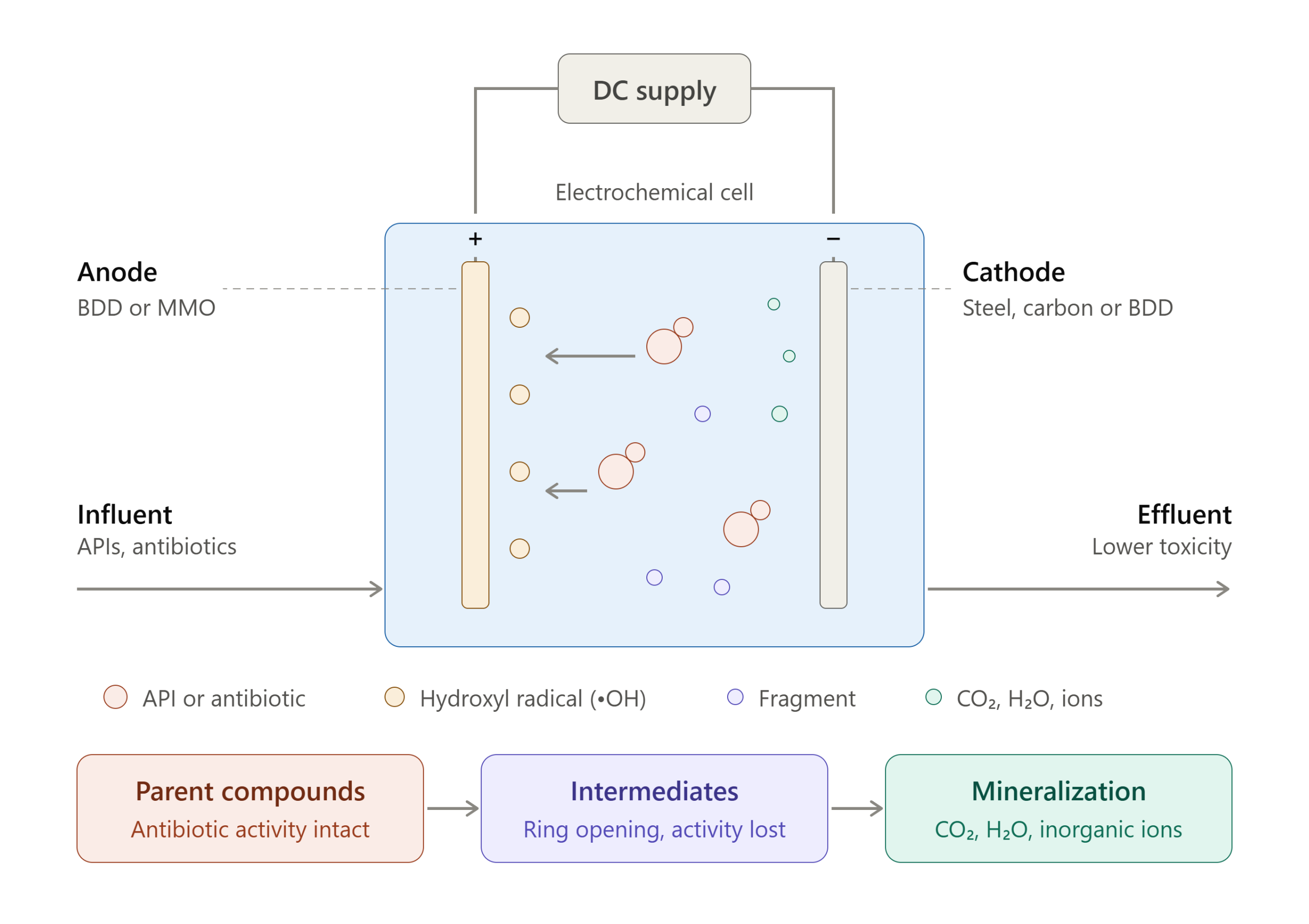
| Fluoroquinolones | Primary Fit | Aromatic core responds well to hydroxyl radical ring-opening |
| Steroid-based APIs | Complementary | Bulky, hydrophobic structures typically need longer residence time — bench testing recommended before sizing |
| Very high-concentration antibiotic streams (undiluted mother liquor) | Not a Primary Fit alone | May need dilution or pretreatment first — talk to engineering before assuming EO alone solves this |
Documented Results
Two named deployments back this rating: Hebei Pharmaceutical (COD 13,650 → ≤360 mg/L, ammonia nitrogen 680 → ≤54 mg/L) and Anhui Antibiotics Removal via BDD pilot module. For the underlying chemistry, see APIs in Wastewater: Degradation Pathways.
Not sure where your compound fits?
Send us your compound class and concentration range for a direct fit assessment.