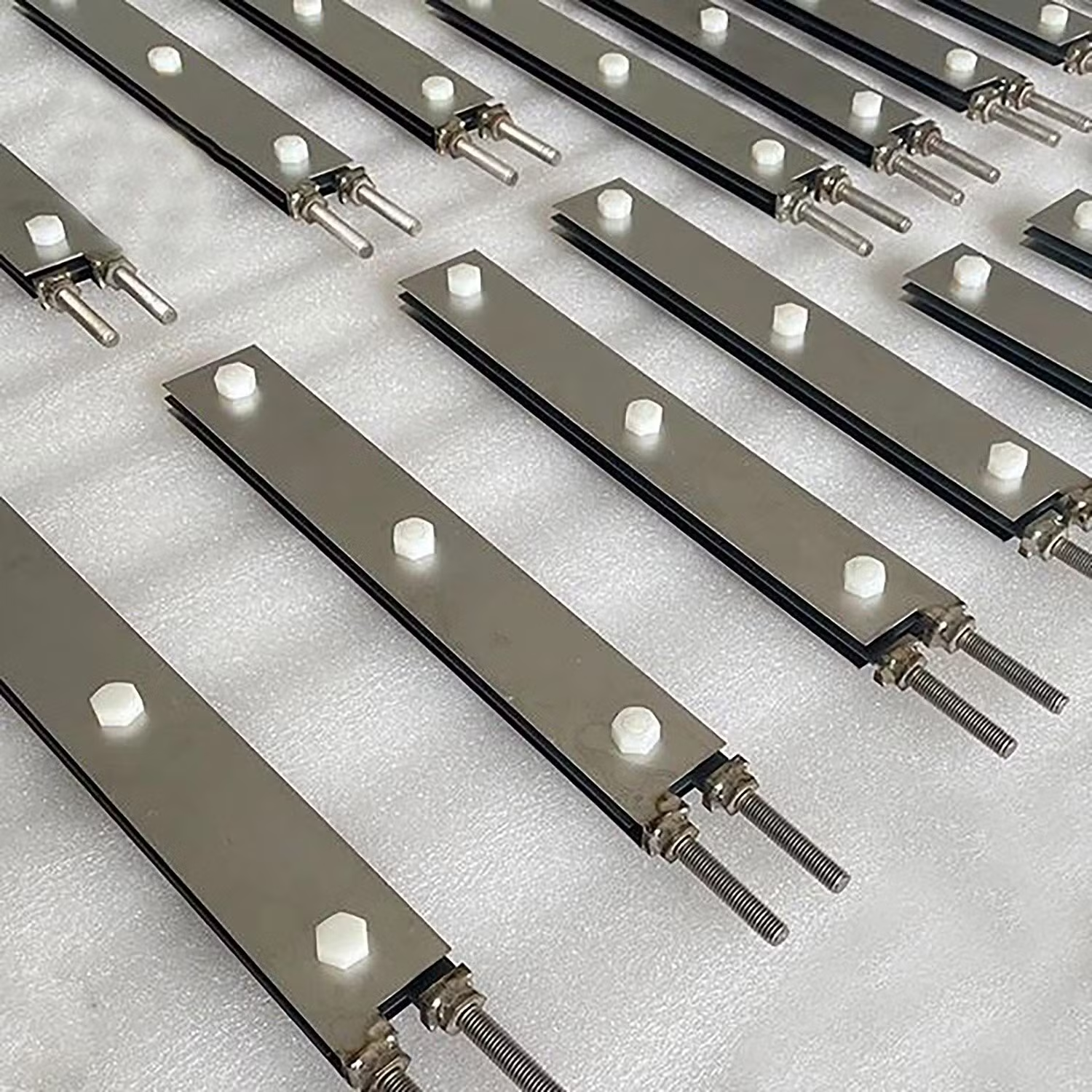
MMO Titanium Plate Anode
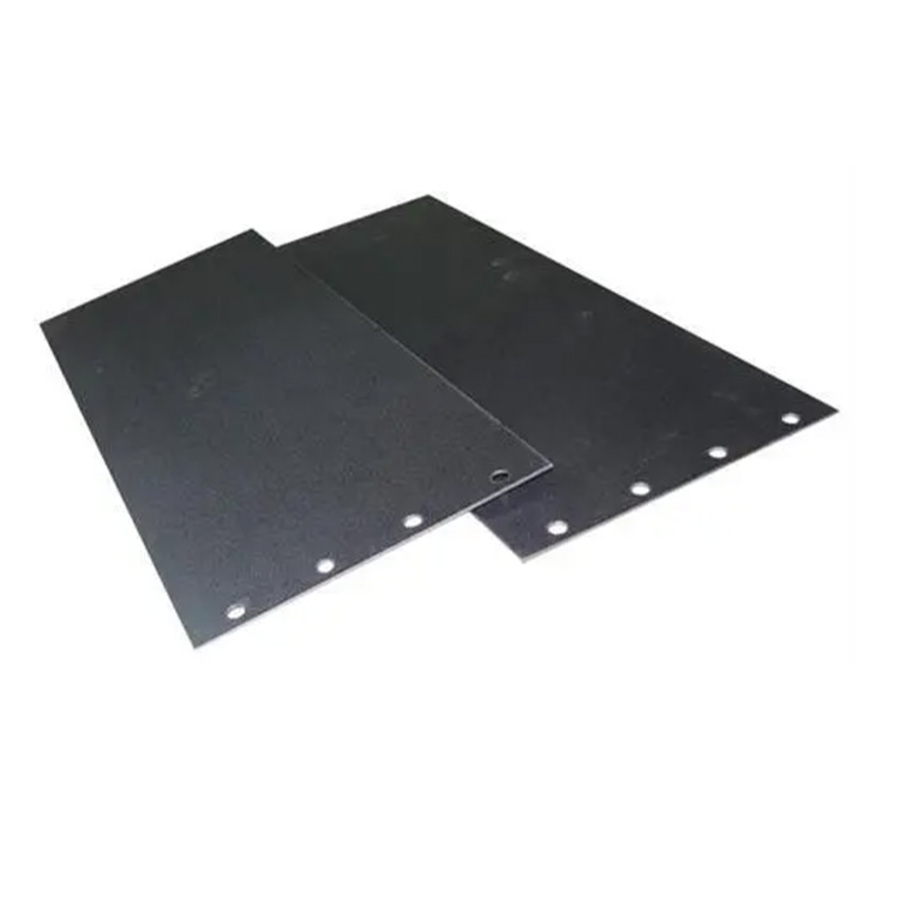
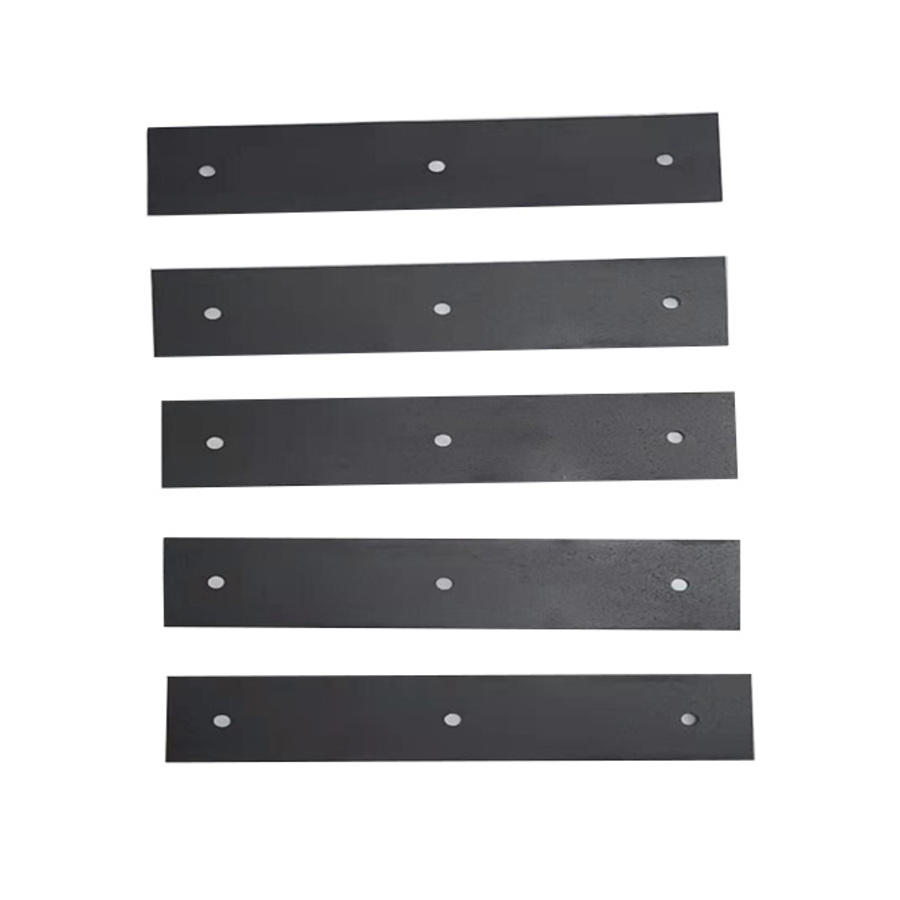
The MMO titanium plate anode is the most controlled flat-surface format in the MMO electrode range. It is selected when the electrochemical cell is built around a planar gap, a compression frame, a gasketed flow channel, or a fixed electrode stack.
The plate format gives the process engineer a known projected area. That matters when current density, voltage, heat load, removal rate, and coating life must be calculated from actual geometry rather than estimated from irregular exposure. A plate anode also gives the fabricator clear surfaces for masking, sealing, bolting, welding, and inspection. A plate anode should be chosen when the cell needs flatness, controlled spacing, and repeatable active area more than open hydraulic area. Where the process needs through-flow and gas release across the electrode plane, mesh may be better. Where the reactor is cylindrical, tube or rod geometry may be cleaner. The plate format earns its place when the housing, gasket, cathode, and flow channel are already arranged around a flat electrode face.
MMO Titanium Plate Anode is usually specified for:
* Filter-press electrochemical oxidation cells
* Sodium hypochlorite and active chlorine generation cells
* Plate-frame wastewater treatment reactors
* Compact brine electrolysis modules
* OEM chlorination equipment
* Replacement anodes for flat-cell systems
* Pilot reactors where scale-up data must remain traceable
Feel free to contact us if you are seeking MMO electrode plates for specific applications, we offer MMO electrode customization, MMO electrode assembly, as well as MMO replacement anode set, as Evoaeo engineering team is always here to support you with solid engineering data, solutions, and products to tackle your challenges.
What Makes Our MMO Titanium Plate Anode Different
Find out how our MMO titanium plate anode differ from regular MMO electrode you encountered:
Defined active area
The coated area can be calculated, inspected, and repeated from batch to batch. This is important for current-density control, cell-voltage comparison, and pilot-to-production scale-up.
Electrode gap control
A rigid plate helps maintain a stable distance from the cathode. In narrow-gap cells, even small distortion can create local current concentration, gas blockage, or uneven coating wear.
Gasket-compatible perimeter
The plate can be supplied with an uncoated sealing land, masked perimeter, machined edge, or controlled bolt-hole area. This allows the electrode to sit inside a compression frame without placing the gasket directly on the catalytic coating.
Selective coating layout
The catalytic layer does not need to cover the whole plate. Coating can be limited to the wetted reaction zone, reducing unnecessary coating cost and preventing active coating in dead zones.
Strong current collector integration
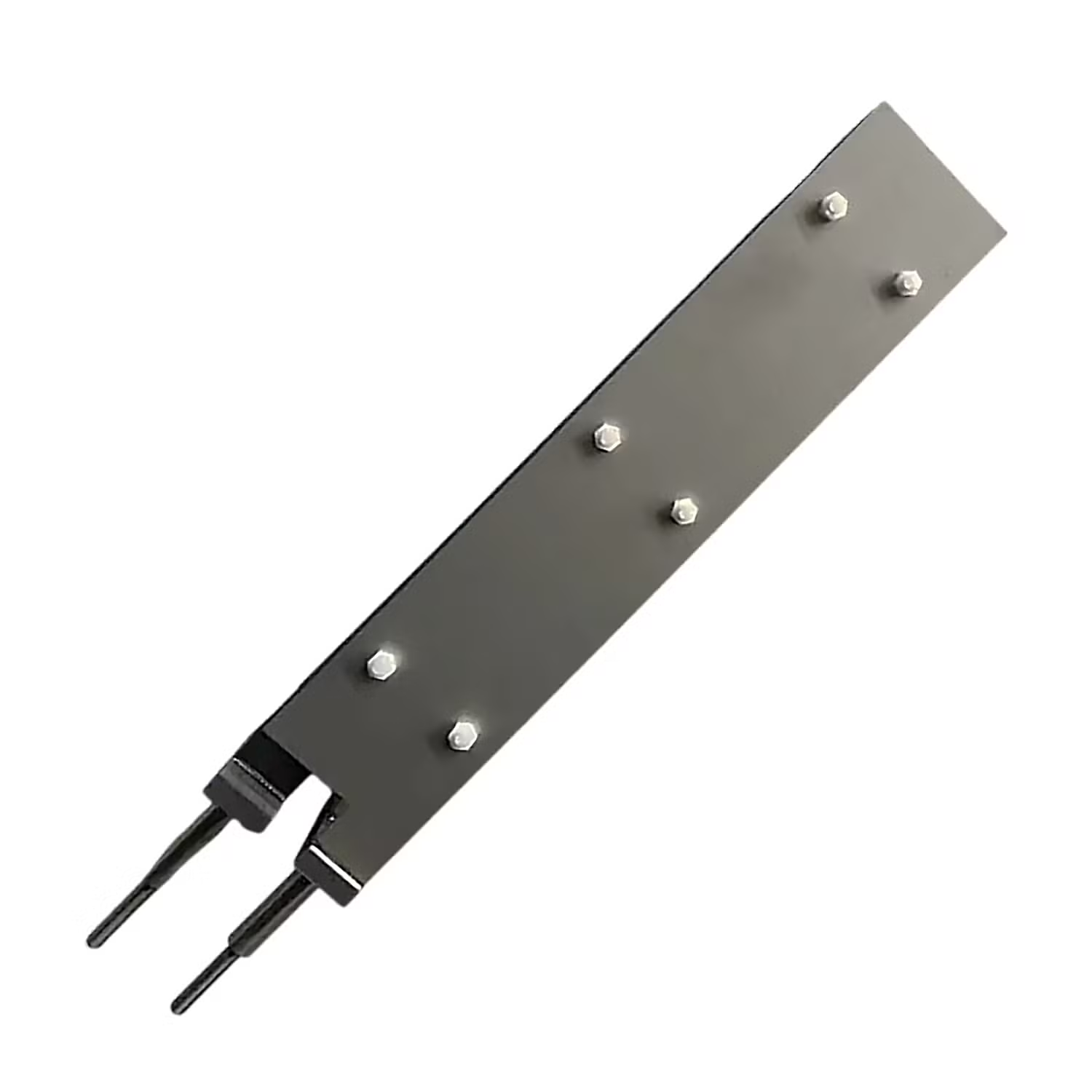
A plate can accept welded titanium bus-bars, extended tabs, bolted lugs, threaded terminals, hanger contacts, or OEM-specific current collectors. Larger plates should not rely on a small single contact if current distribution matters.
Good inspection access
Flat surfaces allow easier inspection of coating uniformity, masking edge, discoloration, scale pattern, pitting, coating loss, and mechanical distortion.
Recoating potential
A titanium plate with sound flatness, clean surface, intact bus-bar, and no deep corrosion may be stripped and recoated after the original catalytic layer reaches end of service.
Persistent supports and services
Premium product quality, technical supports, warranty position, spare parts, and field service workflow to help you utilizing this group of fine catalyst electrode material to their optimal status.
Main features of Our MMO Titanium Plate Anode
Check major features of our MMO titanium plate anode below, check how we can solve your problems with substrates, coating, compatibility, etc.
Controlled planar reaction surface
The plate provides a stable catalytic face for cells where the reaction occurs across a flat liquid channel. This is useful in filter-press, plate-frame, and stacked electrochemical modules.
MMO coating selected by duty
The coating can be chosen for chlorine evolution, oxygen evolution, electrochemical oxidation, or mixed wastewater oxidation duty. Coating selection should follow electrolyte chemistry, current density, temperature, pH, chloride level, and service-life target.
One-side or two-side active coating
Single-side coating is used where only one face is exposed to electrolyte. Two-side coating is suitable when both faces operate between cathodes or in a bipolar-style arrangement.
Masked gasket lands
Uncoated gasket lands help protect the coating from compression damage and improve sealing reliability in gasketed cells.
Welded titanium bus-bar options
Current collection can be supplied through welded titanium tabs, side bus-bars, extended ears, or reinforced terminal sections. For wide plates, current feed should be reviewed to avoid overloaded edges.
Hole and slot customization
Bolt holes, slots, alignment holes, manifold openings, and positioning notches can be added before coating. These areas should be included in the masking and inspection plan.
Stable replacement geometry
For retrofit systems, the plate can be matched to the original cell body, including hole pattern, gasket line, terminal position, active coating window, and polarity orientation.
Serviceable plate construction
Flat plate anodes can be removed, cleaned, inspected, measured, and replaced without dismantling the full electrochemical system when the reactor is designed for service access.
Full Specification Sheet of MMO Titanium Plate Anode
The original specification table has been rebuilt as a separate Elementor-native row area directly beneath this heading/description section. Each row is built from sections, columns and Text Editor widgets.
Product type
Flat MMO-coated titanium plate anode
*Contact our team if you want to order different types of MMO electrode.
Substrate
Titanium plate, commonly Grade 1 or Grade 2
Fabrication and service on requirements
Coating duty
Chlorine evolution, oxygen evolution, electrochemical oxidation, hypochlorite generation, disinfection, or project-specific anodic duty
*Coating according to your application
Plate geometry
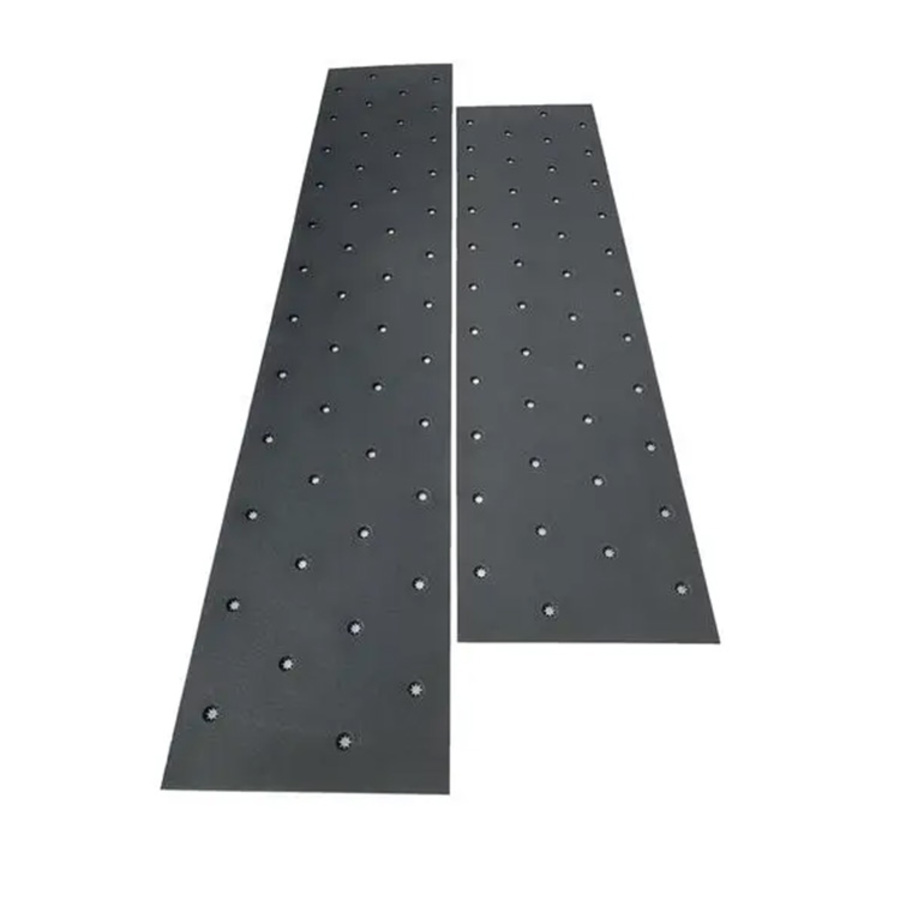
Rectangular plate, square plate, perforated plate, slotted plate, tabbed plate, notched plate, framed plate, or drawing-based profile
*Various shapes, all designed to fit perfectly into your design
Coating side
One side, both sides, edge included, edge masked, or selective active-zone coating
Active area
Coated wetted area only; separate from total plate size, gasket land, bolt zone, and terminal area
*Precise calculation for specific scenario
Plate thickness
Selected by stiffness, current load, reactor gap, compression force, and handling method
Edge treatment
Deburred edge, radius edge, sealed edge, masked edge, machined edge, or gasket-ready perimeter
Hole pattern
Bolt holes, alignment holes, slots, flow windows, or custom cut-outs made before coating
Current collector
Welded titanium bus-bar, extended tab, bolted lug, threaded terminal, hanger bar, or custom OEM connector
Sealing interface
Uncoated gasket land, compression frame, O-ring groove, flat seal face, or housing-defined seal zone
Typical cell format
Plate-frame cell, filter-press cell, chlorination plate stack, compact EO reactor, OEM cartridge, or replacement cell pack
Service route
Replace, clean, inspect, recoat, rebuild terminal, or reproduce as repeat OEM part
Best-Fit Applications
Where MMO Titanium Plate Works
Explore the most suitable applications of our MMO titanium plate anode, concluded by our engineering team
Plate-frame electrochemical oxidation cells
The plate anode is well suited to rectangular electrochemical oxidation channels where active area, flow path, and current density must remain repeatable. It is commonly used in pilot and production EO reactors for conductive industrial wastewater.
Sodium hypochlorite generation
In brine electrolysis cells, MMO plate anodes can be arranged in stacks with cathode plates and spacers to produce active chlorine. Coating selection should match brine strength, operating current, temperature, hardness, and polarity mode.
Saltwater chlorination
Flat MMO plates are common in chlorinator cells where replacement fit, polarity direction, scale behavior, and plate spacing determine service performance.
Wastewater polishing reactors
For textile effluent, landfill leachate polishing, metal finishing rinse treatment, and chemical wastewater oxidation, plate anodes provide a defined catalytic area for process testing and reactor sizing.
Cyanide destruction and metal finishing treatment
Plate anodes can support controlled oxidation in conductive rinse streams where cell geometry, current density, and reaction endpoint must be managed.
OEM electrolysis modules
Equipment manufacturers can use plate anodes as repeat parts inside cartridge cells, plate packs, and compact electrochemical modules.
Looking for application beyond?
All you need to do is tell us exact implements, we will spot your pain point, then offer products, service, as well as industrial solutions all aimed to solve your problem with current project.
— Exclusive BIG NO NO Notes FROM EVOAEO TEAM
Basic Guidance for MMO Titanium Plate Anode
Choose wire or ribbon if the current path must follow a long routed line.
Choose a full chlorinator plate pack if the buyer needs anode plates, cathodes, spacers, polarity sequence, and terminals as one assembled cell core.
Do not specify a plate only by outside dimensions. A useful plate drawing must show active area, masking zone, coating side, hole pattern, edge treatment, terminal design, and installation orientation.
Where the Plate Anode Should Not Be Forced
Use another MMO format when the cell geometry does not support a flat active face.
Choose mesh if the fluid must pass through the electrode plane or if gas release through the electrode is more important than a sealed flat surface.
Choose tubular geometry if the reactor is annular or pipe-based.
Choose rod if the design needs a compact linear electrode rather than a broad face.
— Design Notes for Engineers
Design Notes for MMO Titanium Plate Anode
Hole edges require attention. Coating around punched or drilled holes can be weak if burrs remain. Holes should be deburred and cleaned before coating.
For wastewater service, scale and solids should be considered early. A plate with a narrow gap can perform well in clean conductive streams but may foul quickly if hardness, silica, suspended solids, oil, or polymer carryover is high.
For chlorination service, polarity reversal should be specified if used. A plate designed for fixed polarity should not be assumed suitable for reverse-polarity cleaning cycles.
For replacement projects, inspect the old plate before copying it. Uneven coating loss, terminal overheating, scale marks, gasket damage, and pitting often show what needs to be corrected.
Current density should be calculated from the coated wetted area, not from total plate size. Gasket lands, bolt zones, dry tabs, masked edges, and bus-bar regions should be excluded unless they are deliberately exposed and active.
Flatness matters in narrow-gap cells. A warped plate can create a local high-current region, uneven gas release, and early coating wear. For larger plates, specify allowable flatness and handling method.
Terminal design should be checked against current load. A narrow tab on a wide plate can overfeed the area near the terminal and underfeed the far edge. Large plates may need side bus-bars, multiple feed points, or reinforced current collectors.
Masking should be designed before coating. Masking after coating is not a substitute for a controlled coating boundary. Gasket areas and bolted contact zones should be shown clearly on the drawing.
— Quality and Inspection Points
Quality Assessment for MMO Titanium Plate Anode
Check terminal dimensions and orientation.
Confirm polarity mark and flow-direction mark where required.
Verify plate fit against gauge, housing, or reference sample for OEM work.
Protect coated faces from rubbing during packing.
Separate coated surfaces from bolts, spacers, terminals, and loose hardware.
Record coating batch, drawing revision, and active-area definition for repeat supply.
Where the Plate Anode Should Not Be Forced
Verify titanium grade, plate thickness, and flatness.
Confirm total plate size against drawing.
Confirm active coated area separately from total area.
Check one-side, two-side, edge, or selective coating requirement.
Inspect deburring around holes, slots, and cut-outs before coating.
Confirm masking at gasket lands, terminal zones, bolt holes, and dry sections.
Inspect coating continuity across the central active zone.
Check coating quality near edges, corners, holes, and bus-bar welds.
Verify bus-bar weld quality and electrical continuity.
Resources / Downloads
MMO Titanium Electrode Plate Anode Datasheet
Coating options, substrate data, current-density envelope and standard geometry list.
Reactor Fitment Checklist
Maintenance Guide
Application Section
Send the plate drawing, active coating area, coating side, terminal design, electrolyte chemistry, operating current, voltage range, and cleaning method. We will recommend the MMO coating system, masking layout, bus-bar design, and manufacturing route for the plate anode.
MMO Titanium plate anode FAQ
This section is set to resolve the questions buyers ask before specifying MMO electrodes for electrochemical oxidation, chlorination, hypochlorite generation, electrowinning, and cathodic-protection systems.
Use the FAQ as a design filter
Selection: compare MMO against BDD and define coating chemistry.
Integration: match geometry, terminal, gap, and reactor interface.
Operation: verify current density, scaling control, residual oxidants, and service-life assumptions.
Best answers require real matrix data
For final electrode selection, collect chloride, conductivity, pH, temperature, target contaminant, COD/TOC, flow rate, required oxidant output, and reactor drawings. These fields determine coating formula, electrode geometry, busbar design, and warranty envelope.
Is an MMO titanium plate anode the same as an MMO mesh anode?
No. A plate anode provides a solid flat active surface. A mesh anode provides open-area flow and better gas release through the electrode plane.
Can the plate be coated on both sides?
Yes. Two-side coating is used when both faces are exposed and active. One-side coating is used where the opposite side faces a wall, frame, or inactive zone.
Should the gasket land be coated?
Usually no. In gasketed cells, the sealing land is commonly left uncoated or masked to avoid compressing the catalytic layer and to improve sealing reliability.
Can bolt holes be coated?
They can be, but they should be specified. In many designs, bolt holes and contact zones are masked or excluded from the active coating area.
Can a used titanium plate be recoated?
Often yes, if it remains flat, clean, mechanically sound, and free from deep pitting, weld damage, or terminal overheating.
Why does active area matter?
Current density is calculated from active coated area. If the active area is wrong, the coating may be overloaded or the cell may underperform.
What information is required for quotation?
Provide plate drawing, active area, coating side, hole pattern, terminal design, electrolyte chemistry, current, voltage, pH, temperature, chloride level, electrode gap, and cleaning method.
Still unsure ?
Send your wastewater matrix, reactor drawing, and target duty. The engineering team can convert the application case into coating selection, electrode geometry, terminal design, current-density range, and expected maintenance plan.
Request MMO Electrode Sizing & Coating Review
Use this submission block to collect the exact process data needed for MMO electrode selection, coating formulation, connection design, and reactor-fit review. It is built for single-product pages inside the MMO Electrode Series, so visitors can move from product evaluation to technical inquiry without leaving the page.
Data That Speeds Up Sizing
Best results come from COD/TOC, chloride, conductivity, pH, temperature, target removal, flow rate, and any inhibitor notes. A lab report or reactor drawing is enough for first-pass review.
What You Receive Back
Typical response includes recommended MMO product type, coating direction, active area estimate, current-density window, connection notes, and whether a lab/pilot test is required before scale-up.
Use Cases Covered
Electro-oxidation reactors, active chlorine generation cells, seawater electrochlorination, electrowinning, cathodic protection, acid/alkaline electrolyte service, and custom OEM stacks.
Send Operating Data for MMO Electrode Plate Review
Complete the available fields only. Unknown values can be left blank; our engineering team will request missing data when required for electrode sizing.