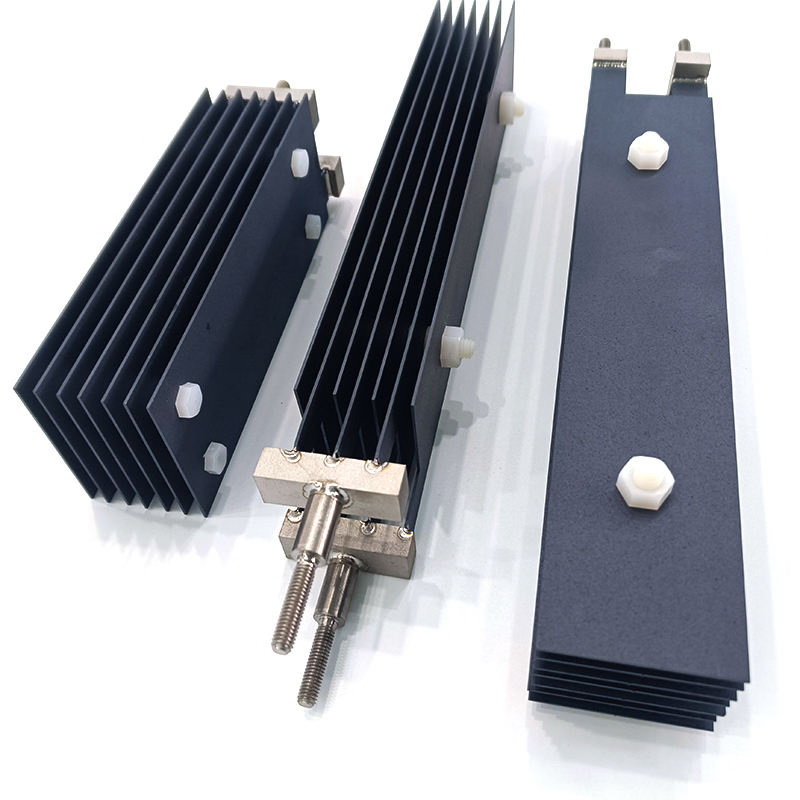
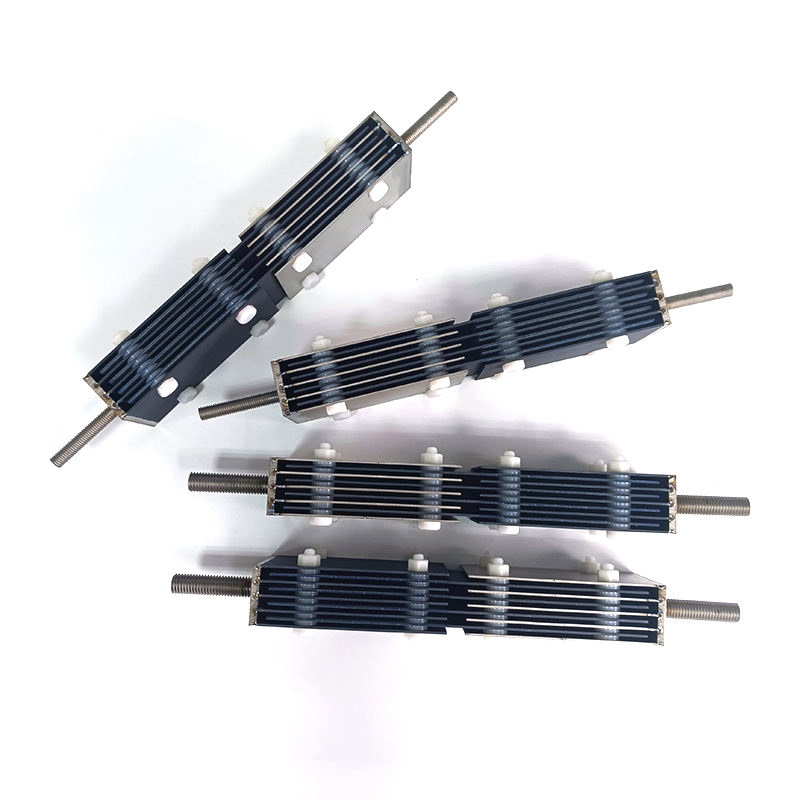
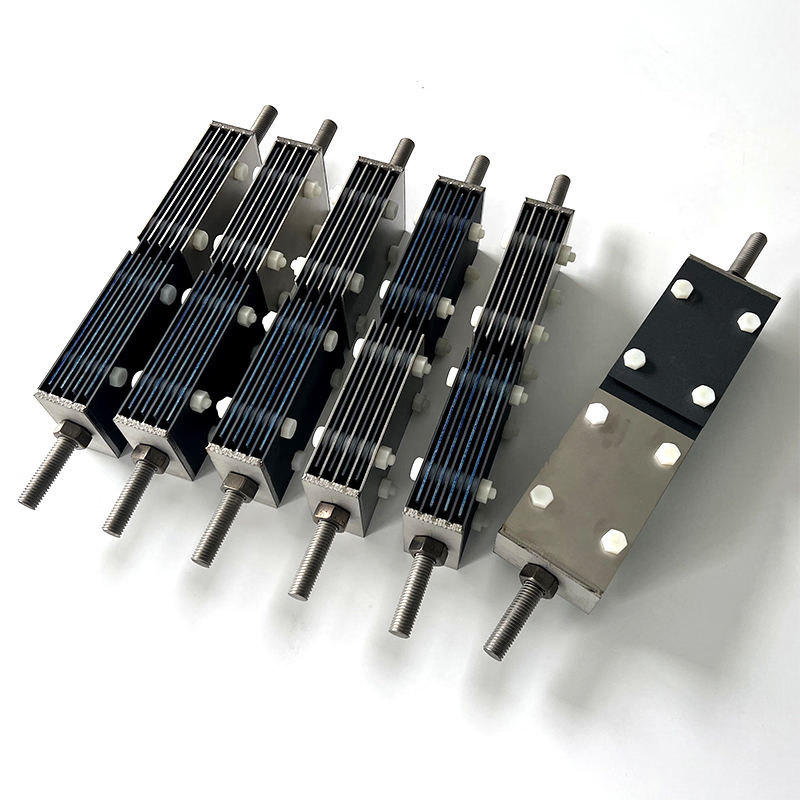
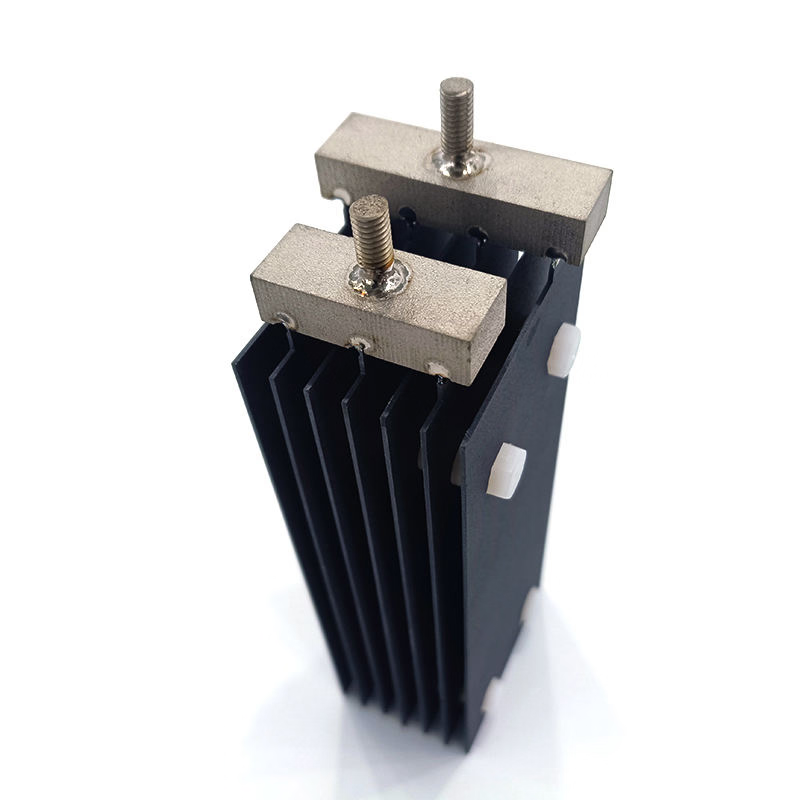
MMO Titanium Plate Anode
The custom MMO electrode assembly is the engineered package above the individual electrode.
A plate anode solves a flat active surface. A mesh anode solves open-area flow. A tubular anode solves a cylindrical cell. A rod, wire, strip, disc, or basket solves a specific geometry. A custom electrode assembly solves the whole electrochemical interface: anode, cathode, spacing, current entry, flow exposure, sealing, mounting, polarity, service access, and installation fit.
This product is selected when the process cannot be reduced to one coated titanium component. The buyer may have a reactor housing, a failed cell, a pilot unit, a new OEM product, or a process requirement that needs the electrode package to be designed as one functional unit.
The assembly may include MMO-coated titanium anodes, uncoated titanium current collectors, cathodes, spacers, gaskets, O-rings, bus-bars, cable transitions, insulation plates, terminal blocks, mounting frames, flow distributors, membrane supports, or cartridge hardware. The exact scope depends on the reactor.
The custom assembly is the right choice when electrochemical performance depends on how all parts work together, not only on the coating applied to one anode.
A custom MMO electrode assembly is a project-specific electrochemical module built from coated titanium anodes and supporting hardware matched to the operating duty. The assembly is designed from reactor geometry, water or electrolyte chemistry, target reaction, current density, hydraulic path, mechanical fit, service interval, and electrical connection.
The anode coating is selected for the required anodic duty: chlorine evolution, oxygen evolution, electrochemical oxidation, disinfection, metal recovery, cathodic protection current discharge, or a defined specialty reaction. The cathode and support structure are selected around conductivity, gas release, scaling tendency, corrosion resistance, cleaning method, and contact stability.
The assembly is a controlled electrochemical build. It can be supplied as a drop-in cartridge, removable electrode pack, plate-frame insert, coaxial electrode module, tank-mounted rack, compact chlorination core, pilot reactor insert, or OEM-ready subassembly. The aim is to deliver a working electrode system that fits the equipment and survives the chemistry.
What Makes Our MMO Titanium Plate Anode Different
Find out how our MMO titanium plate anode differ from regular MMO electrode you encountered:
Built around the reactor
The assembly follows the housing, flow path, power supply, mounting interface, and service method. The electrode does not force the reactor to accept a catalog shape.
Anode and cathode designed together
The MMO anode is only one side of the cell. Cathode material, cathode surface area, hydrogen release, scale behavior, and cleaning method can affect voltage as much as the anode coating.
Fixed electrode spacing
Gap control can be built into the assembly with spacers, sleeves, frames, ceramic standoffs, polymer insulators, gasket compression, machined shoulders, or cartridge supports.
Engineered current collection
Current can be distributed through welded titanium bus-bars, bolted lugs, hanger bars, sealed cable heads, side rails, multi-point feeds, or reinforced current collectors. A good assembly avoids forcing all current through a weak corner or undersized tab.
Defined active and inactive zones
Coated areas, masked areas, gasket lands, terminal zones, dry contacts, weld regions, and spacer contact points are separated clearly. This prevents unnecessary coating exposure and protects sealing or mounting surfaces.
Materials selected as a package
The anode, cathode, spacers, fasteners, seals, insulation, cables, and frame must all tolerate the same chemistry. One incompatible screw or gasket can compromise the full assembly.
Service access designed in
The assembly can be built for cleaning, inspection, recoating, anode replacement, cathode replacement, gasket renewal, or full cartridge exchange.
Documentation for repeat builds
Drawings, active-area records, polarity maps, material lists, coating batches, inspection records, and packing lists can be controlled for repeat production or OEM service.
Main features of Our MMO Titanium Plate Anode
Check major features of our MMO titanium plate anode below, check how we can solve your problems with substrates, coating, compatibility, etc.
Complete electrode package
The assembly can include MMO anodes, cathodes, spacers, frames, seals, current collectors, terminals, fasteners, insulation, and installation accessories.
Coating selected by actual duty
MMO coating is specified according to electrolyte chemistry, current density, pH, chloride level, temperature, polarity mode, cleaning method, and target reaction.
Matched cathode design
Cathode material and surface geometry are selected for hydrogen release, scale tendency, corrosion resistance, electrical contact, and cleaning method.
Controlled gap and alignment
Built-in spacers and alignment features help maintain electrode spacing through installation, operation, cleaning, and replacement.
Custom current-feed layout
Bus-bars, tabs, cable heads, lugs, and feed points can be designed to reduce voltage drop and uneven current distribution.
Seal and gasket integration
O-ring lands, flat gasket surfaces, compression frames, insulated sleeves, and cartridge seals can be integrated into the electrode package.
Modular service format
Assemblies can be supplied as removable cartridges, replacement racks, rebuild kits, pilot inserts, or OEM wet-end modules.
Recoating-aware design
Where lifecycle cost matters, the assembly can be designed so MMO-coated elements can be removed, inspected, stripped, recoated, and reinstalled.
Full Specification Sheet of MMO Titanium Plate Anode
The original specification table has been rebuilt as a separate Elementor-native row area directly beneath this heading/description section. Each row is built from sections, columns and Text Editor widgets.
Product type
Custom MMO electrode assembly, electrode rack, cartridge, stack, insert, plate pack, or wet-end module
*Contact our team if you want to order different types of MMO electrode.
Anode format
Plate, mesh, tube, rod, wire, ribbon, strip, disc, basket, or mixed geometry
Fabrication and service on requirements
Cathode format
Plate, mesh, tube, rod, sleeve, screen, stainless steel, titanium, nickel alloy, graphite, or project-specific material
*Coating according to your application
Coating duty
Chlorine evolution, oxygen evolution, electrochemical oxidation, hypochlorite generation, disinfection, electrowinning, CP duty, or specialty anodic reaction
Assembly scope
Anodes only, anode/cathode set, full electrode pack, removable cartridge, rack, frame, or OEM subassembly
Active area
Coated wetted area recorded by electrode position; separate from total part size
*Precise calculation for specific scenario
Electrode gap
Fixed by spacers, gaskets, frames, sleeves, machined supports, molded holders, or project hardware
Current collection
Welded titanium bus-bar, bolted lug, hanger bar, copper-cored header, cable head, threaded terminal, or sealed feed through
Seal system
O-ring, flat gasket, compression seal, flange seal, cartridge seal, gland, threaded cap, or custom wet-end seal
Support material
Titanium, PVDF, PTFE, PVC, CPVC, PEEK, ceramic, stainless steel, or project-specific compatible material
Flow relationship
Cross-flow, axial flow, radial flow, annular flow, through-pack flow, immersion, recirculation, or tank-mounted operation
Service model
Replace full assembly, replace anode elements, recoat anodes, renew cathodes, replace spacers, rebuild terminals, or supply repeat service kit
Documentation
Drawing, material list, polarity map, active-area record, coating batch, inspection report, packing list, and installation notes
Best-Fit Applications
Where MMO Eletrode Assembly Works
Explore the most suitable applications of our MMO electrode assembly, validated and concluded by our engineering team
Electrochemical oxidation systems
A custom MMO electrode assembly can combine coated anodes, cathodes, spacers, seals, and current collectors into a fitted module for wastewater oxidation reactors where current density, flow path, and cleaning access must be controlled.
Chlorination and hypochlorite generation
The assembly can be adopted for active chlorine production, brine or saltwater flow, gas release, electrode gap, reverse-polarity cleaning, and field replacement requirements.
Retrofit reactor upgrades
Where the reactor body is usable but the electrode package is obsolete or underperforming, a custom assembly can restore function while improving terminal design, coating duty, spacer layout, or service access.
Metal recovery cells
Custom assemblies can be configured for electrowinning or recovery systems where anode geometry, cathode spacing, hanger contact, electrolyte compatibility, and cleaning method determine performance.
Compact OEM modules
OEM equipment can use a custom assembly as a controlled wet-end cartridge, with fixed electrode geometry, terminal orientation, material list, QA records, replacement strategies.
Pilot and scale-up work
Pilot assemblies allow the engineer to test coating, current density, gap, flow, fouling, cleaning method, and power demand before committing to full-scale reactor design.
Looking for application beyond?
All you need to do is tell us exact implements, we will spot your pain point, then offer products, service, as well as industrial solutions all aimed to solve your problem with current project.
— Exclusive BIG NO NO Notes FROM EVOAEO TEAM
Basic Guidance for MMO Electrode Assembly
Do not combine materials without checking chemical compatibility. Seals, spacers, fasteners, sleeves, and cable insulation must tolerate the same environment as the electrodes.
Do not design a permanently sealed assembly if the anode is expected to require recoating or periodic cleaning.
Do not reduce electrode gap only to lower voltage. Narrow gaps can trap gas, collect scale, increase pressure drop, and make cleaning more difficult.
Do not approve production from a concept sketch alone. A custom assembly needs controlled dimensions, active-area definition, polarity layout, material list, and current-feed design.
When the Custom Assembly Is Not the Right Fit
Use a standard MMO plate, mesh, tube, rod, wire, ribbon, disc, or basket when a single electrode geometry solves the application.
Use a replacement anode set when the goal is to restore an existing system without changing the electrode package.
Use an OEM electrode program when the assembly has already been validated and now needs repeat supply, labels, packaging, and lifecycle control.
Do not request a custom assembly from coating preference alone. The cell geometry, current load, cathode material, flow path, sealing method, and service method must be known.
— Design Notes for Engineers
Design Notes for MMO Electrode Assembly
Start with the process and cell envelope. Electrode shape should follow flow path, available space, counter-electrode layout, and service access.
Calculate current density from true coated wetted area. Do not use outside assembly dimensions as the active-area basis.
Design the cathode with the same discipline as the anode. Cathode scale, hydrogen release, surface finish, material selection, and contact resistance affect cell voltage and maintenance.
Check bus-bar and terminal sizing for continuous current. A weak current collector can cause heating, voltage drift, coating wear near the feed point, and cable damage.
Show all inactive zones on the drawing. Gasket lands, masked ends, spacer contact points, terminal pads, threaded sections, and dry leads should be visible in the specification.
Select spacer and seal materials from actual chemistry. Chloride, oxidants, high pH, low pH, temperature, solvents, and cleaning acids can destroy common plastics and elastomers.
For wastewater service, avoid hidden dead zones. Blind cavities, tight corners, narrow uncleanable gaps, and shielded electrode areas can collect solids, grease, scale, or biofilm.
For chlorination systems, design gas release into the assembly. Hydrogen and chlorine-related gases must leave the electrode gap without blanketing active surfaces.
For electrowinning assemblies, check anode/cathode alignment and contact face. Uneven spacing or poor hanger contact can affect deposit quality.
If the assembly will be recoated later, make the coated parts removable. A fully welded structure may reduce initial cost but increase lifecycle cost.
For OEM or repeat production, design for inspection. If a dimension, gap, weld, or coating boundary cannot be checked, it cannot be controlled reliably.
— Quality and Inspection Points
Quality Assessment for MMO Electrode Assembly
Confirm fastener material and insulation compatibility.
Check frame flatness, cartridge alignment, and mounting-hole position.
Verify flow direction marking where required.
Confirm no coated surface rubs against hardware in the assembled condition.
Check that the assembly can be cleaned, removed, or serviced as intended.
Include drawing revision, coating batch, material list, and inspection record.
Pack coated surfaces, seals, cables, and terminals so they cannot damage each other during shipment.
Quality Check and Assurances
Verify all wetted materials against electrolyte chemistry.
Confirm anode coating family, coating loading, and coating zones.
Record active coated area for each MMO element.
Confirm cathode material, exposed area, and surface finish.
Check electrode gap and spacer dimensions.
Verify polarity map before final assembly.
Inspect bus-bar welds, lugs, cable heads, bolted joints, and terminal interfaces.
Check electrical continuity through current collectors.
Check electrical isolation between opposite-polarity parts.
Inspect gasket lands, O-ring grooves, sealing faces, and compression surfaces.
Resources / Downloads
MMO Electrode Assembly Datasheet
Coating options, substrate data, current-density envelope and standard geometry list.
Reactor Fitment Checklist
Maintenance Guide
Application Section
Send the plate drawing, active coating area, coating side, terminal design, electrolyte chemistry, operating current, voltage range, and cleaning method. We will recommend the MMO coating system, masking layout, bus-bar design, and manufacturing route for the plate anode.
MMO Electrode ASSMEBLY FAQ
This section is set to resolve the questions buyers ask before specifying MMO electrode assembly for electrochemical oxidation, chlorination, hypochlorite generation, electrowinning, and cathodic-protection systems.
Use the FAQ as a design filter
Selection: compare MMO against BDD and define coating chemistry.
Integration: match geometry, terminal, gap, and reactor interface.
Operation: verify current density, scaling control, residual oxidants, and service-life assumptions.
Best answers require real matrix data
For final electrode selection, collect chloride, conductivity, pH, temperature, target contaminant, COD/TOC, flow rate, required oxidant output, and reactor drawings. These fields determine coating formula, electrode geometry, busbar design, and warranty envelope.
Is a custom MMO electrode assembly the same as a custom anode?
No. A custom anode is one coated electrode. A custom assembly may include MMO anodes, cathodes, spacers, seals, bus-bars, frames, terminals, insulation, and mounting hardware.
When is a custom assembly necessary?
It is necessary when fit, spacing, polarity, flow path, sealing, current distribution, service access, or multiple electrode components determine performance.
Can the assembly include cathodes?
Yes. Cathodes are often included when the cell requires controlled spacing, matched materials, replacement convenience, or repeatable OEM production.
Can different MMO electrode shapes be combined?
Yes. Plate, mesh, tube, rod, wire, ribbon, disc, and basket elements can be combined if the reactor geometry and current distribution require it.
Can an old assembly be reverse-engineered?
Often yes. A sample, drawing, housing measurement, clear photos, electrical data, electrolyte chemistry, and failure history can be used to recreate or improve the assembly.
Can the coated parts be recoated later?
Yes, if the assembly is designed with removable coated elements and the titanium substrate remains sound after service.
What information is required for quotation?
Provide electrochemical reactor drawing, process duty, electrolyte chemistry, operating current and voltage, flow path, active-area target, electrode gap, terminal layout, sealing method, mounting points, cleaning method, and any existing assembly photos.
Is the custom assembly pressure-rated?
Only if the scope includes pressure-containing housing design and verification. A custom electrode assembly alone should not be assumed to be a pressure-rated reactor.
Request MMO Electrode Electrode assembly Review
Complete the available fields only. Unknown values can be left blank; our engineering team will request missing data when required for electrode sizing.