Produced Water: Problem-Solving
When Treatment Makes More Sense Than Injection: Rethinking Produced Water Disposal
Underground injection into Class II wells has been the default disposal path for decades. In a growing number of basins, that default is getting harder to rely on — not everywhere, but somewhere near you, possibly.
Reviewed for technical accuracy by Janeczka Kowalski, Process / Electrochemical Engineering. Figures and ranges on this page are engineering starting points — verify against your own pilot or vendor data before finalizing a design. The content is created by the Evoaeo engineering team led by Janeczka, All rights reserved.
Why Injection Capacity Is Tightening in Some Basins
Two pressures show up repeatedly: injection capacity constraints in high-volume producing basins (more produced water than nearby wells can absorb), and induced-seismicity concerns that have led some jurisdictions to restrict or pause injection permitting in specific areas. Neither is universal — this is a basin-by-basin reality, not a general argument against injection everywhere.
Where On-Site Treatment Becomes the More Practical Option
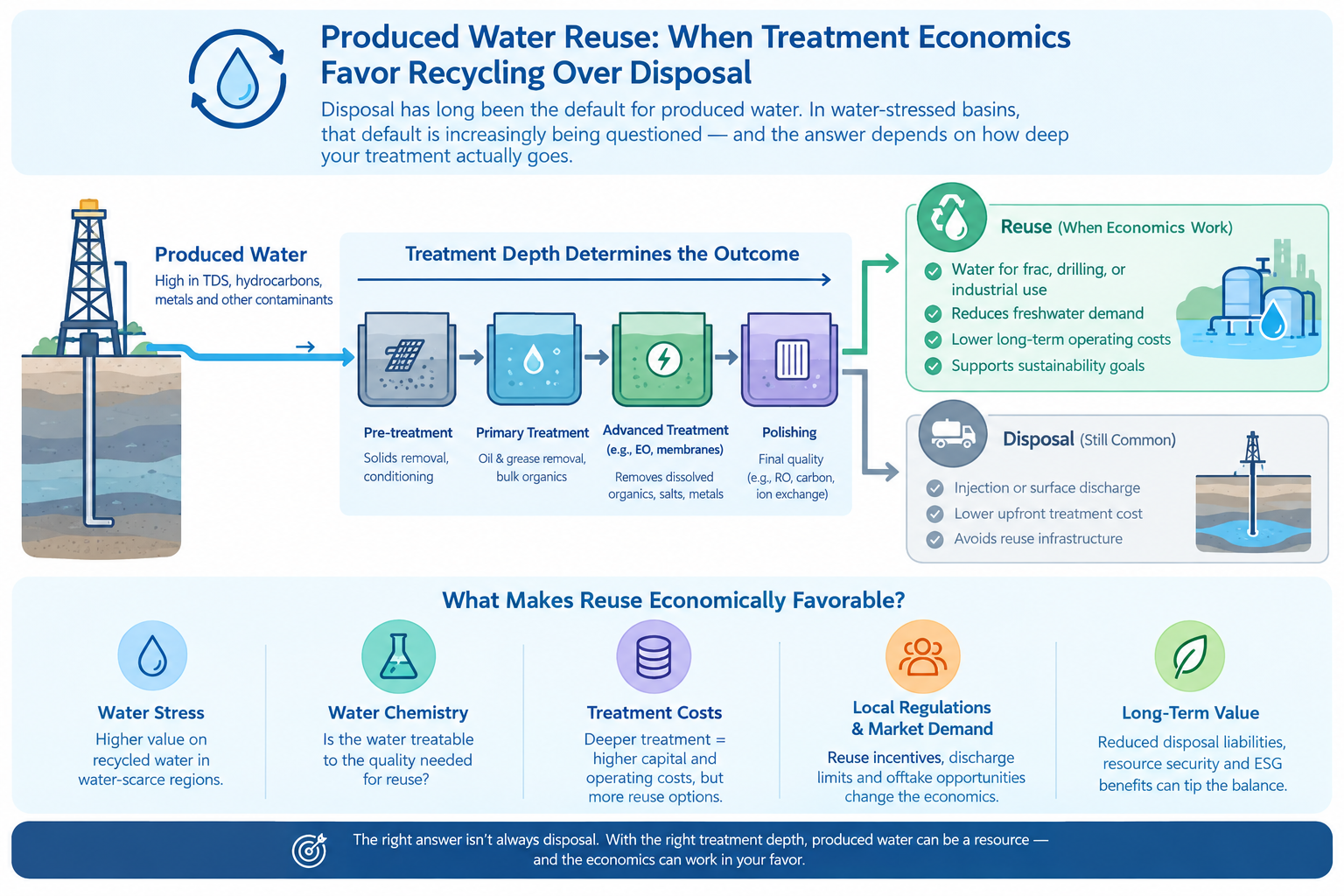
When injection capacity is constrained or permitting is tightening, treating water on-site for reuse (see our Beneficial Reuse Economics page) or for surface discharge becomes a genuine alternative rather than a theoretical one. Being honest about this: injection remains the simpler, cheaper path in plenty of basins, and this page isn’t arguing treatment replaces it universally — only that it’s worth evaluating where injection is becoming the harder path.
Hitting injection capacity limits?
Tell us about your basin and current disposal costs — we’ll help you evaluate whether on-site treatment changes the economics.