Engineering Services / Service & Support
Electro Oxidation Training Programs
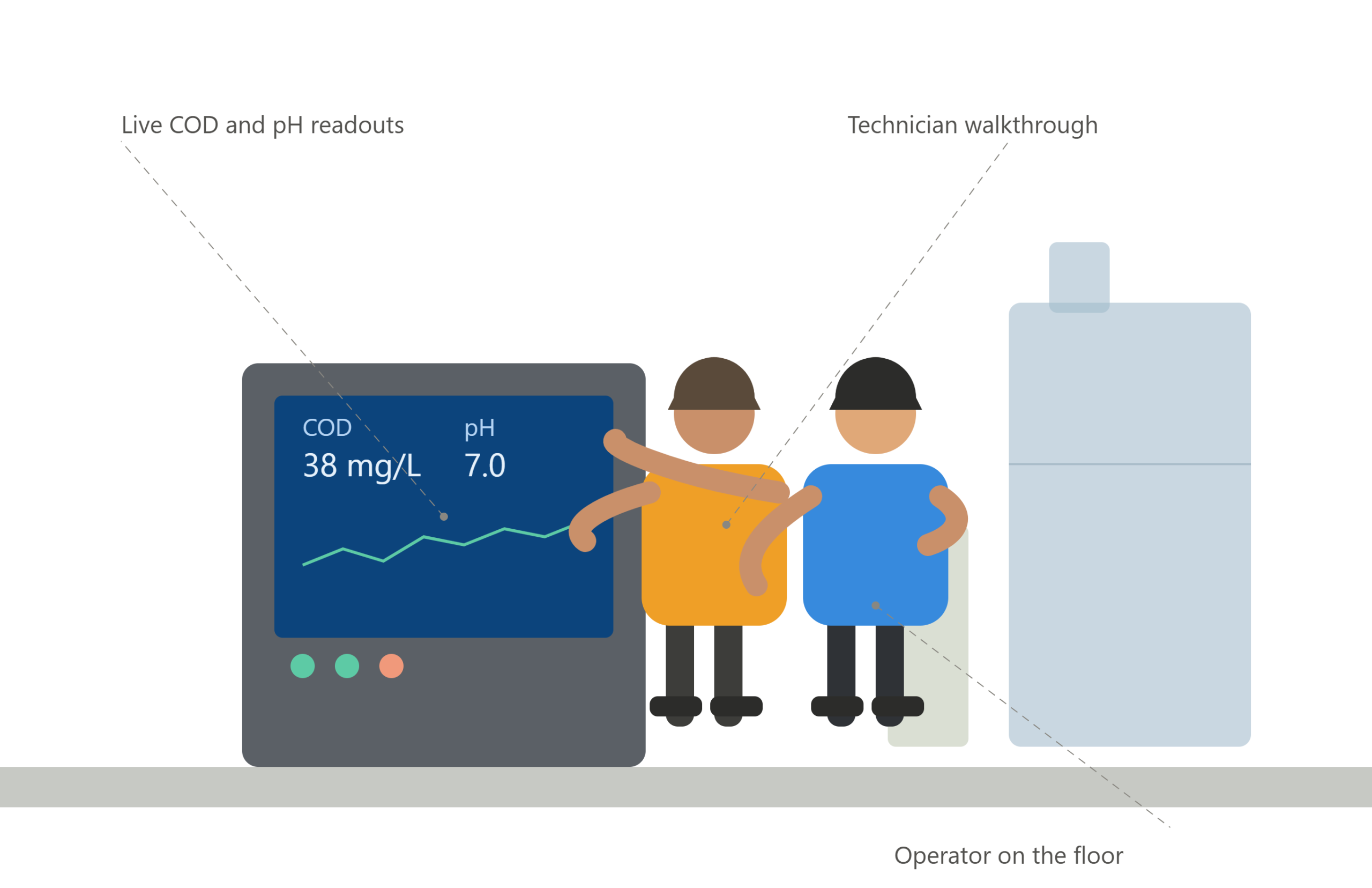
A system is only as reliable as the person running the night shift when something drifts out of range. Training is built around the operators who’ll actually be on the floor, not a generic manual walkthrough.
Reviewed for technical accuracy by Janeczka Kowalski, Process / Electrochemical Engineering. Figures and ranges on this page are engineering starting points — verify against your own pilot or vendor data before finalizing a design. The content is created by the Evoaeo engineering team led by Janeczka, All rights reserved.
Curriculum
What operator training actually covers
Standard operator training runs approximately 8–12 hours across two sessions, broken down roughly as: 3 hours on normal operating procedure and HMI navigation, 2 hours on alarm response and troubleshooting logic, 2 hours on safety protocols specific to hydrogen off-gas and electrical isolation, 2 hours on electrode inspection and routine cleaning procedure, and the remainder on process fundamentals — enough that an operator can recognize a developing problem, such as rising cell voltage or drifting pH, before it becomes a shutdown rather than only reacting after an alarm fires.
Delivery format
On-site, remote, or train-the-trainer
Training is delivered on-site during commissioning as standard, with remote refresher sessions available for facilities with shift rotation or staff turnover between visits. For sites running multiple shifts or multiple locations, we offer a train-the-trainer format so one certified lead operator can carry the curriculum forward internally rather than requiring a return visit for every new hire.
Application note
Facilities with 24/7 operation should plan training across all shift rotations before startup, not just the day shift present during commissioning — the night and weekend crews need the same alarm-response competency as anyone else running the equipment.
Certification
Confirming competency, not just attendance
Training concludes with a practical assessment covering three specific competencies: correctly interpreting a simulated cell-voltage or pH alarm and identifying the appropriate response, demonstrating correct electrode inspection and cleaning procedure, and correctly executing an emergency shutdown sequence. Certification is valid for 24 months, after which a shorter refresher assessment — roughly two hours — renews it, rather than requiring the full original curriculum to be repeated. Certification records are part of the project’s handover documentation and can support internal safety audit requirements.
Questions About Electro Oxidation Electro Oxidation Training Programs?
Scheduling training for a new installation or new staff? Ask our engineering team for a direct anwser.