Electrochemical Oxidation / Engineering & System Design / Reactor Design Types
EO Reactor Design Types: Choosing the Right Configuration
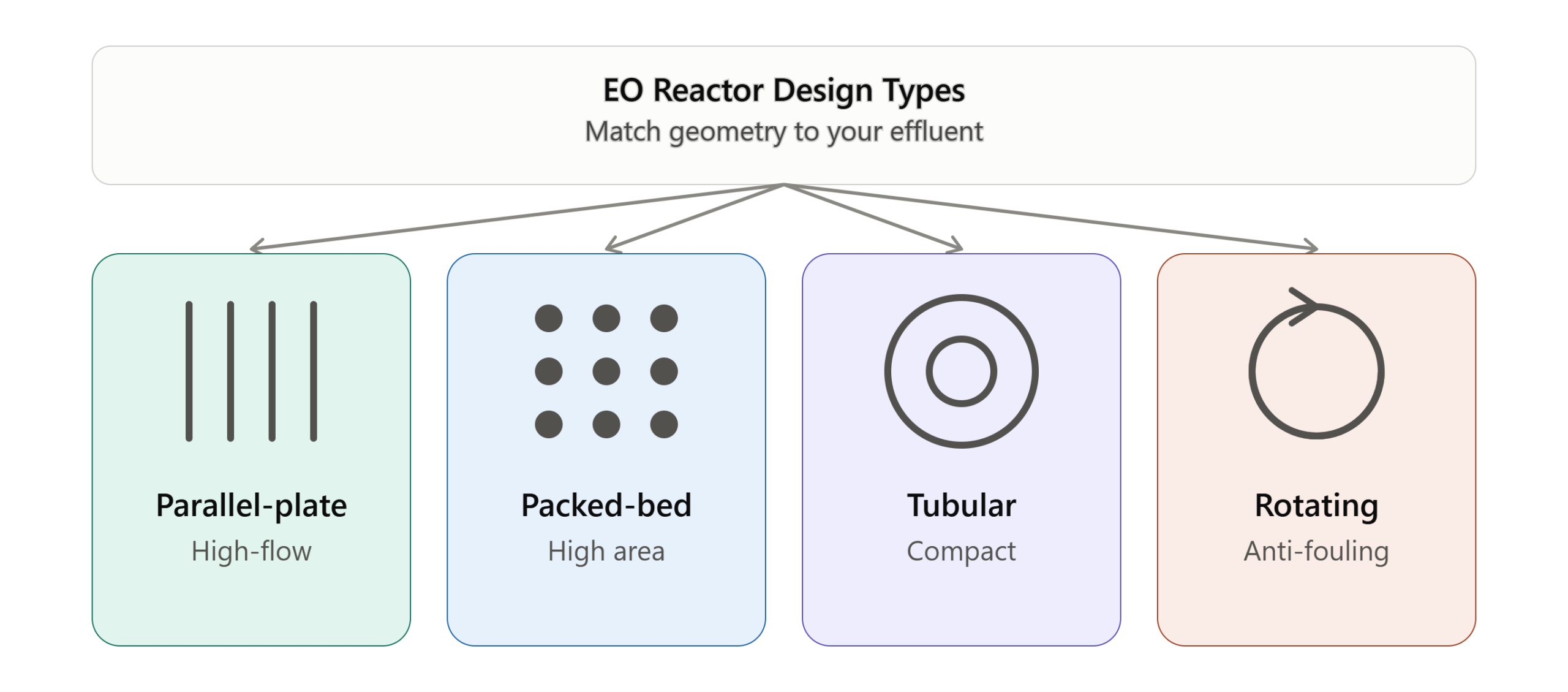
Why This Matters
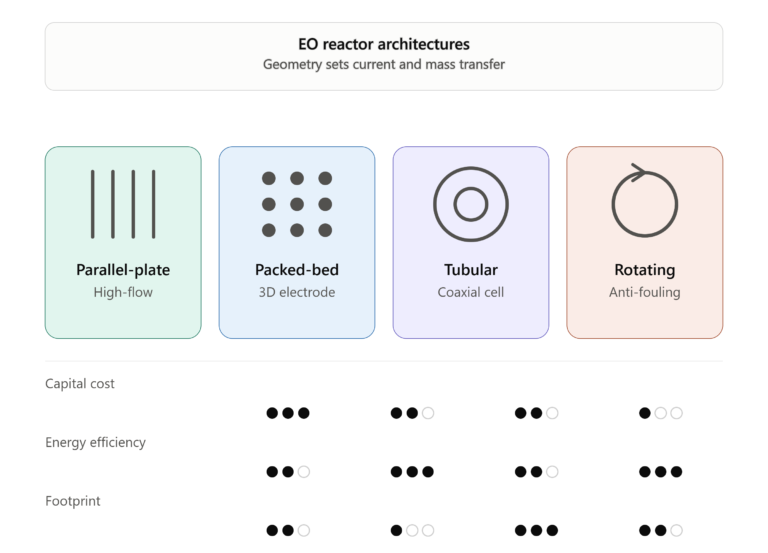
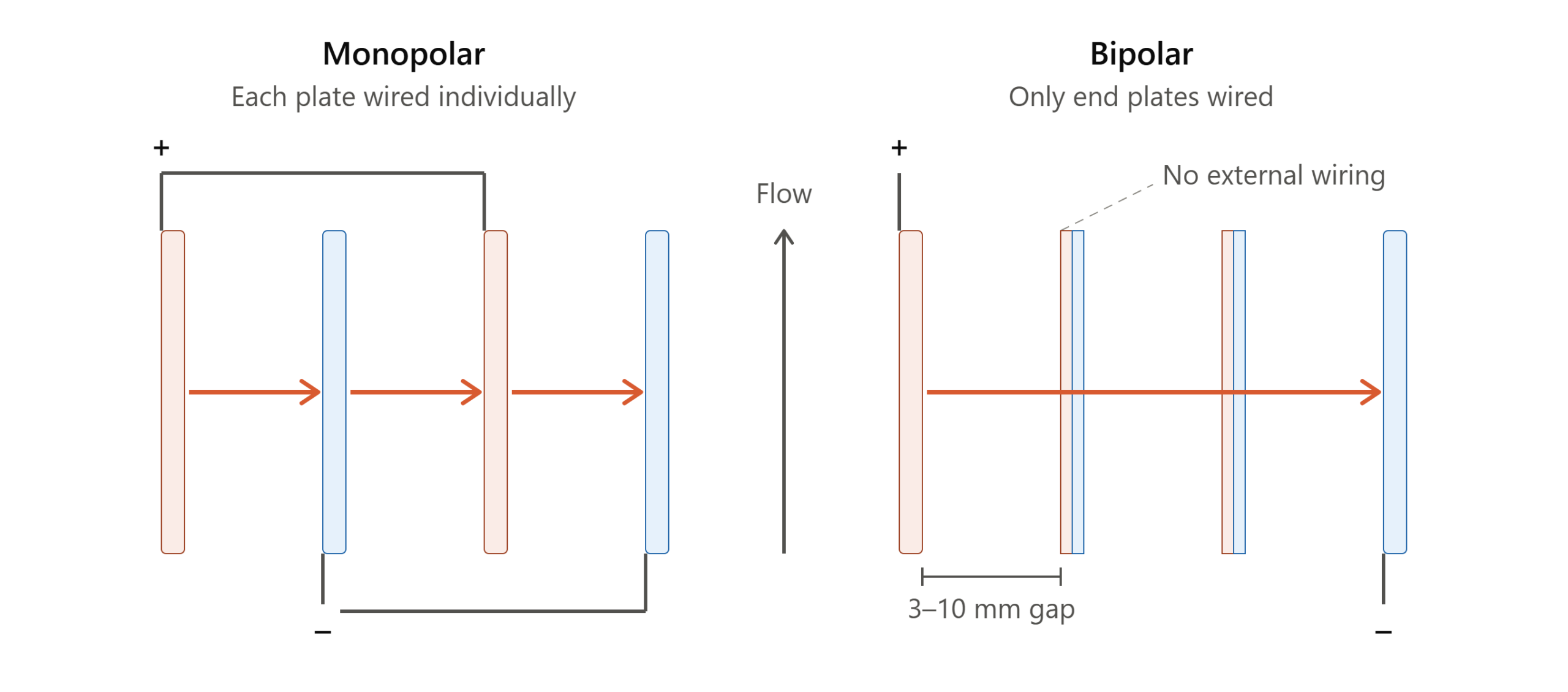
Parallel-Plate Stacks: Monopolar vs Bipolar
Packed-Bed and 3D Particulate Electrodes
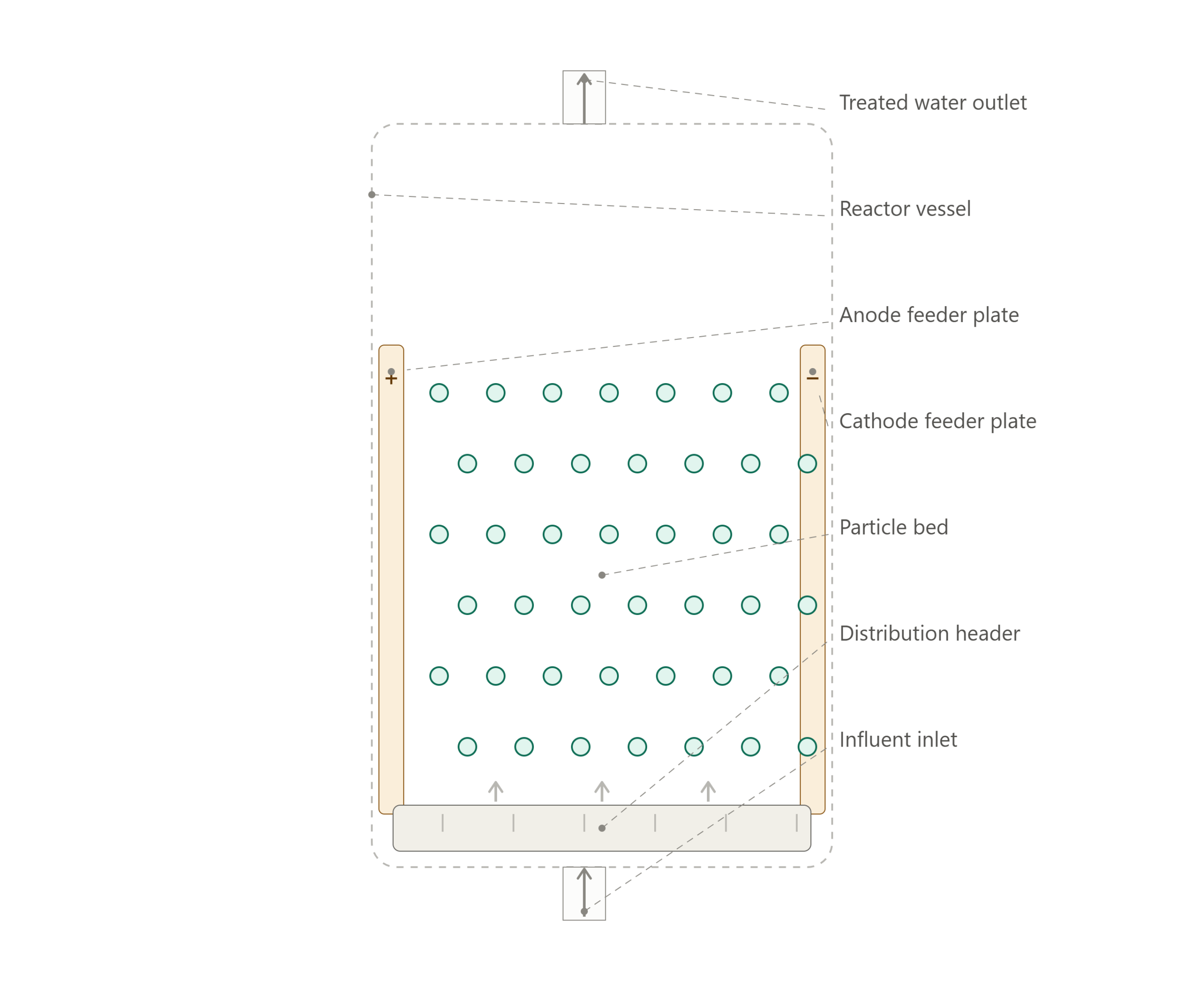
Packed-bed reactors fill the interelectrode space with conductive particles (graphite granules, activated carbon, or coated titanium chips) that act as bipolar micro-electrodes. The particle bed multiplies effective surface area per reactor volume by an order of magnitude or more compared to flat plates.
The tradeoff is hydraulics. Bed compaction, channeling, and pressure drop grow with run time as biofilm or scale accumulates in the void spaces. These reactors work best on dilute streams with low suspended solids where the surface-area advantage matters more than the fouling risk, and they need a defined backwash or bed-replacement procedure from day one.
Tubular and Coaxial Cells
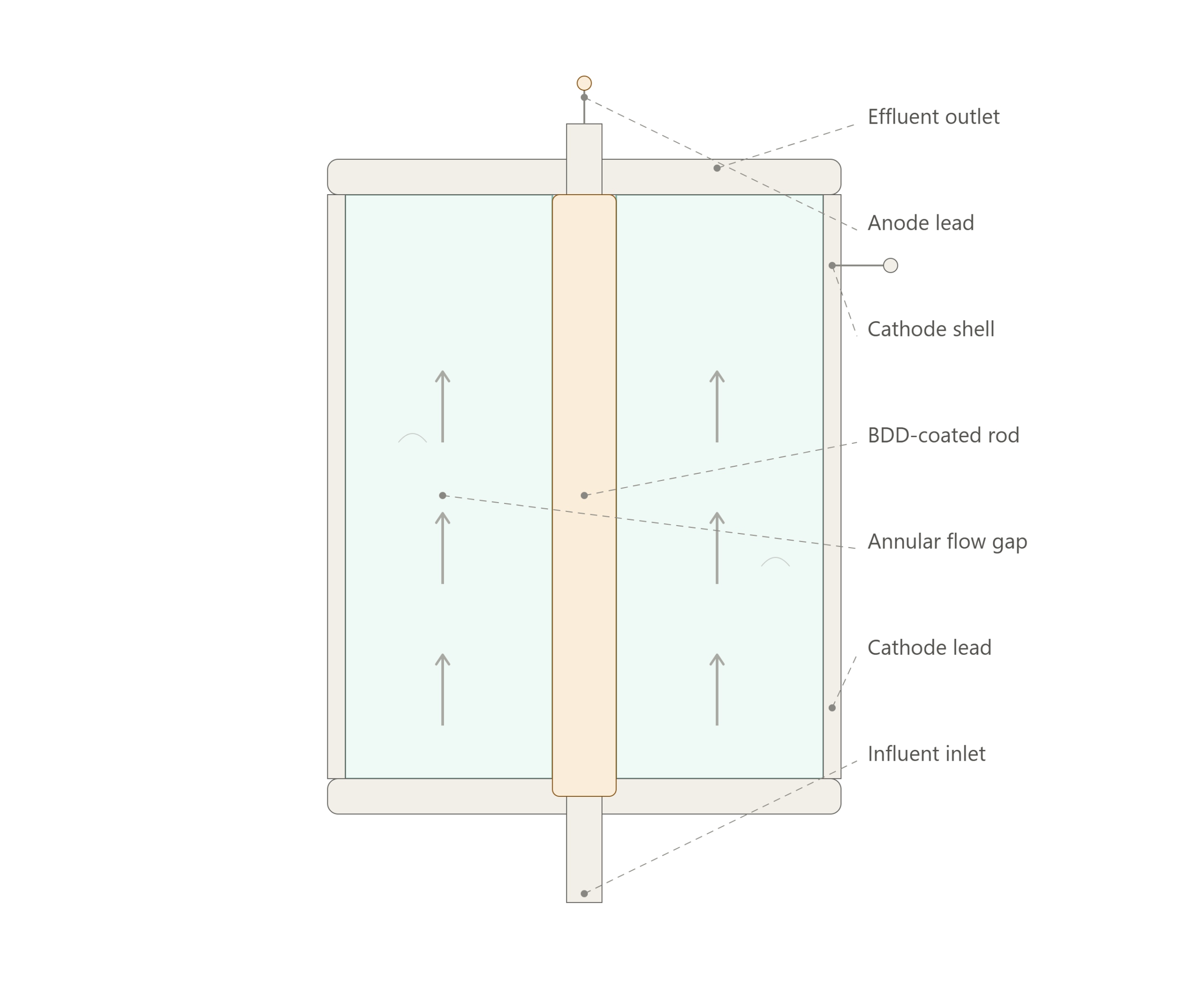
Tubular (concentric cylinder) reactors run a rod or tube anode inside a cylindrical cathode shell, or vice versa, with wastewater pumped through the annular gap. The geometry naturally promotes turbulent, well-mixed flow along the electrode surface, which helps keep the process charge-transfer limited rather than mass-transfer limited.
This configuration is common where BDD (boron-doped diamond) electrodes are used, since BDD is typically manufactured as coated tubes or rods rather than large flat sheets. Coaxial cells also simplify sealing compared to a multi-plate stack, which matters for high-pressure or fully enclosed skid designs. *BDD rod or tube electrode , coating are under research and testing with Evoaeo engineering team as we speak, in this case, use BDD anode plate or mesh if you are trying to build an electrochemical reactor soon.
Rotating Electrode Systems
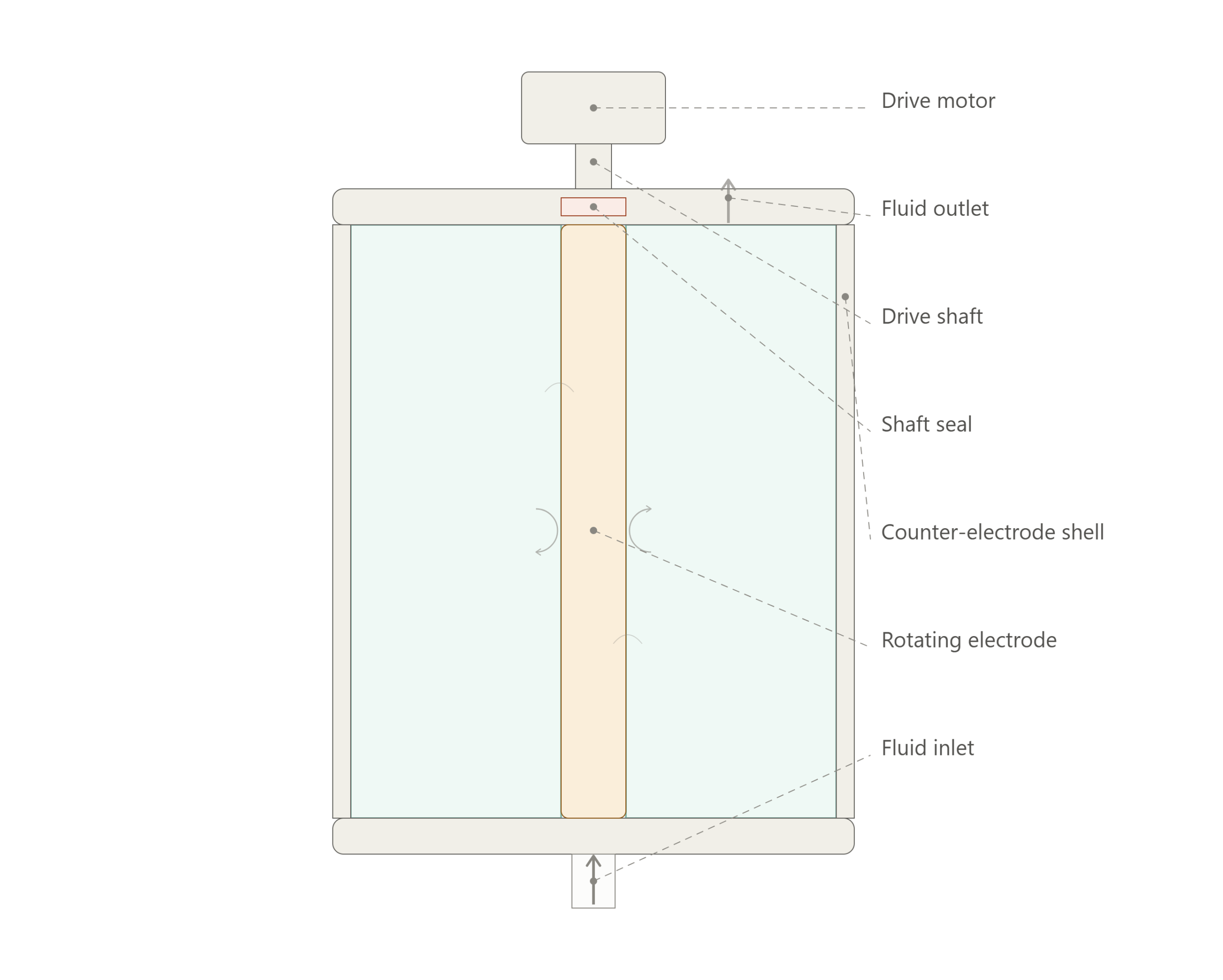
Rotating disc or cylinder electrodes spin the electrode surface through the bulk fluid instead of relying on pump-driven flow to renew the boundary layer. This decouples mass transfer from hydraulic residence time, which is useful for viscous or high-solids streams where pumping alone cannot generate enough shear at the electrode face.
Mechanical complexity is the cost. Rotating seals, bearings, and drive motors add maintenance points that a static plate stack does not have, so this design shows up more often in specialty or low-flow applications than in high-throughput industrial trains.
Typical Plate Gap
Bipolar Voltage Stacking
Flow Regime Target
Confirm the fit before you finalize a design
Feasibility Assessment Tool
Engineering Process
Pilot Test Requirements
Reactor Type at a Glance
Common Selection Mistakes
Where does this take you next?
Geometry is settled
Still comparing options
Not sure EO is the fit
Talk to our process engineers about your application
Electrochemical Oxidation Wastewater Treatment — Engineering & System Design — EO Reactor Design Types, How to choose the right configuration to maximum your treatment efficiency.