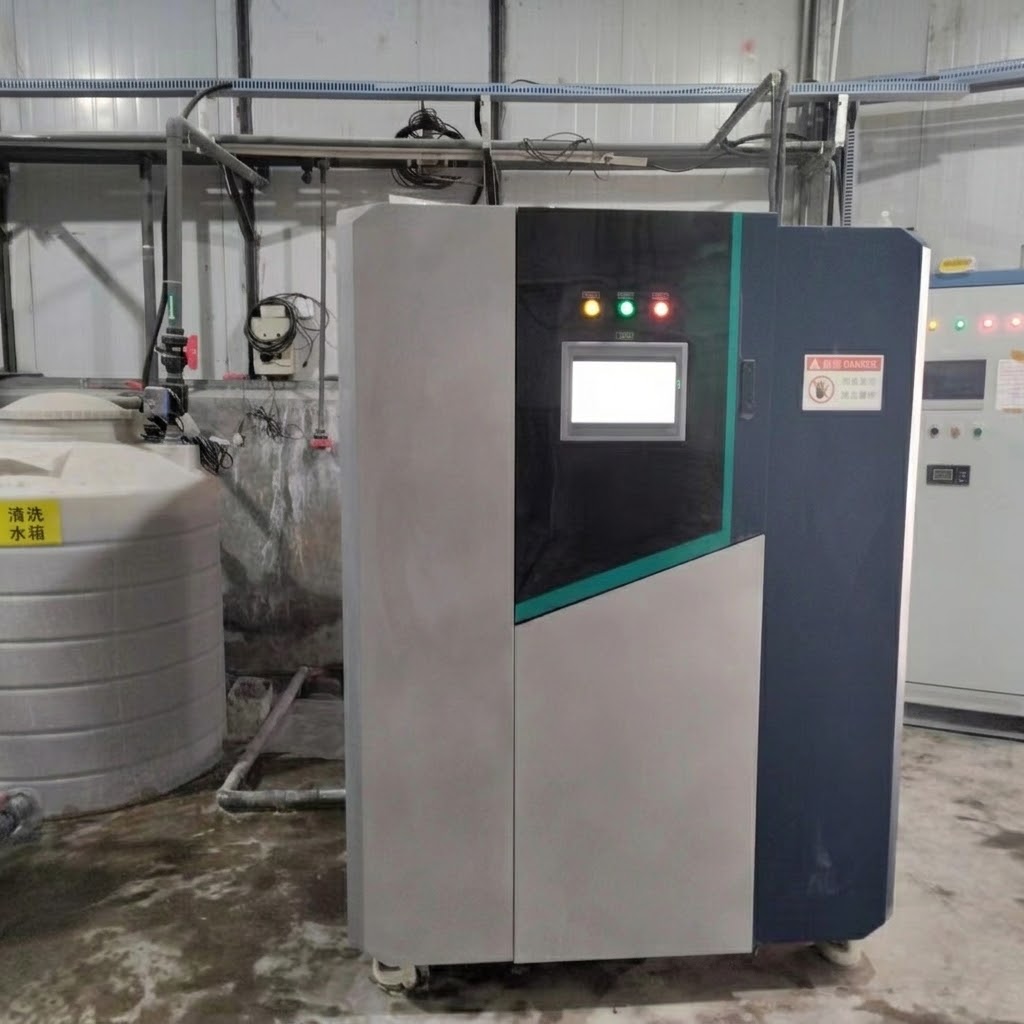
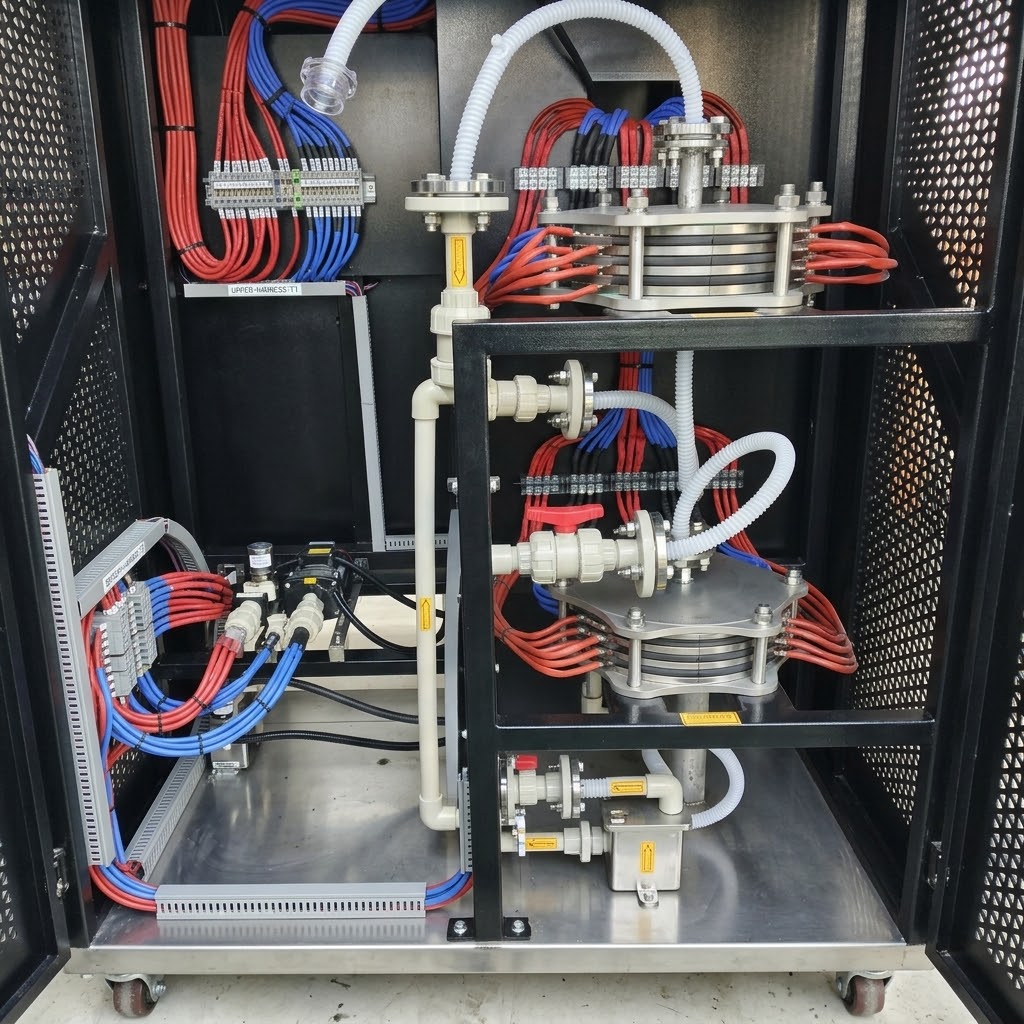
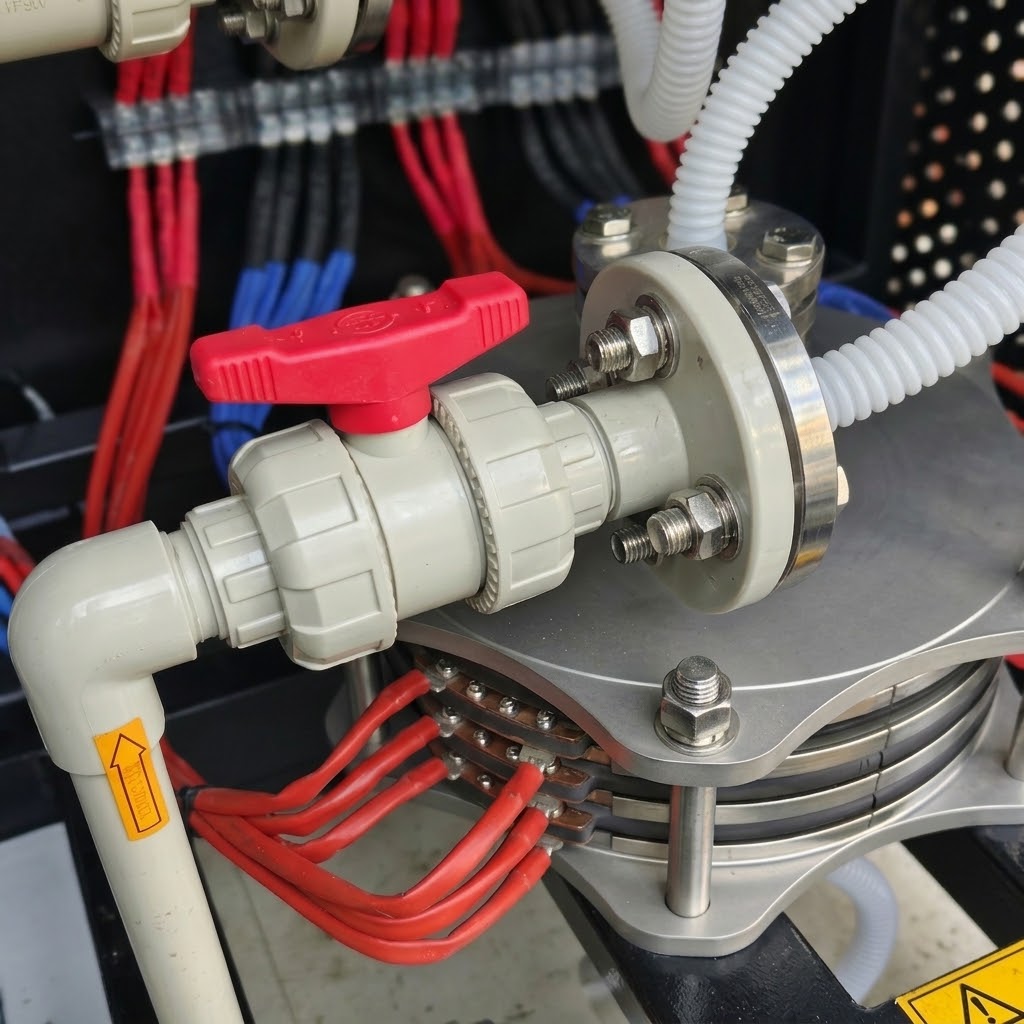
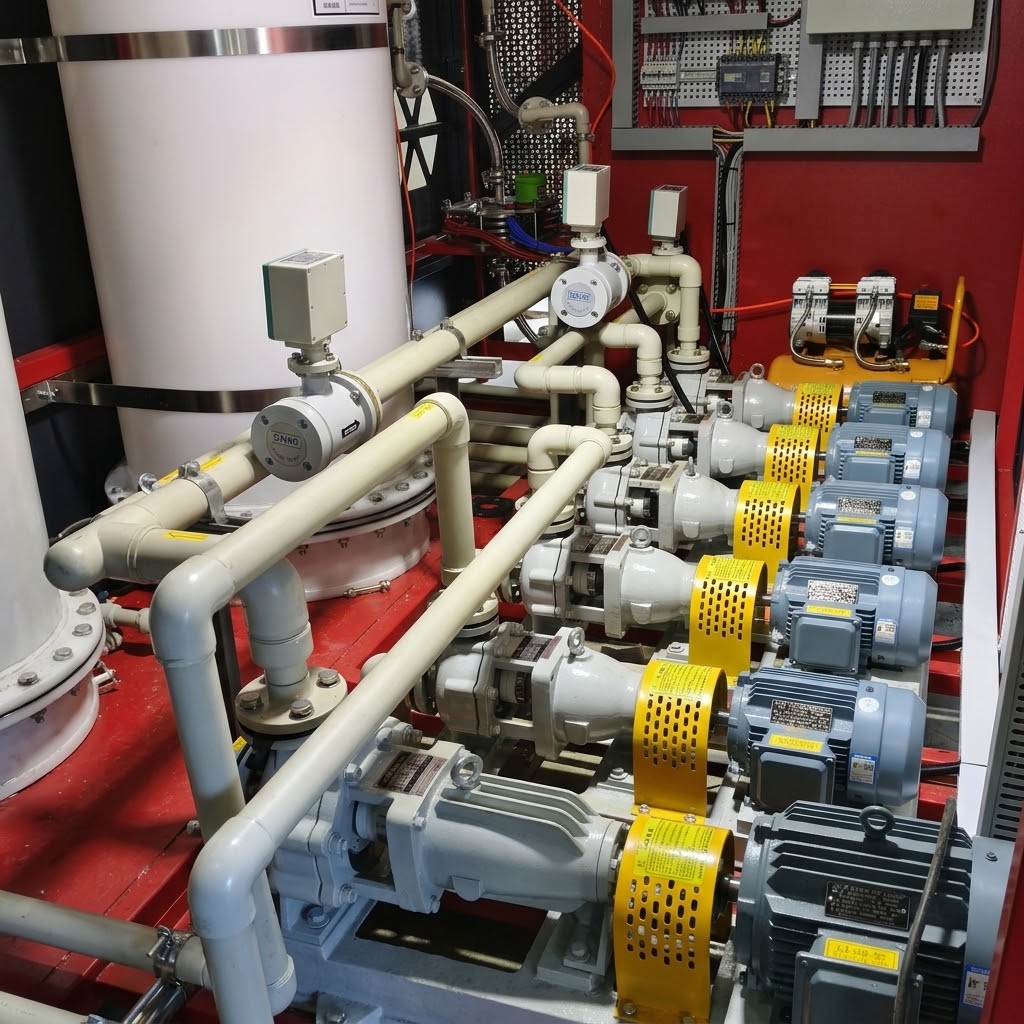
Why electrode-based oxidation
Built to resist what breaks other processes
Every advantage below solves a specific failure mode of conventional treatment — biological systems poisoned by toxicity, Fenton/AOP buried in iron sludge, membranes clogged by scale. The electrode module is engineered around exactly those failure points.
High-salinity tolerance
Removes COD & ammonia nitrogen from saturated saline streams — up to 99% — with no dilution required before treatment.
High-toxicity resistance
Non-biological process removes COD & ammonia at up to 99% while actively reducing biotoxicity within 1–2 hours.
High-concentration capacity
Treats organic industrial wastewater up to ≤450,000 mg/L COD without pre-dilution, cutting system load.
Strong acid/alkali tolerance
Effective across pH 0–14 — no pH adjustment needed before the wastewater enters the equipment.
Zero chemical dosing
The only reagent consumed is electrons from the external circuit. No coagulants, no oxidants, no acid/alkali.
Zero sludge, zero solid waste
Pollutants mineralize to CO2, water and inorganic salts — nothing left to landfill or dispose of as hazardous waste.
Low-voltage, human-safe
Operates at DC 3–15V — no electrical hazard to operators despite working currents of 4,000–5,500A.
No scaling, no clogging
Electrode modules stay clean under high-salt, high-solids conditions that would foul membranes or media filters.
~2% of conventional footprint
Equivalent treatment capacity in a fraction of the space — fits inside existing plant envelopes with room to expand.
No special site requirements
Wind/rain shelter and ventilation are the only site conditions — no explosion-proof classification required or provided.
2–9% of outsourcing cost
Operating cost as a share of third-party disposal fees, with typical payback in 3–6 months of operation.
Fully automated
Runs 0.1–24 h/day unattended, with no process noise and no secondary emissions during operation.
Where EO reaches its limits — this isn’t a fit for every stream, check before you commit: High-BOD, readily biodegradable wastewater · Low-toxicity streams (biology is cheaper) · Energy-intensity constraints
Two oxidation pathways, one electrode stack
Two oxidation pathways, one electrode stack
Patented under invention patent 202011335803.4 / 202030716823.0. Toggle between the two destruction mechanisms and the nitrogen cycle they drive.
Organic pollutants (R) are oxidized directly on the electrode surface via electron transfer: R → RO → CO2 + H2O. No intermediate carrier is needed — the electrode itself does the work, consuming only the electrons supplied by the external circuit, at room temperature.
Chloride and other ions in the wastewater are converted at the electrode into strong oxidants (such as active chlorine species and hydroxyl radicals) that then react with pollutants in the bulk solution, extending oxidation beyond the electrode surface itself.
Ammonia nitrogen is oxidized via a breakpoint-style reaction pathway driven by the same in-situ oxidants, converting it toward nitrogen gas and reducing ammonia load alongside COD in the same electrode stage.
1. Pre-treatment
Equalization, oil separation, primary sedimentation — stabilizes influent quality.
2. EC stage
Electrocoagulation removes colloids, part of the suspended/emulsified organics, color and heavy metals.
3. Electro Oxidation
Core electrode stage mineralizes remaining stable toxic organics into CO2, H2O and inorganic salts.
4. Circulation A/B
Twin tanks alternate fill/drain for continuous discharge without interrupting treatment.
5. Discharge / reuse
Treated water meets discharge standard or returns to production for reuse.
Industry fit
Nine verticals, one electrode platform
Chemical wastewater
Inorganic, fine, and polymer/high-molecular chemical wastewater. The flagship application with the deepest case-study set.
Pharmaceutical
Antibiotic synthesis, chemical-API synthesis, TCM, and formulation/washdown wastewater.
Pesticide / agrochemical
Synthesis, refining, floor washdown and exhaust-gas scrubber wastewater, including cyanide streams.
Laboratory wastewater
Mixed, unpredictable solvent/acid/base/reagent streams from universities, R&D centers and test labs.
Dyeing & printing
Pre-treatment, dyeing, printing and finishing wastewater — deep color, high alkalinity, complex dye chemistry.
Coal chemical
Gasification, gas purification and semi-coke manufacturing wastewater rich in phenolics, PAHs and cyanide.
Aquaculture / livestock
Manure washdown wastewater — active chlorine species double as disinfectant, avoiding DBPs and chemical sludge.
Electroplating & e-coat
Electroplating and electrophoretic (e-coat) coating wastewater — named in scope of application, no dedicated case study yet.
Landfill leachate
Listed among applied industries alongside domestic wastewater — no dedicated case study published yet.
Engineering data
Technical specifications
| Parameter | Value |
|---|---|
| Equipment model | EAO-EOX |
| Electrode model | EAOBE-10-6 electrode |
| Number of electrodes | Customizable |
| Input voltage | AC 380V |
| Power efficiency | ≥85% |
| Frequency range | 50–60Hz |
| Working voltage | DC 3–15V |
| Working current | 4000–5500A |
| Operating time | 0.1–24 h/day |
| Operating temperature | 1–80°C |
| Influent COD | 10,000–300,000 mg/L |
| COD removal rate | 50–100% |
| Pipe connection | DN80 flange |
| Net weight | Customized |
| Dimensions | Customized |
Engineering review
Performance on real effluent
Four representative field cases across industries, each reporting measured COD (mg/L) at the start and end of the treatment window.
Coal chemical — semi-coke
Benzene, phenolics, PAHs, nitrogen-heterocyclic compounds.
91.2% in 5h
0h: 27,240 mg/L → 5h: 2,408 mg/L
Pharmaceutical — antibiotic synthesis
Centrifuge mother liquor: NH4Cl, hydroxylamine HCl, methanol, 28.5% salt.
96.0% in 10h
0h: 168,000 mg/L → 10h: 6,772 mg/L
Pesticide — cyanide wastewater
15.5% Na2SO4, 28.6% NaCl, 21.8% NaOH, 3.5% NaCN, 0.6% enzyme.
97.9% in 10h
0h: 56,918 mg/L → 10h: 1,191 mg/L
Dyeing — dispersed dye intermediate
Oxidation wastewater from dye-intermediate production, 12% Na2SO4.
99.6% in 10h
0h: 40,640 mg/L → 10h: 168 mg/L
Company-reported project results shown for illustration. All performance data above is self-reported by the manufacturer; no independent lab or certifying body is cited. Results for your wastewater must be confirmed through representative bench-scale and pilot testing, not inferred from these cases.
Getting started
Project implementation process
1. Identify wastewater
Define the stream to be treated and its variability.
2. Sample
Owner takes ≥10 litres of representative wastewater.
3. Bench test
Manufacturer runs a small-scale degradation trial and issues a report.
4. Pilot test
On-site pilot equipment confirms the treatment plan.
5. Deliver & run
Contract, manufacture, install and commission.
Selection guide
Estimate your model & payback
Flow rate alone does not determine which model fits, and it is not the same as treatment capacity (see the model-range table above). As a directional starting point only, match your average flow rate to the nearest model in the table above, then confirm sizing and expected operating cost through bench and pilot testing.
Evoaeo’s company-reported figures for budgeting purposes: operating cost typically runs 2–9% of your current third-party disposal cost, with a typical payback period of 3–6 months. Treat these as starting assumptions to confirm against your own capex quote and duty cycle — not a quoted price.
Prefer a structured walkthrough?
In context
Where electrode oxidation fits vs. other AOP/treatment routes
A general framework for evaluating recalcitrant-wastewater technologies — not a claim about any specific competing product.
| Dimension | Electrochemical oxidation (EAO-EOX) | Fenton / chemical AOP | Biological (activated sludge/MBR) | Membrane (RO) + evaporation |
|---|---|---|---|---|
| Chemical dosing | None — electrons only | Iron salt + H2O2, pH swing | Nutrients, sometimes carbon source | Antiscalants, cleaning chemicals |
| Sludge / solid waste | None | Iron hydroxide sludge | Biosolids requiring disposal | Concentrate/brine needing further handling |
| High-toxicity influent | Designed for it | Workable but reagent-heavy | Often inhibited or killed | Passes through untreated |
| High-salinity influent | No dilution needed | Can be reagent-inefficient | Often inhibited | Handles salinity, doesn’t destroy organics |
| Footprint | ~2% of conventional | Moderate | Large | Moderate to large |
| Automation | Fully automated | Dosing control needed | Needs active management | Automated, but fouling-prone |
Questions
FAQ ABOUT electrochemical oxidation wastewater treatment system
No. Pollutants are mineralized directly into CO2, water and inorganic salts. No chemicals are dosed and no sludge or solid residue is generated during treatment. The one caveat worth knowing is chloride byproduct risk in certain wastewater chemistries.
No pH adjustment is required before the wastewater enters the equipment (effective pH 0–14), and no dilution is needed for high-salinity or high-COD influent.
Flow rate alone doesn’t determine capacity. Sizing is confirmed through a bench-scale degradation test followed by an on-site pilot trial on your actual effluent.
Not specified in current source material. This is a genuine information gap — please confirm directly with the manufacturer before budgeting.
Case studies report COD removal percentages, but no specific national or local discharge standard is cited. Confirm with the manufacturer against your applicable regulatory limit.
No — the equipment is explicitly non-explosion-proof rated and must be sited in a ventilated, rain/wind-protected, non-Ex-classified area only.
Not specified in current source material. Request a design consultation to confirm terms directly.
Submit Wastewater Data for an Initial Treatability Review
Submitting wastewater information does not confirm technical suitability, treatment performance, regulatory compliance or final system cost. Recommendations require engineering review and may require laboratory or pilot testing.
Or initialize another Discussion about Your Electrochemical Oxidation Application
Share the wastewater source, flow range, current treatment process, target contaminants and required effluent quality. An engineering assessment can then identify the appropriate testing and design pathway.